🌿 Introduction
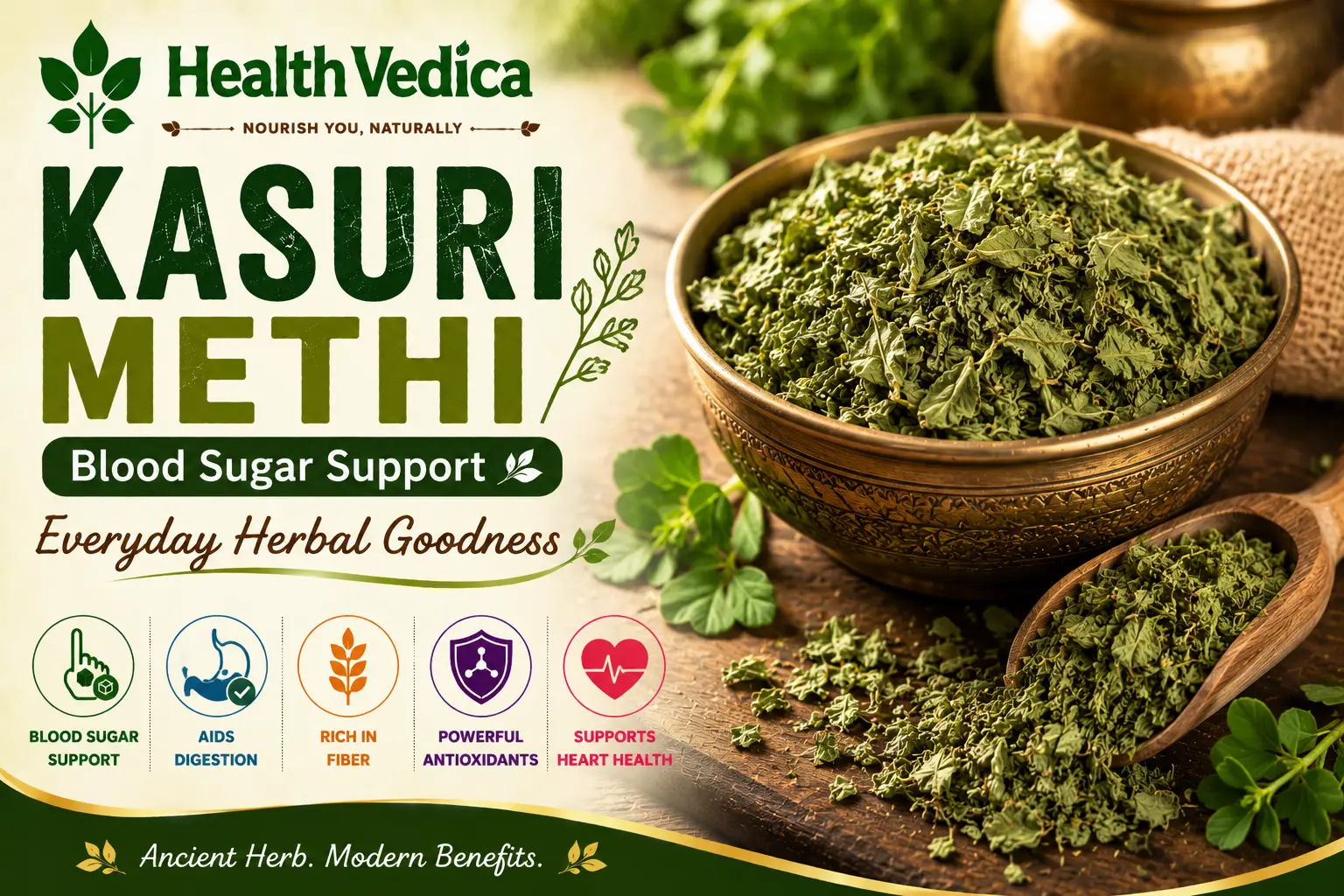
Kasuri Methi is the dried leaves of the fenugreek plant (Trigonella foenum-graecum) and is one of India's most cherished culinary herbs. Named after the Kasur region of Punjab, these aromatic dried leaves are widely used in curries, gravies, dals, breads and restaurant-style dishes to impart a rich earthy flavour. Unlike fenugreek seeds, Kasuri Methi has a milder taste and contains concentrated aromatic compounds that enhance both flavour and nutrition. Ayurveda recognizes fenugreek leaves as a nourishing herb that supports healthy digestion, balanced blood sugar, heart health and overall vitality.
📊 Nutritional Value Per 100g of Kasuri Methi
| Nutrient | Amount | % Daily Value (DV) |
|---|---|---|
| Calories | 323 kcal | 16% |
| Protein | 23 g | 46% |
| Total Fat | 6.5 g | 8% |
| Carbohydrates | 58 g | 21% |
| Dietary Fiber | 24 g | 86% |
| Calcium | 1760 mg | 176% |
| Iron | 33 mg | 183% |
| Magnesium | 190 mg | 45% |
| Potassium | 770 mg | 16% |
| Vitamin A | 9500 IU | 190% |
| Vitamin C | 52 mg | 58% |
📉 Glycemic Index
Kasuri Methi has a very low glycemic index (approximately 15). Due to its fibre content and minimal carbohydrate intake in culinary servings, it has little impact on blood glucose levels.
🧬 Bioactive Compounds
Kasuri Methi contains numerous beneficial phytochemicals including diosgenin, trigonelline, chlorogenic acid, luteolin, quercetin, apigenin, galactomannan fibre and various polyphenols. These compounds contribute to its antioxidant, anti-inflammatory and metabolic health benefits.
💊 Vitamins & Minerals Explained
Kasuri Methi is naturally rich in calcium for bone health, iron for healthy red blood cell production, vitamin A for eye health, vitamin C for immunity and collagen synthesis, magnesium for muscle function and potassium for maintaining healthy blood pressure.
🕉️ Ayurvedic Properties & Dosha Effect
According to Ayurveda, Kasuri Methi possesses Tikta (bitter) and Katu (pungent) tastes with a warming potency (Ushna Veerya). It helps balance Vata and Kapha Doshas while stimulating digestion (Deepana), improving metabolism (Pachana) and strengthening Agni (digestive fire). Excessive intake may increase Pitta in sensitive individuals.
💚 Evidence-Based Health Benefits
Supports Healthy Blood Sugar: Fibre and naturally occurring compounds such as trigonelline and diosgenin may help improve glucose metabolism as part of a healthy diet.
Improves Digestion: Kasuri Methi supports digestive enzyme activity, promotes healthy bowel movements and helps reduce occasional bloating.
Heart Health: Soluble fibre and antioxidants may help maintain healthy cholesterol levels and support cardiovascular wellness.
Rich in Antioxidants: Polyphenols protect cells against oxidative stress and chronic inflammation.
Supports Immunity: Vitamin C and antioxidant compounds contribute to healthy immune function.
Bone Health: High calcium content supports healthy bones and teeth when consumed as part of a balanced diet.
Eye Health: Vitamin A and carotenoids help maintain normal vision and protect eye tissues.
👨👩👧 Who Should Eat Kasuri Methi?
Kasuri Methi is beneficial for adults seeking better blood sugar control, digestive wellness, heart health and nutrient-rich flavour without excess calories. It is suitable for vegetarians, older adults and individuals looking to enhance the nutritional value of homemade meals.
🚫 Who Should Limit or Avoid Kasuri Methi?
Individuals allergic to fenugreek or other legumes should avoid Kasuri Methi. Those taking diabetes medications should monitor blood sugar because fenugreek products may enhance glucose-lowering effects. Pregnant women should avoid medicinal quantities unless advised by a healthcare professional, although culinary amounts are generally considered safe.
🌿 Ayurvedic Remedies & Healthy Recipes
Kasuri Methi Tea: Steep a teaspoon of crushed Kasuri Methi in hot water with ginger for a soothing herbal infusion.
Restaurant-Style Curry: Crush dried leaves between your palms before adding them at the end of cooking to release maximum aroma.
Whole Wheat Paratha: Mix Kasuri Methi into whole wheat dough to prepare aromatic, fibre-rich parathas.
Protein Dal: Add crushed Kasuri Methi to lentils during the final stage of cooking for enhanced flavour and nutrition.
🥗 Best Ways to Eat Kasuri Methi
Use crushed dried leaves in curries, paneer dishes, vegetable gravies, soups, dals, breads, khichdi, yogurt dips and marinades. Adding it near the end of cooking preserves its aroma and flavour.
🍽️ Best Food Combinations
Kasuri Methi pairs well with paneer, tomatoes, onions, garlic, ginger, cumin, coriander, turmeric, cream, yogurt, potatoes, mushrooms and lentils.
🔥 Fresh Fenugreek vs Kasuri Methi
Fresh fenugreek leaves provide more vitamin C and moisture, whereas Kasuri Methi has a more concentrated aroma and flavour because the leaves are dehydrated. Both offer similar phytochemicals but differ in culinary application.
🧊 Storage Tips
Store Kasuri Methi in an airtight container away from sunlight and moisture. Proper storage helps preserve its aromatic oils for up to one year.
📅 Daily Recommended Intake
1–2 teaspoons (1–3 grams) daily is generally sufficient to enhance flavour and obtain its nutritional benefits.
⚠️ Precautions
Kasuri Methi is generally safe in culinary quantities. Excessive intake may cause digestive discomfort in sensitive individuals. People taking blood sugar-lowering medication should consult their healthcare provider before consuming large medicinal quantities.
🔬 Scientific Highlights
Research on fenugreek leaves suggests antioxidant, anti-inflammatory and glucose-supporting properties. Many studies have focused on fenugreek seeds; therefore, evidence for dried leaves is promising but comparatively limited.
❌ Common Myths & Facts
❌ Myth: Kasuri Methi and fenugreek seeds provide identical health benefits.
✅ Fact: They come from the same plant but are different parts. Kasuri Methi is made from dried leaves, while fenugreek seeds have a different nutritional composition and higher concentrations of certain compounds.
❌ Myth: Eating more Kasuri Methi rapidly lowers blood sugar.
✅ Fact: Kasuri Methi may support healthy glucose metabolism, but it is not a substitute for prescribed diabetes treatment.
❌ Myth: Kasuri Methi is only a flavouring herb.
✅ Fact: Besides its distinctive aroma, it provides fibre, vitamins, minerals and beneficial phytochemicals that contribute to overall health.
🌍 Fun Facts
- Kasuri Methi gets its name from the historic Kasur region, now in Pakistan.
- Crushing the leaves before use releases more aromatic essential oils.
- Many restaurant-style Indian dishes owe their signature flavour to Kasuri Methi.
- Kasuri Methi contains concentrated flavour because fresh leaves lose moisture during drying.