🌿 Introduction
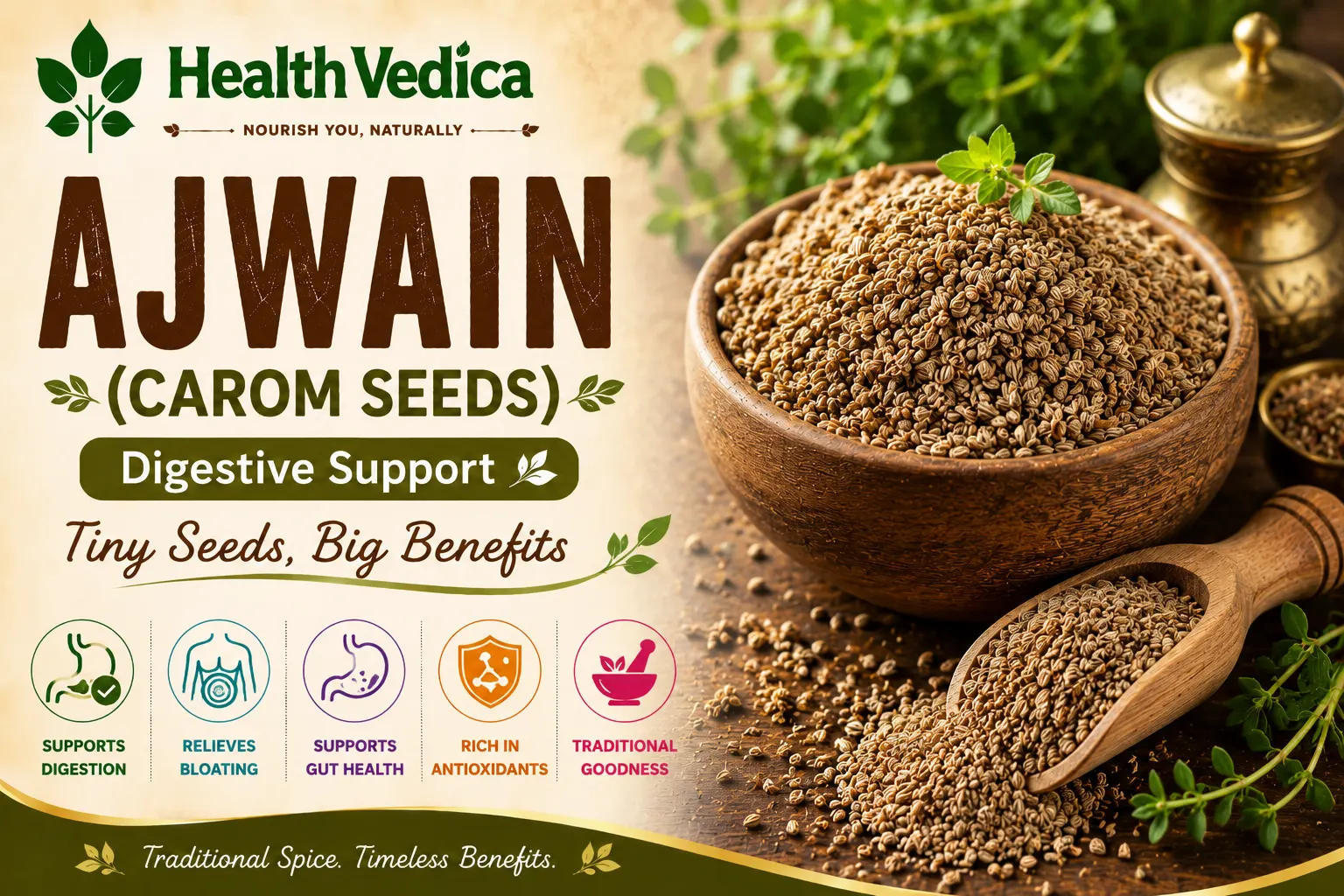
Ajwain, commonly known as Carom Seeds, is one of India's most respected medicinal spices. Obtained from the plant Trachyspermum ammi, ajwain has been used for thousands of years in Ayurveda, Siddha and traditional household remedies for digestive discomfort, bloating, gas and respiratory ailments. Despite their tiny size, ajwain seeds possess an intensely aromatic flavour due to their exceptionally high concentration of thymol, a natural compound with antimicrobial and digestive-supporting properties. Ajwain is widely used in parathas, pakoras, curries, lentils, herbal teas and spice blends, making it both a culinary ingredient and a valuable functional food.
📊 Nutritional Value Per 100g of Ajwain
| Nutrient | Amount | % Daily Value (DV) |
|---|---|---|
| Calories | 305 kcal | 15% |
| Protein | 16 g | 32% |
| Total Fat | 25 g | 32% |
| Carbohydrates | 43 g | 16% |
| Dietary Fiber | 39 g | 139% |
| Calcium | 1034 mg | 103% |
| Iron | 14.6 mg | 81% |
| Magnesium | 130 mg | 31% |
| Phosphorus | 300 mg | 43% |
| Potassium | 1350 mg | 29% |
| Manganese | 2.1 mg | 91% |
📉 Glycemic Index
Ajwain has a very low glycemic index of approximately 10. Since it is consumed in small culinary quantities, it has negligible impact on blood sugar levels and fits well into diabetic-friendly diets.
🧬 Bioactive Compounds
The primary active compound in ajwain is thymol, which gives the seeds their distinctive aroma and digestive properties. Ajwain also contains carvacrol, terpenes, flavonoids, limonene, p-cymene and other antioxidant phytochemicals that contribute to its antimicrobial, anti-inflammatory and carminative effects.
💊 Vitamins & Minerals Explained
Ajwain contains calcium, iron, potassium, magnesium and phosphorus, but because it is consumed in very small quantities, its health benefits mainly arise from its volatile oils rather than its mineral content. Thymol stimulates digestive secretions and supports gastrointestinal comfort.
🕉️ Ayurvedic Properties & Dosha Effect
In Ayurveda, Ajwain has a Katu (pungent) taste with a heating potency (Ushna Veerya) and pungent post-digestive effect (Katu Vipaka). It is one of the most effective spices for balancing Vata Dosha by reducing gas, bloating and abdominal discomfort. It also helps reduce excess Kapha by clearing mucus and supporting respiratory health. Because of its warming nature, people with aggravated Pitta should consume it in moderation.
💚 Evidence-Based Health Benefits
Relieves Gas & Bloating: Ajwain has long been used as a natural carminative. Thymol stimulates digestive enzyme secretion, helping relieve gas, indigestion, abdominal cramps and bloating.
Supports Healthy Digestion: Ajwain promotes efficient digestion after heavy meals and is commonly used with legumes to improve digestibility.
Respiratory Wellness: Traditional Ayurvedic preparations use ajwain to help relieve cough, nasal congestion and mild cold symptoms by supporting healthy airways.
Natural Antimicrobial Activity: Laboratory studies suggest thymol possesses antibacterial and antifungal properties against several common microorganisms.
Rich in Antioxidants: Plant polyphenols help reduce oxidative stress and support healthy ageing.
May Support Weight Management: Although ajwain alone does not burn fat, its digestive-supporting properties may complement a healthy diet and active lifestyle. Scientific evidence for direct weight-loss effects remains limited.
Supports Oral Health: Traditional medicine uses ajwain for fresh breath and maintaining oral hygiene because of its aromatic antimicrobial compounds.
👨👩👧 Who Should Eat Ajwain?
Ajwain is particularly beneficial for individuals with frequent bloating, gas, indigestion, sluggish digestion or discomfort after eating heavy meals. It is also commonly used in postpartum diets and winter meals because of its warming nature.
🚫 Who Should Limit or Avoid Ajwain?
People with active stomach ulcers, severe acid reflux or excessive body heat should consume ajwain in moderation because of its heating properties. Pregnant women should avoid medicinal doses unless advised by a qualified healthcare professional. Culinary use is generally considered safe.
🌿 Ayurvedic Remedies & Traditional Uses
Ajwain Water: Boil one teaspoon of ajwain in water for 5–10 minutes, strain and drink warm after meals to support digestion.
Ajwain & Black Salt: Lightly roast ajwain, grind it with black salt and consume a small pinch after heavy meals to help relieve gas and bloating.
Steam Inhalation: Some traditional households add ajwain to hot water for steam inhalation during seasonal congestion. Scientific evidence for this practice remains limited.
Ajwain Tea: Prepare a soothing herbal tea by boiling ajwain with ginger and a small piece of cinnamon for digestive comfort.
🥗 Best Ways to Eat Ajwain
Ajwain can be used whole or lightly roasted in parathas, puris, pakoras, lentils, vegetable curries, savoury biscuits, breads, herbal teas and spice blends. Light roasting enhances its aroma while maintaining its beneficial compounds.
🍽️ Best Food Combinations
Ajwain pairs exceptionally well with cumin, fennel, ginger, turmeric, black pepper, hing, coriander, lentils, chickpeas, potatoes and whole wheat flour.
🔥 Raw vs Roasted Ajwain
Raw ajwain contains the highest concentration of volatile oils. Light roasting develops a milder flavour and aroma while retaining most digestive benefits. Avoid excessive roasting to preserve thymol.
🧊 Storage Tips
Store ajwain seeds in an airtight glass container away from sunlight, heat and moisture. Whole seeds remain aromatic for much longer than ground ajwain.
📅 Daily Recommended Intake
½–1 teaspoon (2–5 grams) per day is generally sufficient for digestive support and culinary use.
⚠️ Precautions & Drug Interactions
Ajwain is generally safe in culinary quantities. Excessive intake may cause heartburn, stomach irritation or increased body heat in sensitive individuals. People taking medications for acid reflux, blood thinning or liver disease should consult their healthcare provider before using large medicinal amounts. Essential ajwain oil should never be consumed without professional supervision.
🔬 Scientific Highlights
Modern research supports ajwain's traditional use as a digestive aid and antimicrobial spice. Studies indicate that thymol helps stimulate digestive enzymes, reduce intestinal spasms and inhibit the growth of certain bacteria and fungi. Additional clinical research is underway to better understand its effects on metabolism, inflammation and respiratory health.
🌍 Fun Facts
- Despite its English name 'Carom Seeds', ajwain is not related to caraway.
- Ajwain contains one of the highest natural concentrations of thymol among culinary spices.
- Indian households have traditionally used ajwain as a home remedy for digestive discomfort for generations.
- Its aroma resembles thyme because both plants are naturally rich in thymol.