🌿 Introduction
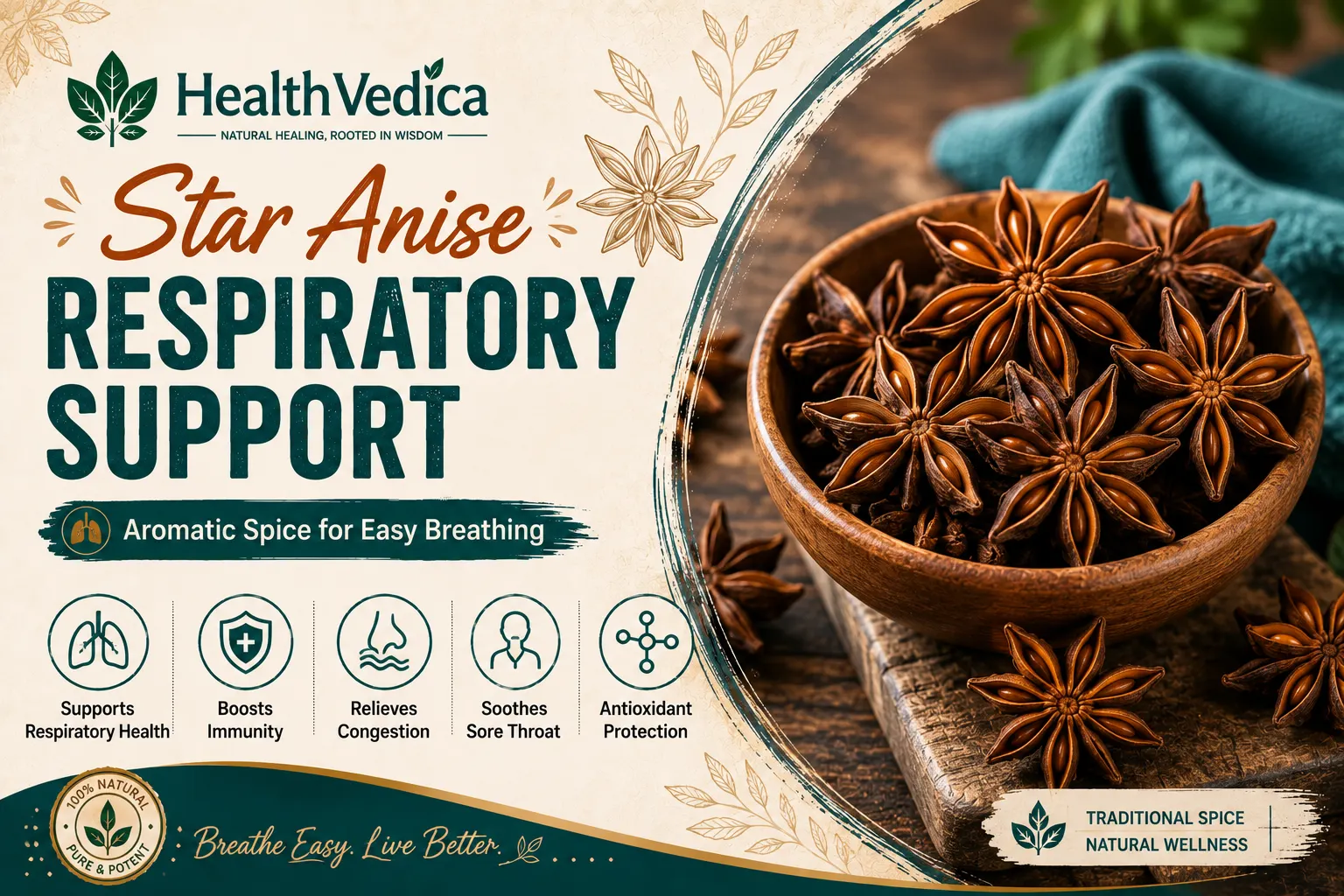
Star anise, known as Chakra Phool or Badiyan in India, is a beautiful star-shaped spice from the fruit of the evergreen tree Illicium verum, native to southern China and northeast Vietnam. Despite sharing a similar licorice-like flavor with the unrelated anise plant, star anise is botanically distinct and actually more potent and medicinally rich. It became globally famous when scientists discovered it contains shikimic acid — the primary compound used to produce oseltamivir (Tamiflu), the world's leading antiviral drug against influenza. This extraordinary connection between a kitchen spice and life-saving medicine highlights star anise's exceptional medicinal potential. In Indian cooking, chakra phool is a key component of garam masala, biryani, and spiced meat preparations.
📊 Nutritional Value Per 100g
| Nutrient | Amount | % Daily Value |
|---|---|---|
| Calories | 337 kcal | 17% |
| Carbohydrates | 50.0 g | 17% |
| Dietary Fiber | 14.6 g | 58% |
| Protein | 17.6 g | 35% |
| Fat | 15.9 g | 24% |
| Calcium | 646 mg | 65% |
| Iron | 36.96 mg | 205% |
| Magnesium | 170 mg | 43% |
| Phosphorus | 440 mg | 44% |
| Potassium | 1441 mg | 41% |
| Zinc | 5.3 mg | 35% |
| Manganese | 14.2 mg | 710% |
| Copper | 0.91 mg | 46% |
| Vitamin C | 21 mg | 35% |
| Vitamin B6 | 0.29 mg | 15% |
⚗️ Key Bioactive Compounds
Shikimic Acid is star anise's most globally significant compound — the precursor to Tamiflu (oseltamivir), the world's primary antiviral drug against influenza A and B. Trans-anethole is the primary volatile compound (responsible for licorice aroma) with potent antifungal, antibacterial, and estrogenic activities. Limonene provides antioxidant and anti-cancer effects. Foeniculin and estragole are additional volatile oils with medicinal properties. Quercetin and kaempferol are flavonoids with powerful antioxidant and anti-inflammatory activity. Gallic acid and other polyphenols provide antioxidant protection and antimicrobial effects.
🕉️ Ayurvedic Properties & Dosha Effect
In Ayurveda, star anise is classified as Ushna Veerya (hot in potency), pungent and sweet in taste. It primarily balances Vata and Kapha doshas and may mildly increase Pitta in excess. Star anise is used as Deepana (digestive stimulant), Kaphahara (phlegm reducer), Shwasahara (respiratory reliever), and Vatanulomana (regulates downward movement of Vata, relieving gas and constipation). It is often included in post-delivery formulations for new mothers to stimulate milk production and restore hormonal balance.
💚 Health & Healing Benefits
Antiviral Properties (Tamiflu Connection): Star anise's shikimic acid is the starting material for synthesizing oseltamivir (Tamiflu). Star anise extract itself shows antiviral activity against influenza viruses, herpes simplex, and other viral pathogens. Regular consumption may support antiviral immune defense, though it cannot replace medical antiviral treatment for serious infections.
Antibacterial & Antifungal: Trans-anethole and other compounds in star anise show potent activity against a broad spectrum of bacteria including drug-resistant strains like MRSA (Staphylococcus aureus), and fungi including Candida species. Research shows it may be as effective as some pharmaceutical antifungals for Candida infections.
Digestive Health: Star anise is a powerful carminative — it relieves gas, bloating, stomach cramps, and indigestion. It promotes the secretion of digestive enzymes and stimulates peristalsis (gut movement). Drinking star anise tea after heavy meals prevents bloating and aids rapid digestion.
Hormonal Balance (Estrogenic Effects): Trans-anethole has mild estrogenic activity, making star anise useful for menstrual regulation, menopausal symptom management, and stimulating breast milk production (galactagogue). However, this property also means it should be used cautiously by individuals with hormone-sensitive conditions.
Respiratory Benefits: Star anise's expectorant properties help clear phlegm from the respiratory tract. Its antimicrobial compounds fight respiratory pathogens. Star anise tea with honey is a traditional Ayurvedic remedy for cough, cold, and bronchitis.
Antioxidant Protection: Star anise's polyphenols (quercetin, kaempferol, gallic acid) are potent antioxidants that protect cells from oxidative damage, reduce inflammation, and may help prevent chronic diseases including cancer.
Blood Sugar Control: Research shows star anise extract improves insulin sensitivity and reduces fasting blood glucose, suggesting potential benefits for blood sugar management.
Sleep & Stress: Star anise has mild sedative properties through its effects on GABA receptors, promoting better sleep quality and mild relaxation. Star anise tea before bed is a traditional remedy for insomnia.
🏠 Ayurvedic & Home Remedies Using Star Anise
| Remedy | Preparation | Benefit |
|---|---|---|
| Star Anise Tea | Boil 2–3 star anise pods in 2 cups water for 10 min, strain, add honey and lemon | Digestion, respiratory health, antiviral, sleep |
| Chakra Phool Kadha (Immunity Booster) | Boil star anise + ginger + cinnamon + cloves + black pepper in water, add tulsi and honey | Viral infections, immunity, cold and flu |
| Star Anise Digestive Tea | Star anise + fennel seeds + cardamom boiled in water, drink after heavy meals | Gas, bloating, indigestion, IBS relief |
| Star Anise Sleep Tea | Boil 2 star anise pods in milk with cardamom, sweeten with honey, drink before bed | Insomnia, stress, anxiety relief |
| Star Anise Mouth Rinse | Cool star anise decoction, use as mouth rinse 2x daily | Bad breath, oral bacteria, gum health |
🍛 Indian Culinary Uses
Star anise, with its bold licorice fragrance, is used judiciously in Indian cuisine as its strong flavor can easily overpower dishes. It is a key ingredient in garam masala — the quintessential Indian spice blend. Star anise is essential in biryani and aromatic rice preparations where it imparts a deep, complex fragrance. It features in Nihari (slow-cooked meat stew), paya (trotters) curry, and rich kormas in North Indian and Mughlai cooking. In South India, it is used in Chettinad masala, one of India's most complex spice blends. Star anise also appears in spiced beverages like masala chai and Indian mulled drinks.
💡 Tips for Buying, Storing & Using
Quality check: Fresh star anise should be reddish-brown, whole, and intensely aromatic. Pale brown or broken pieces lack essential oil potency. The aroma should be strongly licorice-like when broken. Amount matters: Star anise is potent — 1–2 pods is usually sufficient for a pot of curry or biryani serving 4–6 people. Using too much makes dishes bitter and overpowering. Storage: Store whole star anise in an airtight glass container away from light and moisture. They retain potency for 1–2 years. Ground star anise degrades rapidly — avoid purchasing pre-ground. Remove before serving: Like bay leaves, star anise pods should be removed from dishes before serving as they are not pleasant to bite into whole.
⚠️ Precautions & Side Effects
Chinese/Indian star anise (Illicium verum) is safe in culinary and moderate medicinal amounts. Important warning: Japanese star anise (Illicium anisatum) is a different and TOXIC plant that can cause severe neurological side effects — never consume this variety. Star anise has estrogenic activity and should be avoided in large amounts by people with hormone-sensitive cancers (breast, ovarian, uterine). Pregnant women should restrict to culinary amounts as large doses may stimulate uterine contractions. People on anticoagulant medications should be cautious as star anise may have mild blood-thinning effects. Infants should never be given star anise tea as it has caused neurological harm in infants.