🌿 Introduction
Bay leaf, known as Tej Patta in India, is an aromatic leaf from the laurel tree used extensively in Indian, Mediterranean, and Southeast Asian cooking. In India, two types are commonly used: the Indian bay leaf (Cinnamomum tamala, also called Malabar leaf or tejpat) which belongs to the cinnamon family and has a cinnamon-clove-like aroma, and the Mediterranean bay laurel (Laurus nobilis) which is more common globally. The Indian tej patta is particularly prized in Ayurveda and Indian cuisine for its digestive, anti-diabetic, and respiratory healing properties. These fragrant leaves are added whole to dishes and removed before eating, releasing their essential oils and medicinal compounds into food.
📊 Nutritional Value Per 100g
| Nutrient | Amount | % Daily Value |
|---|---|---|
| Calories | 313 kcal | 16% |
| Carbohydrates | 74.9 g | 25% |
| Dietary Fiber | 26.3 g | 105% |
| Protein | 7.6 g | 15% |
| Fat | 8.4 g | 13% |
| Calcium | 834 mg | 83% |
| Iron | 43 mg | 239% |
| Magnesium | 120 mg | 30% |
| Potassium | 529 mg | 15% |
| Zinc | 3.7 mg | 25% |
| Vitamin A | 6185 IU | 124% |
| Vitamin C | 46.5 mg | 78% |
| Folate | 180 mcg | 45% |
| Niacin (B3) | 2.0 mg | 10% |
| Riboflavin (B2) | 0.42 mg | 25% |
⚗️ Key Bioactive Compounds
Bay leaf derives its medicinal power from a rich array of essential oils and phytochemicals. 1,8-Cineole (Eucalyptol) is the primary essential oil, comprising 40–50% of bay leaf oil, with powerful antimicrobial, anti-inflammatory, and bronchodilatory effects. Linalool and alpha-pinene are volatile terpenes with antibacterial and anti-anxiety properties. Eugenol (shared with cloves) provides analgesic and anti-inflammatory effects. Quercetin and rutin are flavonoids with powerful antioxidant and anti-diabetic properties. Parthenolide has migraine-preventive and anti-cancer properties. Catechins support cardiovascular health.
🕉️ Ayurvedic Properties & Dosha Effect
In Ayurveda, Tej Patta (Tamala) is classified as Ushna (hot in potency), pungent, sweet, and astringent in taste. It balances Vata and Kapha doshas and mildly increases Pitta. It is used as Deepana (kindles Agni), Hridya (heart tonic), Shothahara (reduces swelling), and Shwasahara (relieves breathing difficulty). Tej patta is used in classical Ayurvedic preparations for Prameha (diabetes), Shwasa (asthma), and Ajeerna (indigestion). Its oil is used externally for joint pain and skin infections.
💚 Health & Healing Benefits
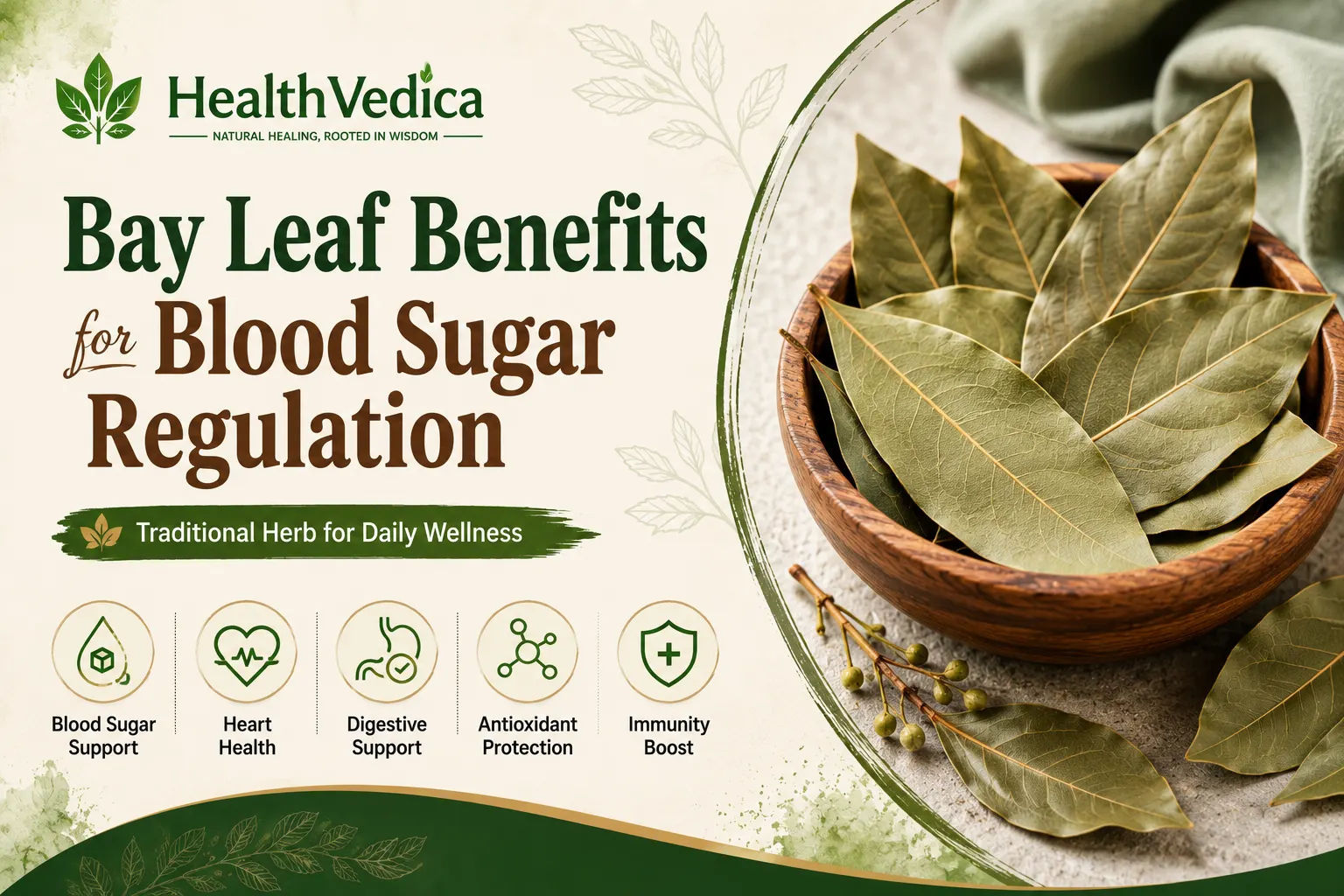
Blood Sugar Control (Diabetes Management): Bay leaf's most clinically significant benefit is its anti-diabetic action. Multiple human studies show that consuming 1–3 grams of bay leaf powder daily significantly reduces fasting blood glucose, postprandial blood sugar, and HbA1c (long-term blood sugar marker) in Type 2 diabetics. It improves insulin sensitivity through quercetin and other compounds.
Heart Health: Bay leaf's antioxidants (quercetin, rutin, catechins) prevent LDL cholesterol oxidation and reduce arterial inflammation, both primary causes of heart disease. It also reduces triglycerides and improves overall lipid profiles.
Digestive Support: Bay leaf stimulates digestive enzyme production and has carminative (gas-reducing) properties. It is a traditional remedy for bloating, indigestion, flatulence, and stomach cramps. Bay leaf tea is effective for relieving nausea.
Respiratory Health: The eucalyptol in bay leaf is a powerful bronchodilator and expectorant. Bay leaf steam inhalation relieves nasal congestion, asthma attacks, and bronchitis. Bay leaf oil chest rubs are a traditional remedy for respiratory congestion.
Antimicrobial & Anti-Fungal: Bay leaf essential oil shows strong activity against bacteria including Staphylococcus aureus, E. coli, and Candida fungal infections. It is used as a natural food preservative in traditional Indian cooking.
Anti-Anxiety & Stress Relief: Linalool in bay leaf has sedative and anxiolytic (anti-anxiety) effects. Bay leaf aromatherapy or bay leaf tea can help manage mild anxiety and promote relaxation.
Anti-Inflammatory & Pain Relief: Eugenol and parthenolide in bay leaf reduce inflammatory pathways and have analgesic properties comparable to some pharmaceutical pain relievers at tested doses.
Kidney Health: Bay leaf has mild diuretic properties that support kidney function and may help prevent kidney stone formation by reducing urinary creatinine and urea levels.
Anti-Cancer Potential: Parthenolide and catechins in bay leaf have shown ability to trigger cancer cell apoptosis (programmed death) in laboratory studies on breast, cervical, and colon cancer cells.
🏠 Ayurvedic & Home Remedies Using Bay Leaf
| Remedy | Preparation | Benefit |
|---|---|---|
| Bay Leaf Tea (Diabetes) | Boil 2–3 bay leaves in 2 cups water for 10 min, strain and drink twice daily | Blood sugar control, digestion, heart health |
| Bay Leaf Steam Inhalation | Boil 5–6 bay leaves in water, inhale steam with towel over head for 10 min | Cold, congestion, sinus relief, asthma |
| Bay Leaf Stress Relief Drink | Burn dried bay leaf in a heat-safe bowl, inhale the smoke for 10 minutes in a closed room | Anxiety, mental clarity, stress reduction |
| Bay Leaf Powder Capsule | Grind dried bay leaves to powder, take 1g twice daily with warm water | Blood sugar management, cholesterol control |
| Bay Leaf Oil for Joints | Infuse 10 bay leaves in 100ml sesame oil for 2 weeks, apply on painful joints | Arthritis, joint pain, muscle soreness |
| Bay Leaf Digestive Decoction | Boil bay leaf + ajwain + ginger in water, strain and drink after meals | Bloating, gas, indigestion, IBS |
🍛 Indian Culinary Uses
Tej patta is a foundational whole spice in Indian cooking. It is always added whole to hot oil at the beginning of tadka, releasing its aromatic oils before other ingredients are added. Bay leaves are essential in biryanis, pulao, and dum preparations where they impart a subtle cinnamon-clove fragrance. They are added to dals (lentil dishes), meat curries, kormas, and spiced rice. Tej patta is part of the whole spice combination (along with cardamom, cloves, and cinnamon) used in virtually all North Indian gravies. It is removed and discarded before serving as the whole leaf is not consumed.
💡 Tips for Best Use
Indian vs. Mediterranean bay leaf: Indian tej patta (Cinnamomum tamala) has a distinctive cinnamon-clove aroma and is preferred in Indian cooking. Mediterranean bay laurel has a more herbal, slightly menthol-like scent. Both have medicinal benefits but different flavor profiles — use Indian tej patta for authentic Indian recipes. Medicinal use: For blood sugar benefits, dry and powder the leaves and consume as tea or in capsule form (1–3g daily). Freshness: Dried bay leaves retain potency for 1–2 years. Discard when they lose their aroma. Never consume whole leaves: Whole bay leaves remain tough even after cooking and can cause choking or digestive injury — always remove before serving.
⚠️ Precautions & Side Effects
Bay leaf is safe in culinary amounts for everyone. Medicinal doses may enhance the effects of diabetes and blood pressure medications — monitor accordingly with a doctor. Some individuals are allergic to bay leaf (especially those with laurel family allergies). Bay leaf essential oil should not be taken internally without professional guidance. Pregnant and breastfeeding women should limit to culinary amounts.