🌿 Introduction
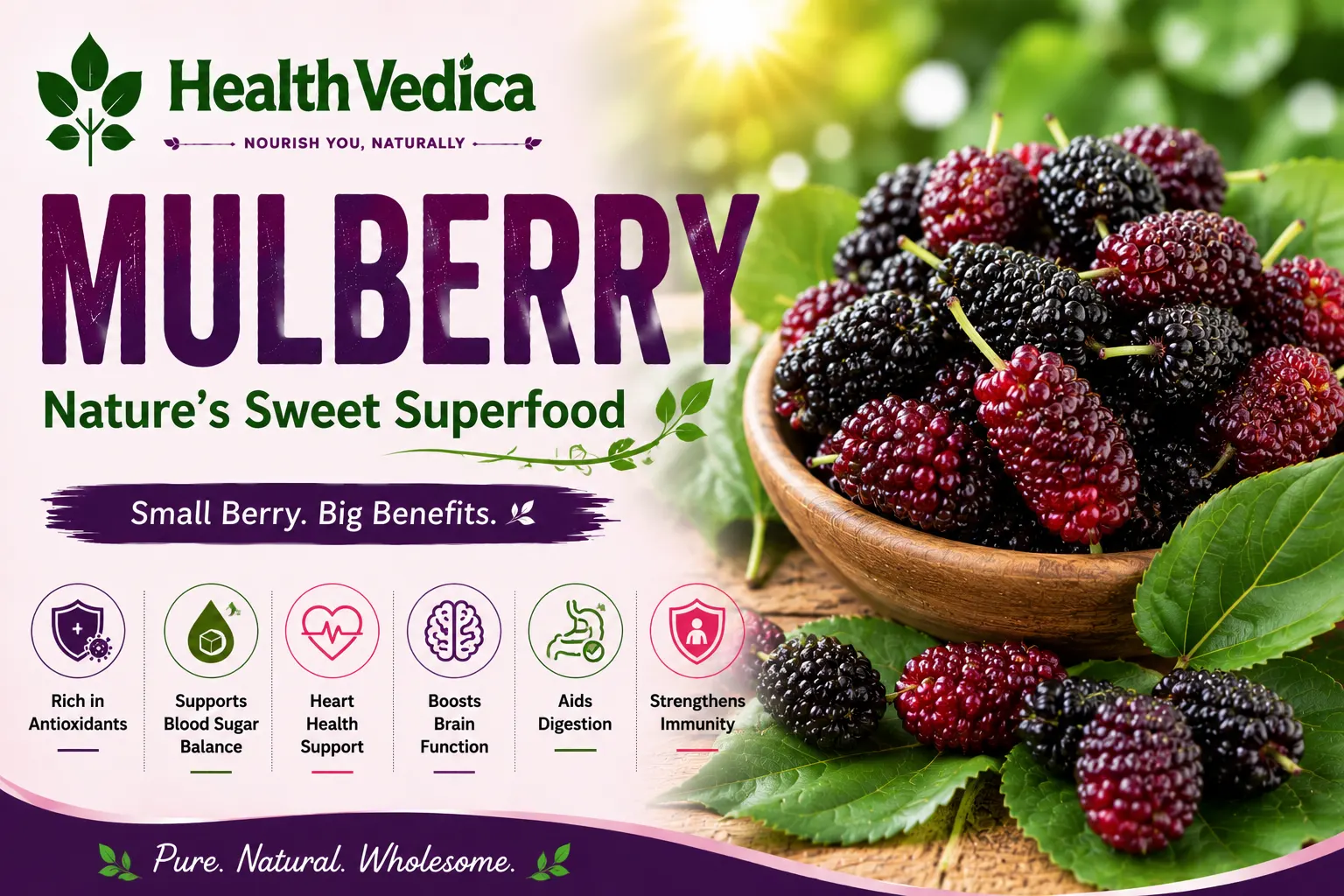
Mulberry (Morus species), popularly known as Shahtoot in India, is a delicious berry that has been treasured for centuries in Ayurveda, Traditional Chinese Medicine (TCM), and Persian medicine. While the leaves are famous as food for silkworms, the sweet fruits are packed with vitamin C, iron, dietary fiber, anthocyanins and powerful antioxidants. Mulberries are increasingly recognized for supporting healthy blood sugar metabolism, heart health, immunity, digestion and healthy ageing. Their naturally occurring compound 1-Deoxynojirimycin (DNJ) has attracted scientific attention for its potential role in slowing carbohydrate digestion and supporting healthy post-meal blood glucose levels.
📊 Nutritional Value Per 100g of Fresh Mulberries
| Nutrient | Amount | % Daily Value (DV) |
|---|---|---|
| Calories | 43 kcal | 2% |
| Protein | 1.4 g | 3% |
| Total Fat | 0.4 g | <1% |
| Carbohydrates | 9.8 g | 4% |
| Natural Sugars | 8.1 g | — |
| Dietary Fiber | 1.7 g | 6% |
| Vitamin C | 36.4 mg | 40% |
| Iron | 1.9 mg | 11% |
| Potassium | 194 mg | 4% |
| Calcium | 39 mg | 4% |
| Magnesium | 18 mg | 4% |
| Vitamin K | 7.8 mcg | 7% |
| Water | 87.7 g | — |
📉 Glycemic Index
Fresh mulberries have a low glycemic index of approximately 25. Their fiber content and naturally occurring DNJ compound may help slow carbohydrate digestion and support healthy blood sugar control when consumed as part of a balanced diet.
🧬 Powerful Plant Compounds
Mulberries are rich in anthocyanins, resveratrol, rutin, quercetin, chlorogenic acid, cyanidin-3-glucoside, lutein, zeaxanthin and the unique compound 1-Deoxynojirimycin (DNJ). These bioactive compounds contribute antioxidant, anti-inflammatory and cardioprotective effects.
💊 Vitamins & Minerals Explained
Mulberries provide vitamin C for immunity and collagen formation, iron for healthy red blood cells, potassium for blood pressure regulation, calcium for bone health and antioxidants that help protect cells against oxidative stress.
🕉️ Ayurvedic Properties & Dosha Effect
In Ayurveda, Shahtoot is considered Madhura (sweet) and slightly Kashaya (astringent) with a cooling potency (Sheeta Veerya). It is believed to nourish body tissues (Dhatus), support healthy blood (Rakta Dhatu), improve hydration and help balance Pitta and Vata Doshas. Excessive consumption may increase Kapha Dosha in susceptible individuals.
💚 Evidence-Based Health Benefits
Supports Healthy Blood Sugar: Mulberries contain DNJ, a naturally occurring compound that inhibits alpha-glucosidase enzymes, helping slow carbohydrate digestion and reduce post-meal blood sugar spikes.
Boosts Immunity: Vitamin C strengthens immune defenses and supports collagen production.
Heart Health: Anthocyanins, potassium and dietary fiber help support healthy blood pressure, cholesterol metabolism and blood vessel function.
Rich in Antioxidants: Dark-colored mulberries are especially rich in anthocyanins that help neutralize harmful free radicals.
Supports Healthy Blood Formation: Iron and vitamin C together aid healthy hemoglobin production and iron absorption.
Digestive Wellness: Fiber supports bowel regularity and promotes beneficial gut bacteria.
Healthy Skin: Vitamin C and polyphenols contribute to collagen formation and help protect skin from oxidative damage.
👨👩👧 Who Should Eat Mulberries?
Mulberries are suitable for children, students, athletes, older adults, pregnant women (after medical advice), individuals with active lifestyles and people seeking antioxidant-rich fruits.
🚫 Who Should Limit Mulberries?
Individuals taking diabetes medications should monitor blood glucose regularly because mulberries may modestly support glucose control. People with berry allergies should consume them cautiously.
🌿 Healthy Recipes & Home Remedies
Fresh Mulberry Bowl: Enjoy fresh mulberries with yogurt and mixed nuts for a wholesome breakfast.
Mulberry Smoothie: Blend mulberries with banana, oats and milk for a nutrient-rich drink.
Mulberry Chia Pudding: Combine fresh mulberries with chia seeds and Greek yogurt for a fiber-rich snack.
Homemade Mulberry Jam: Prepare a naturally sweetened jam using fresh mulberries and minimal jaggery.
🥗 Best Ways to Eat Mulberries
Fresh mulberries are nutritionally superior and can be eaten directly after washing. They may also be added to smoothies, salads, yogurt bowls, oatmeal and healthy desserts. Dried mulberries are more calorie-dense and should be consumed in moderate quantities.
🍽️ Best Food Combinations
Mulberries pair well with yogurt, almonds, walnuts, chia seeds, oats, kiwi, strawberries, flaxseeds and dark chocolate.
🧊 Storage Tips
Fresh mulberries are highly perishable. Refrigerate immediately and consume within 2–3 days. Wash only before eating to preserve freshness. Dried mulberries should be stored in an airtight container.
📅 Daily Recommended Intake
75–100 grams of fresh mulberries or about 20–30 grams of dried mulberries daily is appropriate for most healthy adults.
⚠️ Precautions
Unripe mulberries may cause mild stomach discomfort in some individuals. Consume only ripe fruits. People taking blood sugar-lowering medications should monitor glucose levels if consuming mulberries regularly.
🔬 Scientific Highlights
Research suggests that mulberry fruits and leaves contain DNJ, anthocyanins and resveratrol-like compounds that may support healthy glucose metabolism, cardiovascular health and antioxidant defense. Clinical studies continue to evaluate their role in diabetes management and metabolic health.
❌ Common Myths & Facts
❌ Myth: Mulberries are just like blackberries.
✅ Fact: Although they look similar, mulberries belong to a different plant family and contain unique compounds like DNJ.
❌ Myth: Only mulberry leaves are medicinal.
✅ Fact: Both the fruits and leaves contain beneficial nutrients and bioactive compounds.
❌ Myth: Mulberries contain too much sugar.
✅ Fact: Fresh mulberries have a relatively low glycemic index and are suitable for most healthy individuals when eaten in moderation.
🌍 Fun Facts
- Mulberry trees are the exclusive food source for silkworms, making them essential to silk production.
- There are more than 15 species of mulberries worldwide.
- Black mulberries generally contain the highest levels of anthocyanins.
- Mulberry trees can produce fruit for several decades.
- India is one of the world's major mulberry-growing countries because of its silk industry.