🌟 Introduction
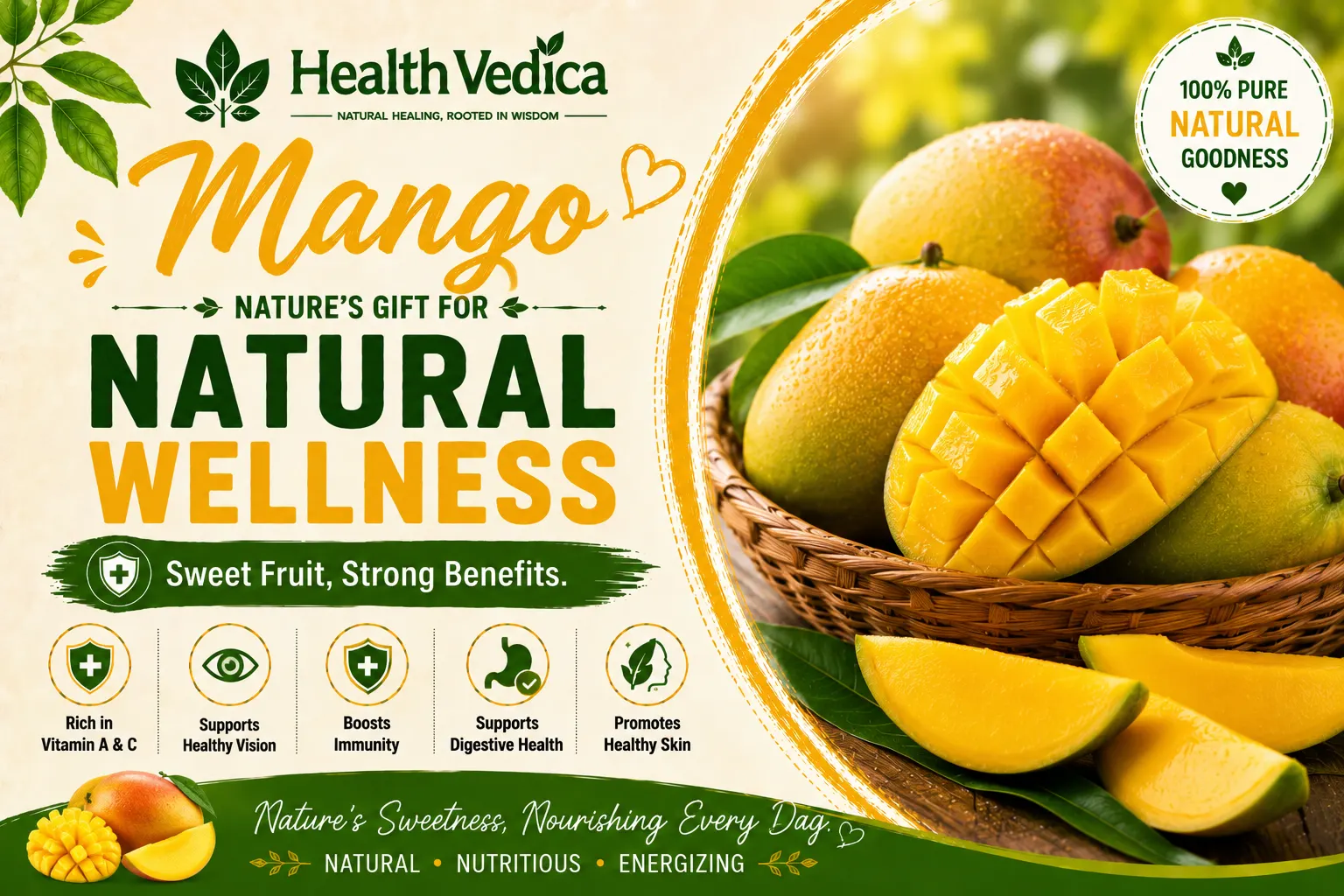
Mango, known as Aam in Hindi and revered as the 'King of Fruits,' is India's national fruit and the most beloved fruit in the country and across South and Southeast Asia. More than just a seasonal delicacy, mango is a genuine nutritional powerhouse packed with Vitamin C, Vitamin A (beta-carotene), folate, fiber, potassium, and a unique collection of phytonutrients including mangiferin, quercetin, and astragalin. India is the world's largest mango producer, offering over 1,000 varieties including Alphonso (Hapus), Kesar, Dasheri, Langra, Totapuri, and Himsagar.
📊 Nutritional Value Per 100g (Ripe)
| Nutrient | Amount | % Daily Value |
|---|---|---|
| Calories | 60 kcal | 3% |
| Carbohydrates | 15 g | 5% |
| Natural Sugars | 13.7 g | — |
| Fiber | 1.6 g | 6% |
| Protein | 0.8 g | 2% |
| Fat | 0.4 g | 1% |
| Vitamin C | 36.4 mg | 40% |
| Vitamin A | 1082 IU | 22% |
| Folate | 43 mcg | 11% |
| Vitamin B6 | 0.12 mg | 7% |
| Potassium | 168 mg | 5% |
| Copper | 0.11 mg | 12% |
| Mangiferin | High (unique antioxidant) | — |
| Beta-Carotene | 640 mcg | — |
| Zeaxanthin | 23 mcg | — |
📉 Glycemic Index
Ripe mango has a moderate glycemic index of 51–60 depending on variety and ripeness. Raw/green mango has a much lower GI due to higher starch and lower sugar content. While mango does contain natural sugars, its fiber, Vitamin C, and unique antioxidants help moderate blood sugar impact. Diabetics should limit to 100–150g per serving and prefer less ripe varieties.
☯️ Ayurvedic Properties & Dosha Effect
In Ayurveda, mango is one of the most revered fruits — a true Rasayana when consumed properly. Ripe sweet mango is Madhura (sweet), Guru (nourishing), Snigdha (unctuous), and Ushna (slightly warming). It nourishes all seven Dhatus (body tissues) and builds Ojas (vital essence). Sweet mango pacifies Vata and mildly pacifies Pitta. Ripe mango with milk (Aamras with milk) is a classic Indian Ojas-building preparation. Unripe mango is Amla (sour), Kashaya, and cooling — used for Pitta disorders and heat-related conditions. Ayurveda strictly warns against mixing mango with incompatible foods — especially curd, chili, and cold water — which disturb digestion.
💚 Health & Healing Benefits
Mangiferin, a unique xanthone antioxidant found almost exclusively in mango, is one of the most studied phytonutrients for anti-diabetic, anti-cancer, anti-inflammatory, and cardioprotective properties. It is more potent than many synthetic antioxidants. Vitamin A (22% DV as beta-carotene) supports eye health, immune function, and skin regeneration — making mango one of the best natural sources of this vitamin for vegetarians. Vitamin C (40% DV) provides immunity and collagen-building support. Folate (11% DV) supports DNA repair and is particularly beneficial during pregnancy. The unique enzymes in mango (amylases) help break down complex starch molecules, improving digestion significantly. Mango's high beta-carotene and zeaxanthin content protects eye health and reduces macular degeneration risk. Studies on mangiferin show promising anti-cancer activity against leukemia, colon, cervical, and breast cancers.
🥭 Mango-Based Drinks & Preparations
Aamras: Fresh mango pulp with cardamom and saffron — one of India's most beloved summer preparations and an Ojas-building Ayurvedic food. Aam Panna: Raw mango with cumin, black salt, and mint — a cooling, anti-heat stroke drink rich in electrolytes. Mango Lassi: Ripe mango + curd + cardamom — a probiotic-rich, protein-containing energy drink. Mango Shrikhand: Mango + strained yogurt — a high-protein, probiotic dessert. Dried Raw Mango Powder (Amchur): Concentrated Vitamin C and digestive acid — essential Indian spice.
🏠 Home Remedies with Mango
For Heatstroke Prevention: Drink Aam Panna (raw mango drink) before going out in summer — its electrolytes, Vitamin C, and cooling properties prevent heat exhaustion and heatstroke. For Acne & Skin: Apply ripe mango pulp on face for 10–15 minutes — beta-carotene, Vitamin C, and antioxidants brighten skin and reduce acne. For Eye Health: Regular mango consumption provides beta-carotene for night vision and zeaxanthin for macular protection. For Anemia: Eat mango with its iron content alongside its Vitamin C — enhances iron absorption. For Digestive Weakness: The amylase enzymes in mango help digest heavy meals. Eat a small piece of ripe mango after a large meal. For Boosting Immunity in Summer: Daily consumption of one mango during season provides significant Vitamins A and C for seasonal immunity.
🍽️ Indian Dietary Uses
Mango is consumed fresh, as Aamras, Aam Panna, Mango Lassi, Mango Shrikhand, Aam ka Achaar (pickle), Mango Chutney, Amchur (dried mango powder), Mango Ice Cream, Mango Halwa, and dried mango (Aam Papad/Mango Leather). India's Alphonso (Hapus), Kesar, Himsagar, Langra, and Dasheri are world-renowned mango varieties. Mango season (April–July) is one of India's most celebrated food events.