🌿 Introduction
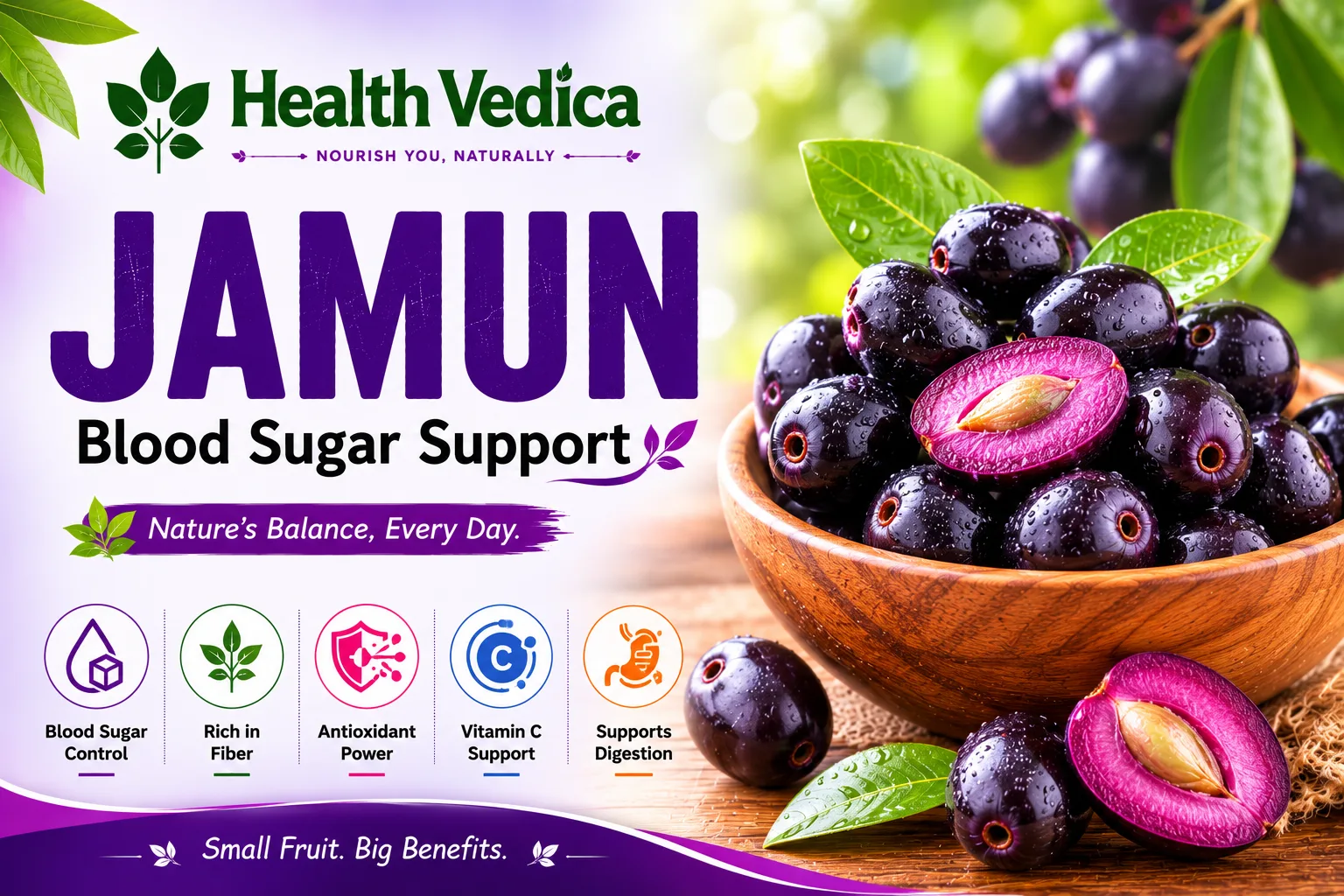
Jamun (Syzygium cumini), also known as Indian Blackberry or Java Plum, is one of India's most treasured medicinal fruits. Its deep purple colour comes from powerful anthocyanin antioxidants that protect cells against oxidative stress. In Ayurveda, almost every part of the Jamun tree—including the fruit, seeds, bark and leaves—is used for supporting digestion, blood sugar balance and overall health. The fruit is low in calories, rich in vitamin C, potassium and polyphenols, making it an excellent seasonal fruit for healthy living.
📊 Nutritional Value Per 100g of Jamun
| Nutrient | Amount | % Daily Value (DV) |
|---|---|---|
| Calories | 60 kcal | 3% |
| Protein | 0.7 g | 1% |
| Total Fat | 0.2 g | <1% |
| Carbohydrates | 15.6 g | 6% |
| Dietary Fiber | 0.9 g | 3% |
| Vitamin C | 18 mg | 20% |
| Potassium | 79 mg | 2% |
| Calcium | 19 mg | 2% |
| Iron | 0.2 mg | 1% |
| Magnesium | 15 mg | 4% |
| Water | 84 g | — |
📉 Glycemic Index
Jamun has a low glycemic index of approximately 25, making it one of the most diabetes-friendly fruits when consumed in moderation.
🧬 Powerful Plant Compounds
Jamun is exceptionally rich in anthocyanins, ellagic acid, gallic acid, jamboline, jambosine, quercetin, kaempferol, tannins and numerous flavonoids. These compounds contribute to antioxidant protection, metabolic health and anti-inflammatory activity.
💊 Vitamins & Minerals Explained
Jamun provides vitamin C for immunity and collagen production, potassium for healthy blood pressure, magnesium for muscle function and antioxidants that protect cells from free-radical damage.
🕉️ Ayurvedic Properties & Dosha Effect
According to Ayurveda, Jamun possesses Kashaya (astringent) and Madhura (sweet) tastes with a cooling potency (Sheeta Veerya). It helps balance Kapha and Pitta Doshas, supports digestion, promotes healthy metabolism and is traditionally recommended for maintaining healthy blood sugar levels.
💚 Evidence-Based Health Benefits
Supports Healthy Blood Sugar: Jamun seeds and fruit contain jamboline and polyphenols that have been investigated for supporting healthy glucose metabolism. They should complement—not replace—medical treatment.
Powerful Antioxidant: The dark purple pigments are rich in anthocyanins that help protect against oxidative stress and support healthy ageing.
Heart Health: Antioxidants, potassium and polyphenols contribute to healthy blood vessels and cardiovascular wellness.
Supports Digestion: The fruit's natural astringent properties have traditionally been used to support digestive comfort and bowel health.
Supports Immunity: Vitamin C and polyphenols contribute to normal immune function.
Supports Oral Health: Traditional practices have used Jamun leaves and bark to promote healthy gums and oral hygiene.
May Support Liver Health: Experimental studies suggest hepatoprotective effects through antioxidant mechanisms.
👨👩👧 Who Should Eat Jamun?
Jamun is ideal for individuals seeking antioxidant-rich seasonal fruits, those focusing on healthy blood sugar management, older adults, athletes and anyone wanting to support heart and digestive health.
🚫 Who Should Limit Jamun?
People taking diabetes medications should monitor blood sugar, as consuming large amounts of Jamun alongside medication may contribute to low blood glucose. Individuals with very sensitive stomachs may experience mild acidity if eaten excessively.
🌿 Healthy Recipes & Traditional Remedies
Fresh Jamun Bowl: Enjoy ripe Jamun with a pinch of black salt for a refreshing seasonal snack.
Jamun Smoothie: Blend fresh Jamun with yogurt and chia seeds for an antioxidant-rich breakfast.
Jamun Juice: Prepare fresh juice without added sugar to retain maximum nutritional value.
Jamun Seed Powder: Traditionally used in Ayurveda under professional guidance for supporting healthy glucose metabolism.
🥗 Best Ways to Eat Jamun
Fresh ripe Jamun provides the highest nutritional value. It can also be enjoyed in smoothies, fruit bowls, salads and homemade juices without added sugar.
🍽️ Best Food Combinations
Jamun pairs well with amla, pomegranate, mint, yogurt, chia seeds, flaxseeds and lemon for nutrient-rich recipes.
🧊 Storage Tips
Fresh Jamun is highly perishable and should be refrigerated immediately after purchase. Consume within 2–3 days for the best flavour and nutritional quality.
📅 Daily Recommended Intake
100–150 grams (approximately one small bowl) of fresh Jamun per day is appropriate for most healthy adults during the season.
⚠️ Precautions
Avoid consuming excessive amounts on an empty stomach if it causes digestive discomfort. Individuals taking diabetes medications should monitor blood sugar levels regularly and consult their healthcare provider before using Jamun seed supplements.
🔬 Scientific Highlights
Modern studies have demonstrated antioxidant, anti-inflammatory, antimicrobial and glucose metabolism-supporting properties of Jamun. Anthocyanins and ellagic acid are among the major compounds responsible for its health-promoting effects. While research is promising, larger human clinical trials are still needed for many traditional uses.
📚 Traditional Ayurvedic References
- Charaka Samhita
- Sushruta Samhita
- Bhavaprakasha Nighantu
- Dhanvantari Nighantu
- Ayurvedic Pharmacopoeia of India (API)
❌ Common Myths & Facts
❌ Myth: Jamun cures diabetes.
✅ Fact: Jamun may support healthy blood sugar management, but it is not a cure and should never replace prescribed medication.
❌ Myth: Only Jamun seeds are beneficial.
✅ Fact: The fruit itself is rich in vitamin C, anthocyanins and polyphenols, making it highly nutritious.
❌ Myth: People with diabetes can eat unlimited Jamun.
✅ Fact: Although Jamun has a low glycemic index, moderation remains important as part of an overall balanced diet.
🌍 Fun Facts
- Jamun trees can live for more than 100 years and produce fruit for decades.
- The deep purple pigment of Jamun is one of the richest natural sources of anthocyanins.
- Every part of the Jamun tree—fruit, seed, bark and leaves—is used in traditional Ayurvedic medicine.
- Jamun is the state fruit of Telangana in India.