🌟 Introduction
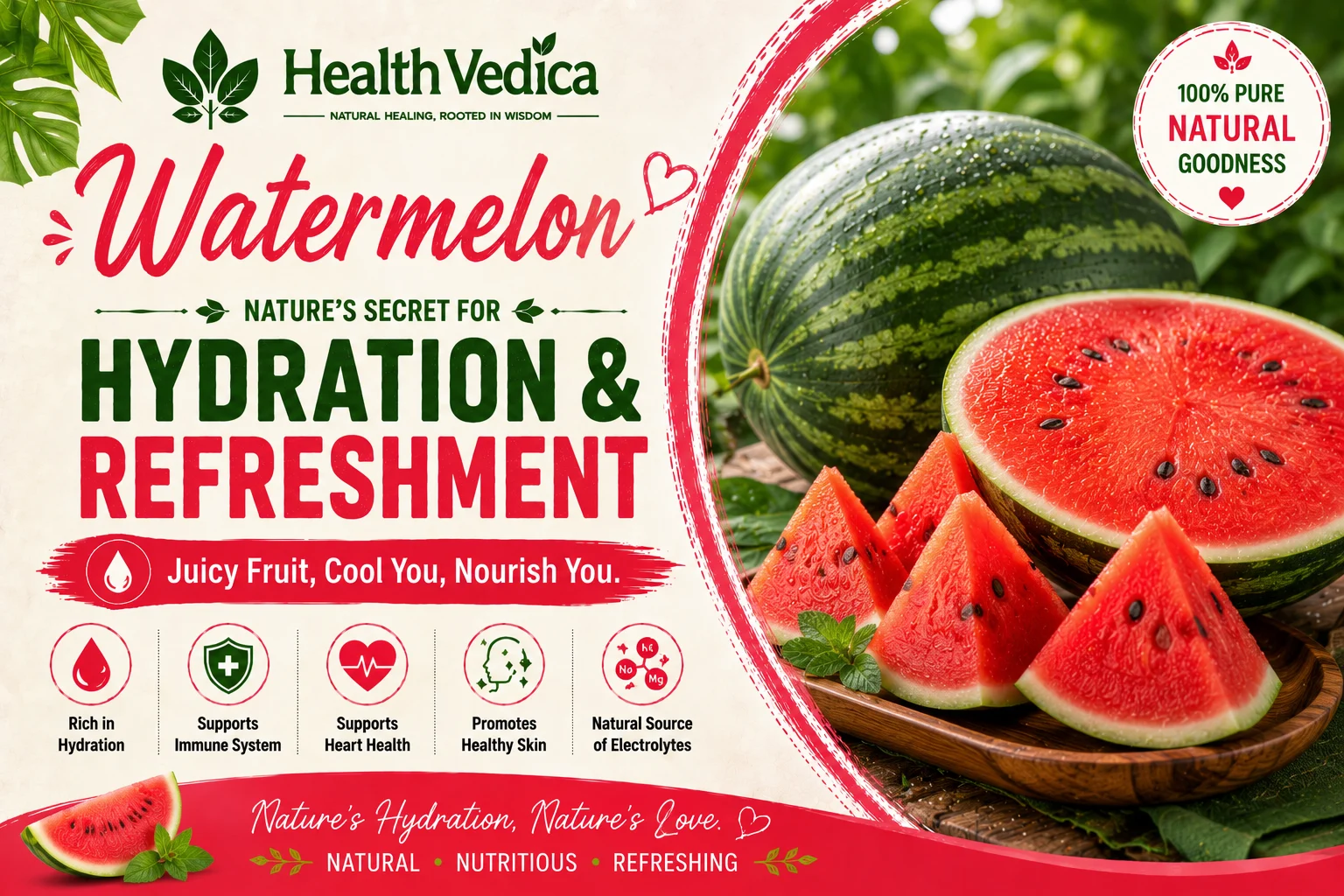
Watermelon, known as Tarbooz in Hindi, is India's most refreshing summer fruit, composed of over 92% water — the highest water content of any solid food. Beyond its extraordinary hydration properties, watermelon is a rich source of lycopene (one of the most concentrated natural sources available), citrulline, Vitamins A and C, and potassium. It is a natural blood pressure remedy, athletic performance enhancer, anti-cancer food, and kidney cleanser all in one delicious package.
📊 Nutritional Value Per 100g
| Nutrient | Amount | % Daily Value |
|---|---|---|
| Calories | 30 kcal | 2% |
| Water | 91.4 g | — |
| Carbohydrates | 7.6 g | 3% |
| Natural Sugars | 6.2 g | — |
| Fiber | 0.4 g | 1% |
| Protein | 0.6 g | 1% |
| Fat | 0.2 g | 0% |
| Vitamin C | 8.1 mg | 9% |
| Vitamin A | 569 IU | 11% |
| Potassium | 112 mg | 3% |
| Magnesium | 10 mg | 2% |
| Lycopene | 4532 mcg | — |
| Citrulline (Amino Acid) | High (especially rind) | — |
| Beta-Carotene | 303 mcg | — |
📉 Glycemic Index
Watermelon has a relatively high glycemic index of 72–80 — but a very low glycemic load (GL) of just 4–5 due to its extremely high water content (92%) and minimal carbohydrates per serving. This means watermelon's actual impact on blood sugar in normal serving sizes is minimal. A typical serving (150g) has only 9g of carbohydrates, which is less than most 'diabetes-safe' foods. Diabetics can enjoy watermelon in moderate portions.
☯️ Ayurvedic Properties & Dosha Effect
In Ayurveda, watermelon (Tarbuja) is Sheeta (deeply cooling), Madhura (sweet), Laghu (light), and Kleda-kara (moisture-producing). It is one of the supreme Pitta pacifiers and is specifically recommended during Indian summers. It cools the liver, reduces body heat, quenches thirst, and acts as a natural diuretic. It may increase Kapha when consumed in excess. Ayurveda advises eating watermelon alone — not with other foods — and never chilled (at room temperature for maximum digestive benefit).
💚 Health & Healing Benefits
Watermelon contains the highest concentration of lycopene among fresh fruits (4532 mcg/100g), providing exceptional protection against prostate cancer, heart disease, and skin damage from UV radiation. Lycopene in watermelon is more bioavailable than from tomatoes due to watermelon's unique water matrix. Citrulline, an amino acid abundant in watermelon flesh and rind, is converted to arginine in the body, which relaxes blood vessels and improves blood flow — making watermelon a natural remedy for high blood pressure and erectile dysfunction. Athletic performance research shows that drinking watermelon juice before exercise reduces muscle soreness and heart rate recovery time significantly. Watermelon's 92% water content and electrolytes make it one of the best natural rehydration foods during Indian summers. Its potassium and magnesium content supports heart rhythm and muscle function.
🍉 Watermelon Juice & Drinks
Plain watermelon juice: Blend and strain for a pure, refreshing lycopene-rich drink. Watermelon-mint-lime juice: A classic Indian summer cooler with digestive benefits. Watermelon-coconut water blend: The ultimate natural sports rehydration drink. Watermelon rind juice: Often discarded, the white rind contains the highest citrulline content — blend with lime for a blood pressure-reducing tonic. Note: Drink watermelon juice fresh and consume within 30 minutes of preparation for maximum benefit.
🏠 Home Remedies with Watermelon
For Heatstroke & Dehydration: Eat watermelon or drink fresh watermelon juice — its 92% water and electrolyte content provides rapid rehydration superior to many commercial sports drinks. For Blood Pressure: Eat 2 cups of watermelon daily or drink watermelon juice — citrulline reduces arterial stiffness and lowers blood pressure. For Kidney Cleansing: Fresh watermelon juice acts as a natural diuretic, flushing kidneys and reducing risk of kidney stones. For UTI: Drink 2 glasses of watermelon juice daily during UTI — increases urinary volume, flushing out bacteria. For Muscle Recovery: Drink fresh watermelon juice 1–2 hours before or immediately after exercise to reduce soreness. For Sunburn: Apply watermelon juice on sunburned skin — lycopene and cooling properties reduce inflammation and skin damage.
🍽️ Indian Dietary Uses
Watermelon is eaten fresh as fruit, in fruit chaat, juices, smoothies, and fruit salads. Watermelon rind sabzi (Tarbooz ke Chhilke ki Sabzi) is a traditional Indian recipe that uses the nutritious white rind. Watermelon seeds (roasted) are eaten as a nutritious snack rich in zinc, magnesium, and healthy fats.