🌿 Introduction
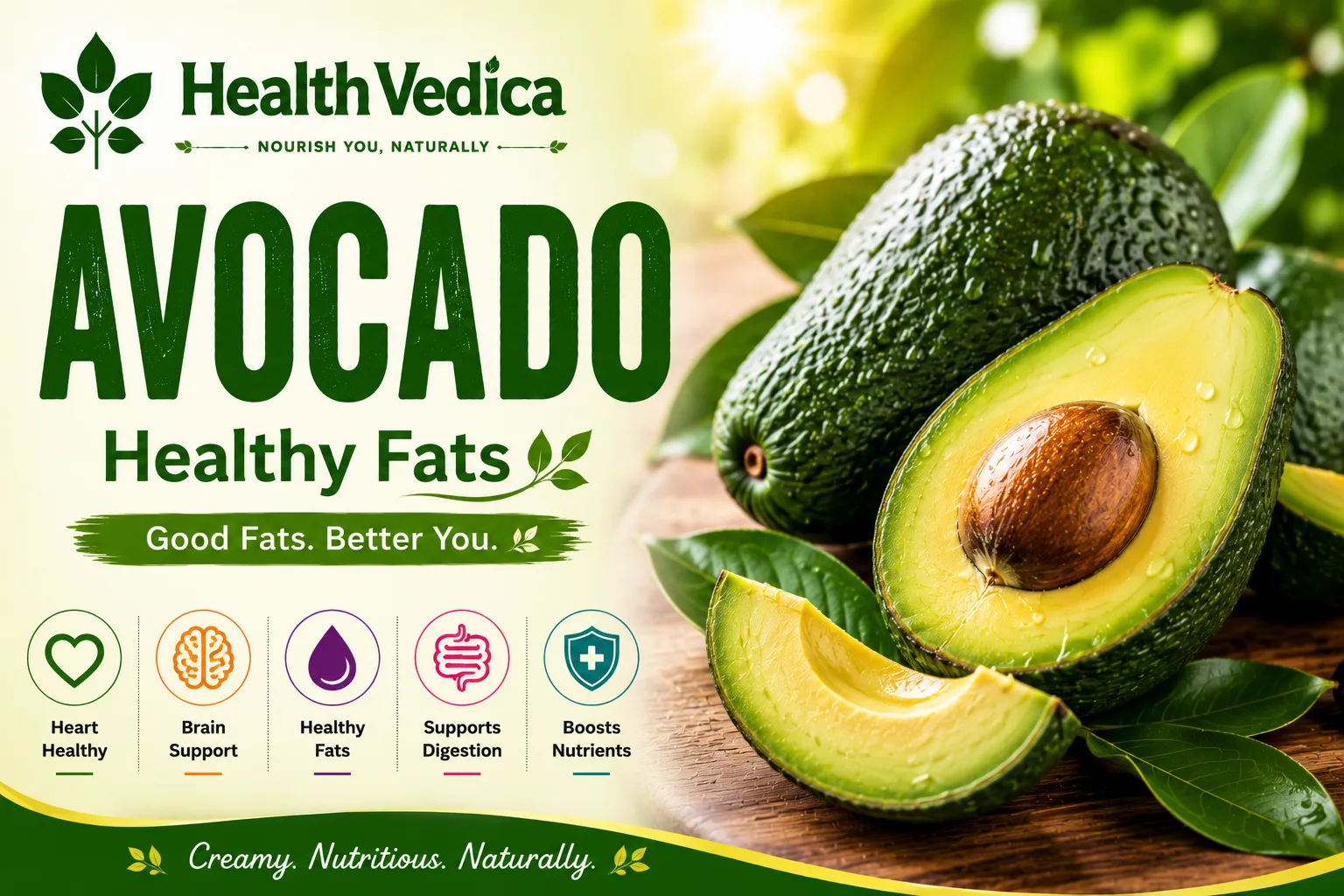
Avocado (Persea americana), often called Butter Fruit in India, is one of the world's most nutrient-dense fruits. Unlike most fruits, avocados are naturally rich in heart-healthy monounsaturated fats instead of carbohydrates. Native to Central America, avocados have become increasingly popular in India due to their creamy texture, mild flavor and impressive nutritional profile. They provide healthy fats, dietary fiber, potassium, folate, vitamin E and numerous antioxidants that support heart health, brain function, eye health and healthy ageing.
📊 Nutritional Value Per 100g of Avocado
| Nutrient | Amount | % Daily Value (DV) |
|---|---|---|
| Calories | 160 kcal | 8% |
| Protein | 2.0 g | 4% |
| Total Fat | 14.7 g | 19% |
| Monounsaturated Fat | 9.8 g | — |
| Carbohydrates | 8.5 g | 3% |
| Dietary Fiber | 6.7 g | 24% |
| Potassium | 485 mg | 10% |
| Folate | 81 mcg | 20% |
| Vitamin E | 2.1 mg | 14% |
| Vitamin K | 21 mcg | 18% |
| Vitamin C | 10 mg | 11% |
| Magnesium | 29 mg | 7% |
| Lutein + Zeaxanthin | 271 mcg | — |
| Water | 73.2 g | — |
📉 Glycemic Index
Avocado has an extremely low glycemic index of around 15. Its high fiber and healthy fat content make it one of the best fruits for maintaining stable blood sugar levels.
🧬 Powerful Plant Compounds
Avocados are rich in oleic acid, lutein, zeaxanthin, beta-sitosterol, glutathione, carotenoids, chlorophyll, vitamin E and numerous polyphenols. These bioactive compounds help protect cells from oxidative stress and support cardiovascular, eye and brain health.
💊 Vitamins & Minerals Explained
Avocados provide potassium for healthy blood pressure, folate for DNA synthesis and pregnancy health, vitamin E for antioxidant protection, vitamin K for bones and blood clotting, magnesium for muscle and nerve function, and dietary fiber for digestive wellness.
🕉️ Ayurvedic Properties & Dosha Effect
Although avocado is not traditionally described in classical Ayurvedic texts, Ayurvedic practitioners generally classify it as Madhura (sweet) and Snigdha (unctuous) with a mildly cooling nature. It helps nourish body tissues and may balance Vata Dosha. Excessive intake may aggravate Kapha Dosha due to its rich fat content.
💚 Evidence-Based Health Benefits
Supports Heart Health: Avocados are among the richest natural sources of heart-healthy monounsaturated fats that help maintain healthy LDL and HDL cholesterol levels.
Excellent for Brain Health: Healthy fats, vitamin E and folate support normal brain function and cognitive health throughout life.
Supports Eye Health: Lutein and zeaxanthin accumulate in the retina and may help reduce the risk of age-related macular degeneration.
Improves Nutrient Absorption: The healthy fats in avocado significantly improve the absorption of fat-soluble vitamins A, D, E and K from vegetables.
Supports Weight Management: Despite being calorie-dense, avocado promotes satiety because of its fiber and healthy fats, helping reduce overall calorie intake.
Promotes Digestive Health: Nearly 7 grams of fiber per 100 grams nourish beneficial gut bacteria and support regular bowel movements.
Supports Healthy Pregnancy: Folate plays an essential role in fetal brain and neural tube development.
👨👩👧 Who Should Eat Avocado?
Avocados are ideal for children, athletes, pregnant women, older adults, individuals following Mediterranean diets, vegetarians, people seeking heart-healthy foods and those managing blood sugar.
🚫 Who Should Limit Avocado?
Individuals with chronic kidney disease should consult their healthcare provider due to avocado's relatively high potassium content. People following calorie-restricted diets should account for its higher energy density.
🌿 Healthy Recipes & Home Remedies
Classic Guacamole: Mash avocado with tomatoes, onions, coriander, lemon juice and black pepper for a heart-healthy dip.
Avocado Smoothie: Blend avocado with spinach, banana and milk or yogurt for a creamy nutrient-rich breakfast.
Avocado Toast: Spread mashed avocado over whole-grain bread and top with seeds for a balanced meal.
Butter Fruit Salad: Combine avocado with cucumber, tomatoes, olives and lemon dressing for a refreshing lunch.
🥗 Best Ways to Eat Avocado
Eat ripe avocado fresh without cooking whenever possible to preserve heat-sensitive nutrients. It can also be added to salads, wraps, sandwiches, smoothies and healthy desserts.
🍽️ Best Food Combinations
Avocado pairs well with tomatoes, spinach, eggs, salmon, chickpeas, whole grains, chia seeds, pumpkin seeds, lemon and olive oil.
🧊 Storage Tips
Ripen avocados at room temperature. Once ripe, refrigerate for up to 3–5 days. Sprinkle cut avocado with lemon juice to reduce browning before refrigeration.
📅 Daily Recommended Intake
Half to one medium avocado (75–150 grams) daily is suitable for most healthy adults as part of a balanced diet.
⚠️ Precautions
People with latex allergy may occasionally experience cross-reactivity with avocado. Individuals taking warfarin should maintain consistent vitamin K intake rather than avoiding avocado completely. Never feed avocado leaves, seeds or skin to pets, especially birds, as they contain persin which may be toxic to animals.
🔬 Scientific Highlights
Numerous human clinical studies demonstrate that regular avocado consumption improves diet quality, supports cardiovascular health, enhances satiety and increases absorption of fat-soluble nutrients. The Mediterranean diet frequently includes avocado as a healthy fat source associated with reduced cardiovascular risk.
❌ Common Myths & Facts
❌ Myth: Avocados are fattening and should be avoided.
✅ Fact: Avocados contain predominantly heart-healthy monounsaturated fats that support satiety and overall health when eaten in appropriate portions.
❌ Myth: Avocados increase cholesterol.
✅ Fact: Research consistently shows that avocados help improve healthy cholesterol profiles when incorporated into balanced diets.
❌ Myth: Only athletes benefit from avocados.
✅ Fact: Children, pregnant women, older adults and anyone seeking better heart, brain and eye health can benefit from moderate avocado consumption.
🌍 Fun Facts
- Avocado is technically a berry with a single large seed.
- More than 70% of the fat in avocado is heart-healthy monounsaturated fat.
- Avocados naturally contain more potassium than bananas per 100 grams.
- The name 'Avocado' originated from the Aztec word āhuacatl.
- India has successfully started cultivating avocados in Karnataka, Tamil Nadu, Kerala, Maharashtra and Sikkim.