🌟 Introduction
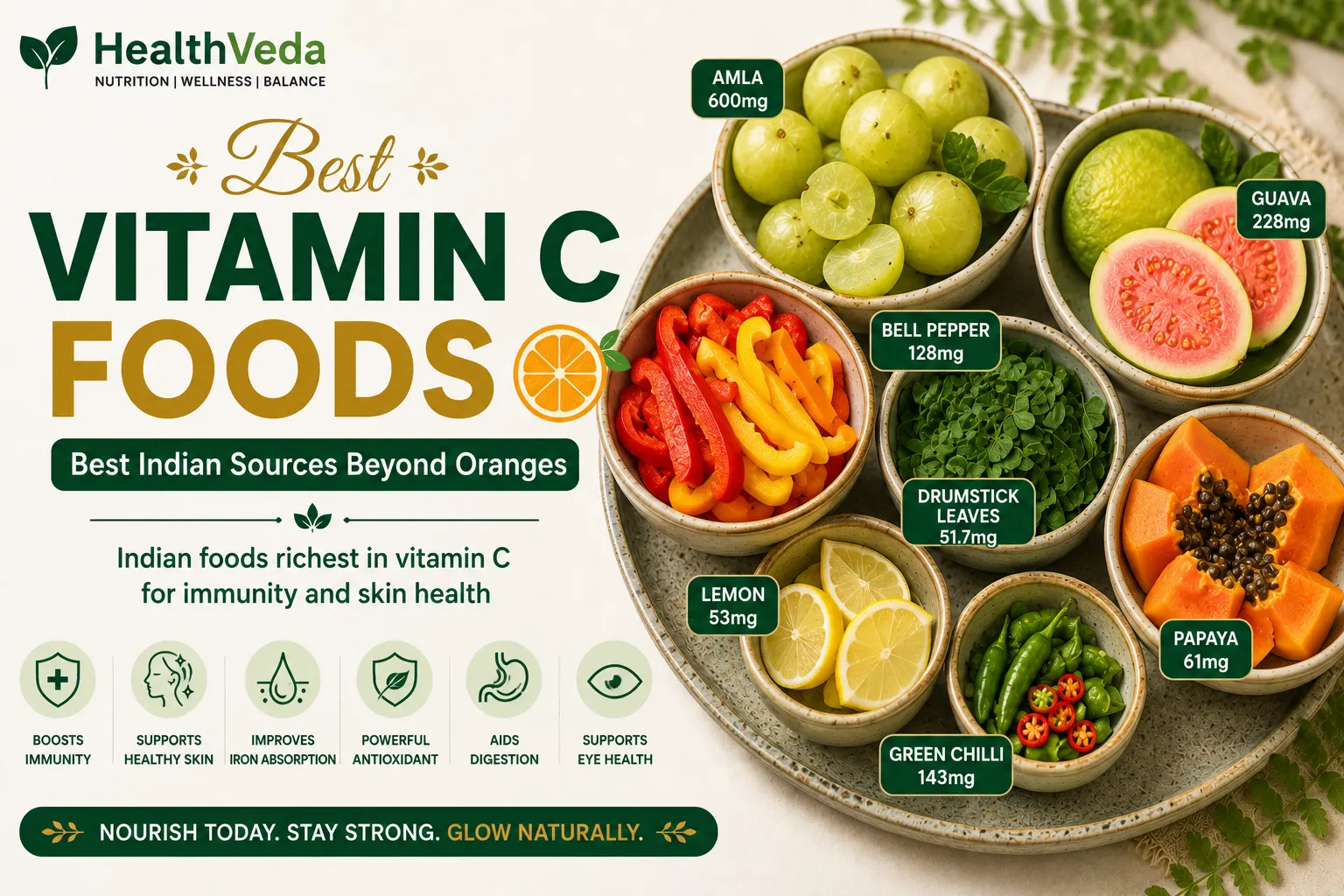
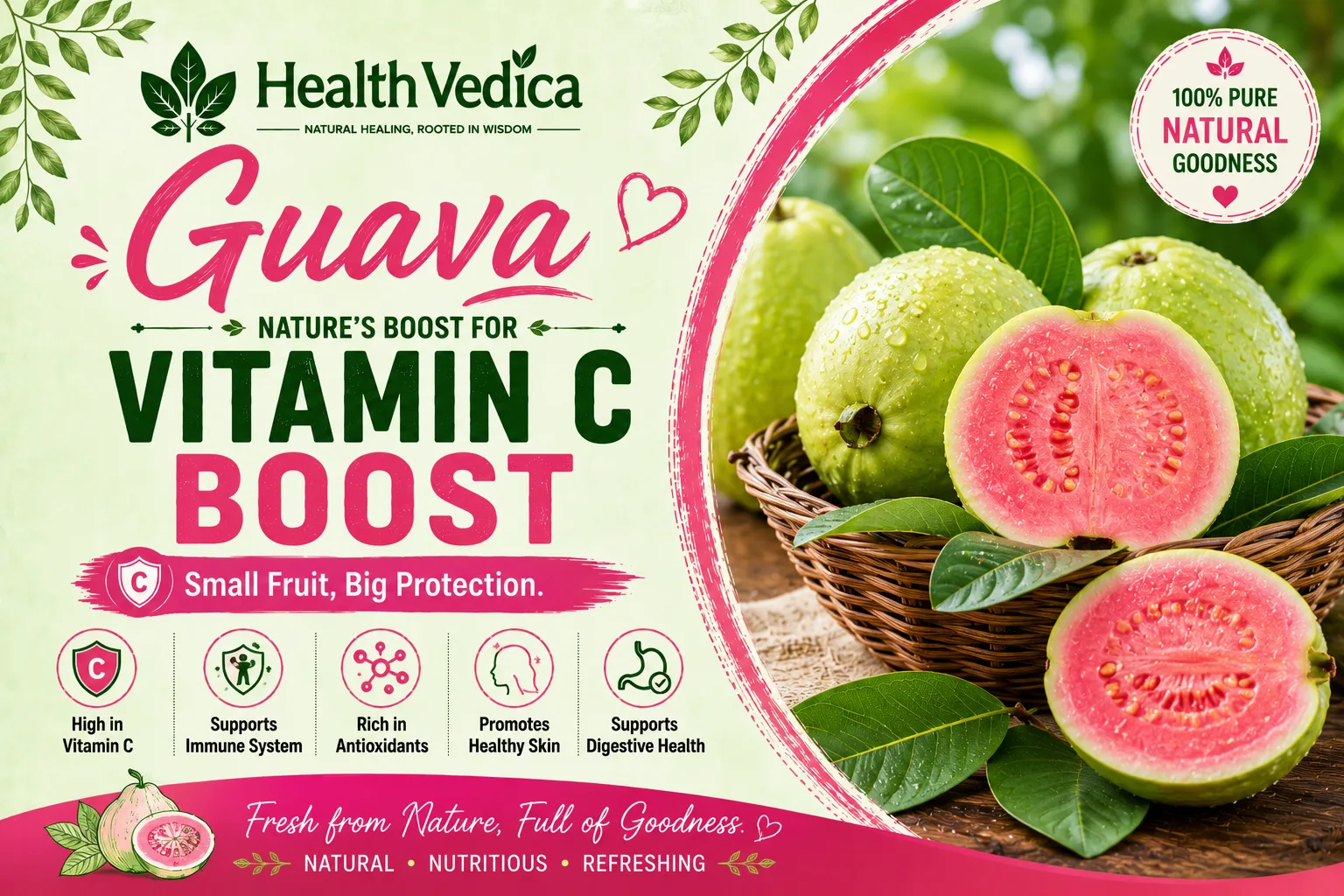
Guava, known as Amrood in Hindi, Peru in Marathi, and Koyya Pandu in Telugu, is one of India's most beloved tropical fruits and a true nutritional superstar. It contains 4 to 5 times more Vitamin C than an orange, making it one of the richest plant-based Vitamin C sources available. Rich in lycopene, quercetin, fiber, folate, and potassium, guava supports immunity, blood sugar control, heart health, and digestive wellness. India is one of the world's top guava producers and this affordable fruit deserves its title as the 'Poor Man's Apple.'
📊 Nutritional Value Per 100g
| Nutrient | Amount | % Daily Value |
|---|---|---|
| Calories | 68 kcal | 3% |
| Carbohydrates | 14.3 g | 5% |
| Natural Sugars | 8.9 g | — |
| Fiber | 5.4 g | 19% |
| Protein | 2.6 g | 5% |
| Fat | 0.9 g | 1% |
| Vitamin C | 228 mg | 253% |
| Vitamin A | 624 IU | 12% |
| Folate | 49 mcg | 12% |
| Potassium | 417 mg | 12% |
| Lycopene (Pink Guava) | 5204 mcg | — |
| Quercetin | Significant | — |
| Manganese | 0.15 mg | 7% |
📉 Glycemic Index
Guava has a low glycemic index of 12–24, one of the lowest among all fruits. Its very high fiber content (5.4g/100g) significantly slows sugar absorption. Guava leaf extract has been clinically shown to reduce post-meal blood glucose spikes by up to 10% — making guava not just safe but actively therapeutic for diabetics.
☯️ Ayurvedic Properties & Dosha Effect
In Ayurveda, guava is classified as Kashaya (astringent), Madhura (sweet), and Amla (sour). It primarily pacifies Pitta and Kapha doshas. Ripe guava is Snigdha (unctuous) and nourishing. Unripe guava is astringent and useful for treating diarrhea and bleeding gums. Guava is one of Ayurveda's recommended fruits for Prameha (diabetes) management and is classified as a natural blood purifier. Eating guava on an empty stomach in the morning is recommended in Ayurvedic nutrition for maximum digestive benefit.
💚 Health & Healing Benefits
Guava's Vitamin C content (228 mg/100g — 253% DV) is phenomenal — it provides 2.5 times the daily Vitamin C requirement in a single 100g serving. This makes guava one of the most powerful natural immunity boosters available. Pink guava contains 5204 mcg of lycopene per 100g — comparable to tomatoes — offering strong cancer prevention properties particularly for prostate and breast cancer. The high fiber (5.4g) supports healthy gut motility, feeds beneficial bacteria, and reduces risk of colorectal cancer. Guava leaves are equally or more medicinal than the fruit — guava leaf tea has clinical evidence for blood sugar reduction, anti-diarrheal activity, and reducing menstrual pain. Potassium (417 mg/100g) supports blood pressure regulation and heart health. Quercetin provides anti-inflammatory and antihistamine benefits.
🍵 Guava Leaf Tea — A Powerful Remedy
Boil 5–6 fresh guava leaves in 2 cups water for 10 minutes. Strain and drink warm. This tea is clinically proven to: reduce post-meal blood sugar by up to 10%, relieve diarrhea and gut inflammation, reduce menstrual cramps and pain, fight oral bacteria and bad breath, and provide anti-cancer polyphenols. Guava leaf tea is one of India's most underutilized natural remedies.
🏠 Home Remedies with Guava
For Diabetes: Eat one ripe guava with seeds daily or drink guava leaf tea before meals — both have strong evidence for blood sugar reduction. For Diarrhea: Boil guava leaves in water and drink as tea, or eat unripe guava — the tannins are powerful astringents that stop diarrhea quickly. For Toothache & Gum Disease: Chew fresh guava leaves or make a paste — guava leaves have antibacterial properties that reduce gum inflammation and relieve toothache. For Dengue: Guava leaf extract has shown evidence of increasing platelet count and is a popular traditional remedy during dengue fever in India. For Skin: Apply guava pulp as a face pack — the Vitamin C brightens skin and lycopene provides antioxidant protection. For Weight Loss: Eat guava as a mid-meal snack — its high fiber keeps you full, while the low calorie count and blood sugar-stabilizing properties prevent unnecessary snacking.
🍽️ Indian Dietary Uses
Guava is eaten raw with black salt and chili powder (classic Indian street snack), in fruit chaat, guava juice, guava murabba, guava jam/jelly, guava halwa, and as a pickle. Guava leaf tea is a traditional home remedy used across India. Both white and pink flesh guavas are commonly available in Indian markets.