🌿 Introduction
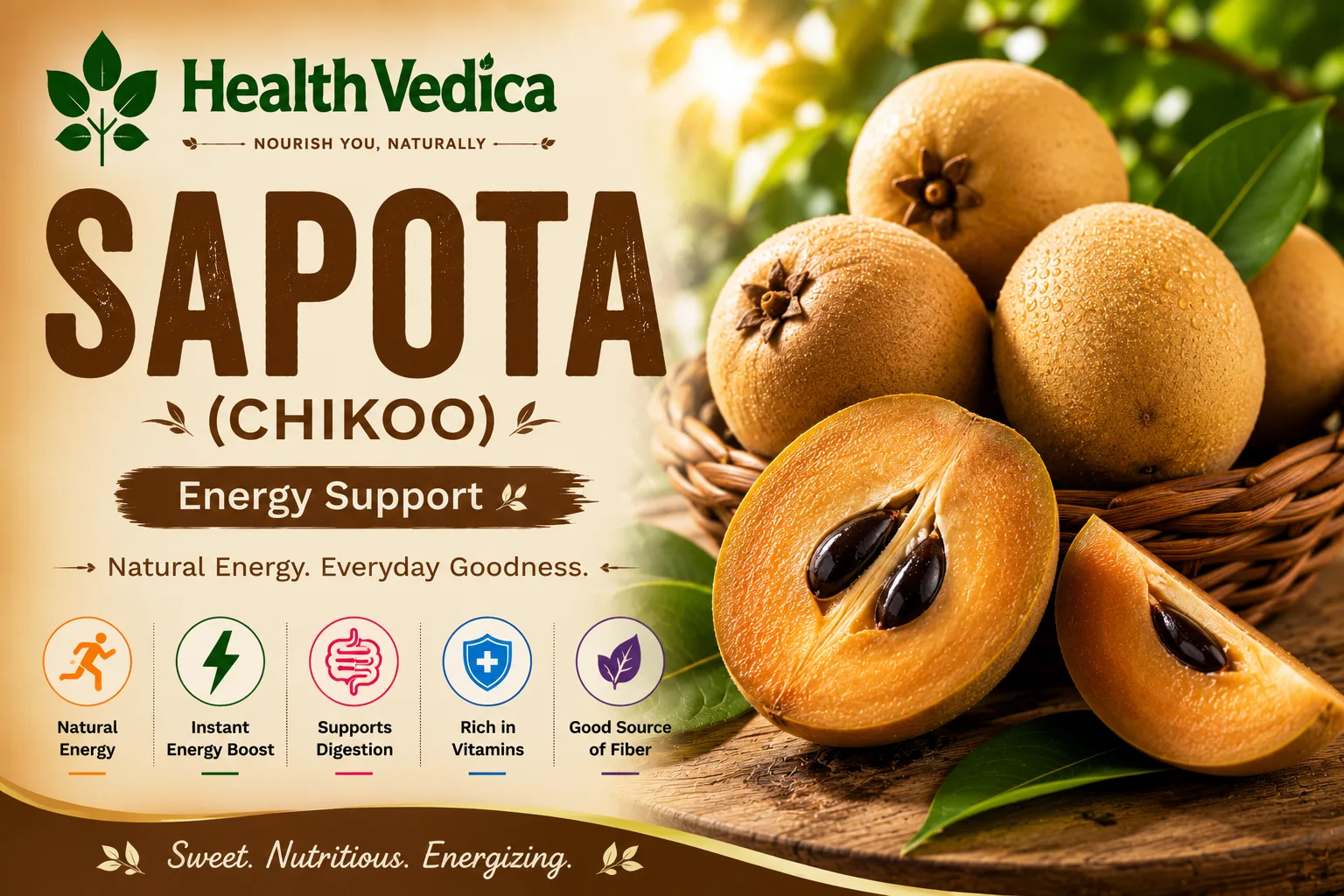
Sapota (Manilkara zapota), popularly known as Chikoo in India, is a naturally sweet tropical fruit cherished for its caramel-like flavour, soft texture and remarkable nutritional profile. Native to Central America and now widely cultivated across India, sapota is an excellent source of natural carbohydrates, dietary fiber, vitamin C, copper and powerful plant antioxidants. It is valued as an instant energy fruit while also supporting digestive health, immunity, skin health and heart wellness.
📊 Nutritional Value Per 100g of Sapota (Chikoo)
| Nutrient | Amount | % Daily Value (DV) |
|---|---|---|
| Calories | 83 kcal | 4% |
| Protein | 0.4 g | 1% |
| Total Fat | 1.1 g | 2% |
| Carbohydrates | 19.9 g | 7% |
| Natural Sugars | 14.7 g | — |
| Dietary Fiber | 5.3 g | 19% |
| Vitamin C | 14.7 mg | 16% |
| Copper | 0.09 mg | 10% |
| Potassium | 193 mg | 4% |
| Iron | 0.8 mg | 4% |
| Magnesium | 12 mg | 3% |
| Water | 78 g | — |
📉 Glycemic Index
Sapota has a moderate glycemic index of approximately 55. Due to its natural sugar content, portion control is recommended, particularly for individuals managing diabetes.
🧬 Powerful Plant Compounds
Sapota contains beneficial polyphenols, catechins, quercetin, gallic acid, chlorogenic acid, tannins and carotenoids. These compounds contribute to antioxidant protection, reduced oxidative stress and healthy ageing.
💊 Vitamins & Minerals Explained
Chikoo supplies vitamin C for immune health and collagen formation, potassium for maintaining healthy blood pressure, copper for red blood cell formation and dietary fiber for digestive wellness.
🕉️ Ayurvedic Properties & Dosha Effect
According to Ayurveda, ripe Sapota has a Madhura (sweet) taste with a cooling nature (Sheeta Veerya). It nourishes body tissues, provides strength and helps balance Vata and Pitta Doshas. Because of its sweetness, excessive intake may increase Kapha Dosha.
💚 Evidence-Based Health Benefits
Natural Energy Booster: Sapota provides easily digestible natural carbohydrates that supply quick and sustained energy, making it an excellent fruit for active individuals.
Supports Digestive Health: Its high fiber content promotes healthy bowel movements, supports beneficial gut bacteria and helps maintain digestive comfort.
Supports Immunity: Vitamin C strengthens the body's natural immune defenses and supports collagen production.
Heart Health: Potassium helps regulate blood pressure, while antioxidants protect blood vessels from oxidative stress.
Supports Healthy Skin: Vitamin C and polyphenols contribute to collagen synthesis and help protect skin from free-radical damage.
Supports Bone Health: Copper, magnesium and calcium contribute to maintaining healthy bones and connective tissues.
Antioxidant Protection: Polyphenols help neutralize harmful free radicals, supporting healthy ageing and cellular protection.
👨👩👧 Who Should Eat Sapota?
Sapota is an excellent fruit for growing children, athletes, older adults, pregnant women, individuals recovering from illness and anyone seeking a healthy natural energy source.
🚫 Who Should Limit Sapota?
Individuals with diabetes or those following low-carbohydrate diets should consume Sapota in moderation due to its natural sugar content. Excessive intake may contribute to unnecessary calorie consumption.
🌿 Healthy Recipes & Home Remedies
Chikoo Milkshake: Blend ripe Sapota with chilled milk and cardamom for a naturally sweet beverage without added sugar.
Sapota Smoothie Bowl: Combine Sapota with oats, yogurt, chia seeds and almonds for a fiber-rich breakfast.
Fresh Fruit Salad: Mix Sapota with papaya, pomegranate and kiwi for a colourful antioxidant-rich dessert.
Frozen Chikoo Cubes: Freeze ripe Sapota pieces for a healthy summer snack.
🥗 Best Ways to Eat Sapota
Enjoy fully ripe Sapota fresh, blended into smoothies, mixed into fruit salads or combined with yogurt. Avoid eating unripe fruits as they contain tannins that can produce an unpleasant astringent taste.
🍽️ Best Food Combinations
Sapota pairs well with milk, yogurt, oats, almonds, walnuts, chia seeds, cinnamon and cardamom.
🧊 Storage Tips
Allow unripe Sapota to ripen naturally at room temperature. Once ripe, refrigerate and consume within 3–5 days for the best taste and nutritional quality.
📅 Daily Recommended Intake
1 medium Sapota (approximately 120–150 grams) per day is suitable for most healthy adults as part of a balanced diet.
⚠️ Precautions
Consume only fully ripe Sapota. Unripe fruits contain high levels of tannins that may cause throat irritation and digestive discomfort. Individuals with diabetes should monitor portion size because of the fruit's natural sugars.
🔬 Scientific Highlights
Research indicates that Sapota contains significant amounts of dietary fiber and antioxidant polyphenols that may support digestive health, cardiovascular wellness and protection against oxidative stress. More human clinical studies are needed to fully understand its long-term health benefits.
📚 Traditional Ayurvedic References
- Modern Ayurvedic Dietetics
- Ayurvedic Nutrition Principles
- Traditional Indian Seasonal Food Practices
❌ Common Myths & Facts
❌ Myth: Sapota is unhealthy because it is sweet.
✅ Fact: Sapota contains natural fruit sugars along with fiber, vitamins, minerals and antioxidants that make it a nutritious fruit when eaten in moderation.
❌ Myth: People trying to lose weight should completely avoid Chikoo.
✅ Fact: Moderate portions can fit into a balanced weight-management diet because its fiber promotes fullness.
❌ Myth: Unripe Sapota is as healthy as ripe Sapota.
✅ Fact: Unripe fruits contain high tannin levels that can irritate the mouth and digestive tract. Fully ripe fruits are preferred.
🌍 Fun Facts
- Sapota trees can produce fruits continuously for many years.
- The tree produces natural latex called chicle, historically used to manufacture chewing gum.
- India is one of the world's largest producers of Sapota.
- The fruit becomes naturally sweeter as it ripens because starch converts into simple sugars.