🌿 Introduction
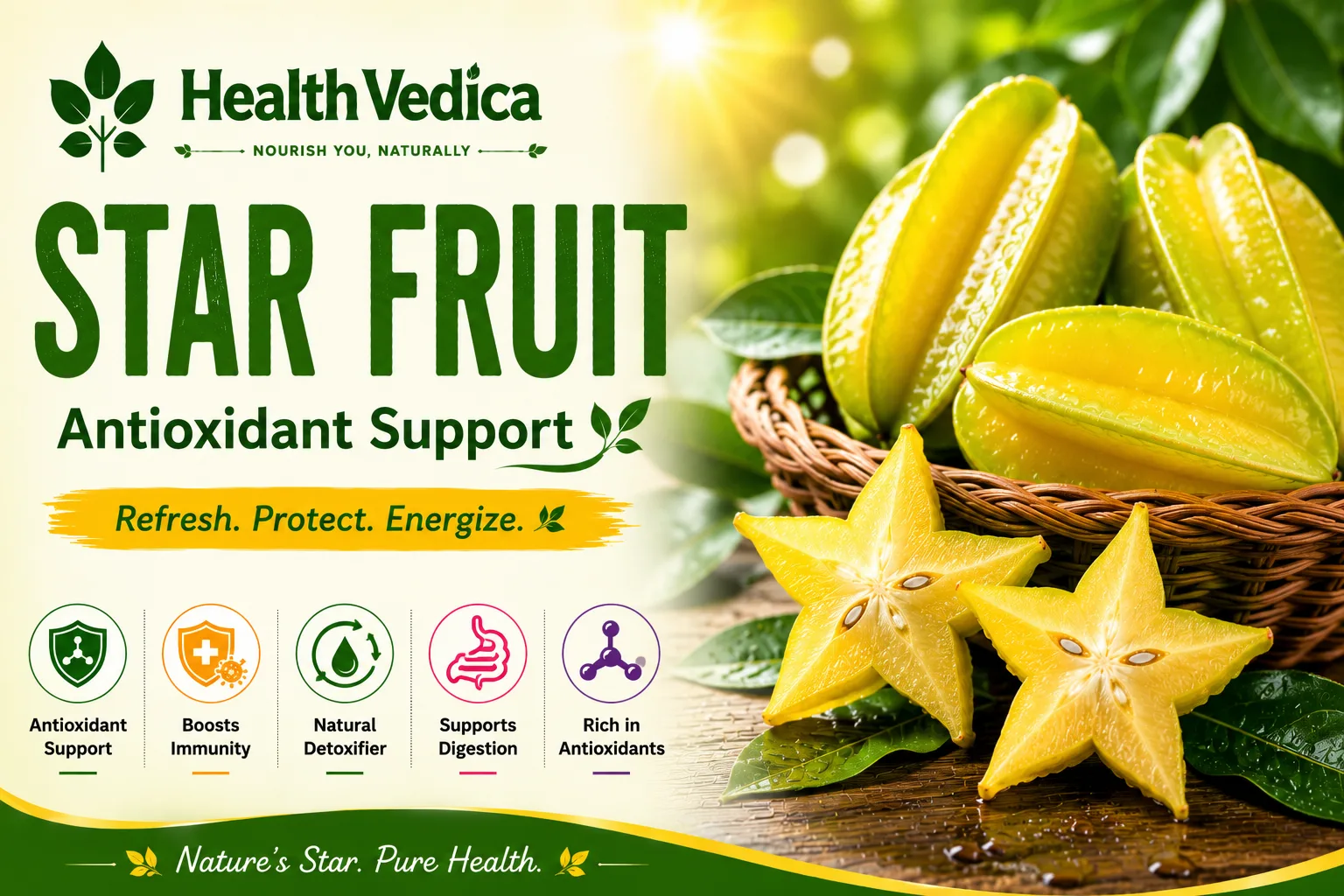
Star Fruit (Averrhoa carambola), commonly known as Carambola or Kamrakh in India, is a vibrant tropical fruit famous for its distinctive star-shaped slices. Native to Southeast Asia and widely cultivated in India, Malaysia and Sri Lanka, this refreshing fruit is naturally low in calories while being rich in vitamin C, dietary fiber and powerful antioxidants. Star fruit supports immunity, digestive health, heart wellness and healthy skin. However, individuals with kidney disease should avoid consuming it because it naturally contains high levels of oxalates and a neurotoxin called caramboxin.
📊 Nutritional Value Per 100g of Star Fruit
| Nutrient | Amount | % Daily Value (DV) |
|---|---|---|
| Calories | 31 kcal | 2% |
| Protein | 1.0 g | 2% |
| Total Fat | 0.3 g | <1% |
| Carbohydrates | 6.7 g | 2% |
| Natural Sugars | 3.9 g | — |
| Dietary Fiber | 2.8 g | 10% |
| Vitamin C | 34.4 mg | 38% |
| Potassium | 133 mg | 3% |
| Magnesium | 10 mg | 2% |
| Copper | 0.14 mg | 16% |
| Folate | 12 mcg | 3% |
| Water | 91.4 g | — |
📉 Glycemic Index
Star Fruit has a low glycemic index of approximately 36. Its combination of low carbohydrates and dietary fiber helps support healthy blood sugar control when consumed as part of a balanced diet.
🧬 Powerful Plant Compounds
Star Fruit contains quercetin, epicatechin, gallic acid, beta-carotene, vitamin C and numerous flavonoids. These antioxidants help protect cells against oxidative stress and contribute to immune and cardiovascular health.
💊 Vitamins & Minerals Explained
Carambola is particularly rich in vitamin C for immune support and collagen production. It also supplies dietary fiber for digestive health, potassium for healthy blood pressure and copper for normal red blood cell formation.
🕉️ Ayurvedic Properties & Dosha Effect
Although Star Fruit is not extensively described in classical Ayurvedic texts, it is generally considered to have a Amla (sour) and Madhura (sweet) taste with a cooling nature (Sheeta Veerya). It may help reduce excess Pitta Dosha while supporting hydration during hot weather. Excessive consumption may aggravate Vata Dosha in sensitive individuals because of its sourness.
💚 Evidence-Based Health Benefits
Boosts Immunity: Star Fruit provides a generous amount of vitamin C, which supports immune cell function and antioxidant protection.
Supports Digestive Health: Dietary fiber promotes healthy bowel movements and supports beneficial gut bacteria.
Heart Health: Potassium helps maintain healthy blood pressure, while antioxidants help protect blood vessels from oxidative damage.
Supports Healthy Skin: Vitamin C is essential for collagen production and helps maintain skin elasticity.
Weight Management: With only 31 calories per 100 grams, Star Fruit is one of the lowest-calorie tropical fruits, making it suitable for calorie-conscious diets.
Hydration: More than 90% of the fruit consists of water, making it refreshing during hot summer months.
Antioxidant Protection: Polyphenols help reduce oxidative stress and support healthy ageing.
👨👩👧 Who Should Eat Star Fruit?
Healthy adults, athletes, children, older adults and individuals seeking a low-calorie fruit rich in vitamin C can enjoy Star Fruit as part of a balanced diet.
🚫 Who Should NOT Eat Star Fruit?
Individuals with chronic kidney disease, kidney failure or those undergoing dialysis should completely avoid Star Fruit. The fruit contains high levels of oxalates and a naturally occurring neurotoxin called caramboxin, which healthy kidneys normally eliminate. In kidney disease, these compounds can accumulate and cause serious neurological complications, including confusion, persistent hiccups, seizures and, in severe cases, death.
🌿 Healthy Recipes & Home Remedies
Star Fruit Salad: Combine sliced Star Fruit with kiwi, papaya and pomegranate for a colorful antioxidant-rich fruit bowl.
Star Fruit Juice: Blend ripe Star Fruit with mint and lemon without added sugar for a refreshing beverage.
Tropical Smoothie: Mix Star Fruit with pineapple, yogurt and chia seeds for a nutrient-rich breakfast.
Fresh Salsa: Dice Star Fruit with cucumber, coriander and lime to prepare a refreshing salsa for grilled vegetables.
🥗 Best Ways to Eat Star Fruit
Wash thoroughly and eat the whole ripe fruit, including the edible peel. It can also be added to fruit salads, smoothies, juices and healthy desserts.
🍽️ Best Food Combinations
Star Fruit pairs well with kiwi, pineapple, papaya, mango, mint, yogurt, chia seeds, coconut water and cucumber.
🧊 Storage Tips
Store ripe Star Fruit in the refrigerator for up to one week. Slightly unripe fruits can ripen naturally at room temperature before refrigeration.
📅 Daily Recommended Intake
One medium Star Fruit (approximately 100–150 grams) is suitable for most healthy adults with normal kidney function.
⚠️ Precautions
People with kidney disease should completely avoid Star Fruit. Even small quantities may cause serious toxicity. Healthy individuals should consume ripe fruits in moderation as part of a varied diet. Star Fruit may also interact with certain medications similarly to grapefruit by affecting liver enzymes, so consult your healthcare provider if taking prescription medicines.
🔬 Scientific Highlights
Scientific studies support the antioxidant, anti-inflammatory and vitamin C-rich properties of Star Fruit. However, medical research has clearly established the risk of Star Fruit toxicity in patients with impaired kidney function due to caramboxin and oxalates. This safety warning is strongly supported by clinical evidence.
❌ Common Myths & Facts
❌ Myth: Star Fruit is safe for everyone.
✅ Fact: It is safe for most healthy individuals but should be completely avoided by people with kidney disease because of caramboxin toxicity.
❌ Myth: Star Fruit has no nutritional value because it is low in calories.
✅ Fact: It provides vitamin C, dietary fiber, antioxidants and hydration while remaining very low in calories.
❌ Myth: Only the flesh is edible.
✅ Fact: The entire ripe fruit, including its thin waxy skin, is edible after proper washing.
🌍 Fun Facts
- When sliced horizontally, Star Fruit naturally forms beautiful five-pointed stars.
- Star Fruit belongs to the Oxalidaceae family.
- It contains over 90% water, making it highly refreshing.
- India, Malaysia, Indonesia and the Philippines are among the major producers of Star Fruit.
- The fruit is widely used as a natural garnish because of its unique shape.