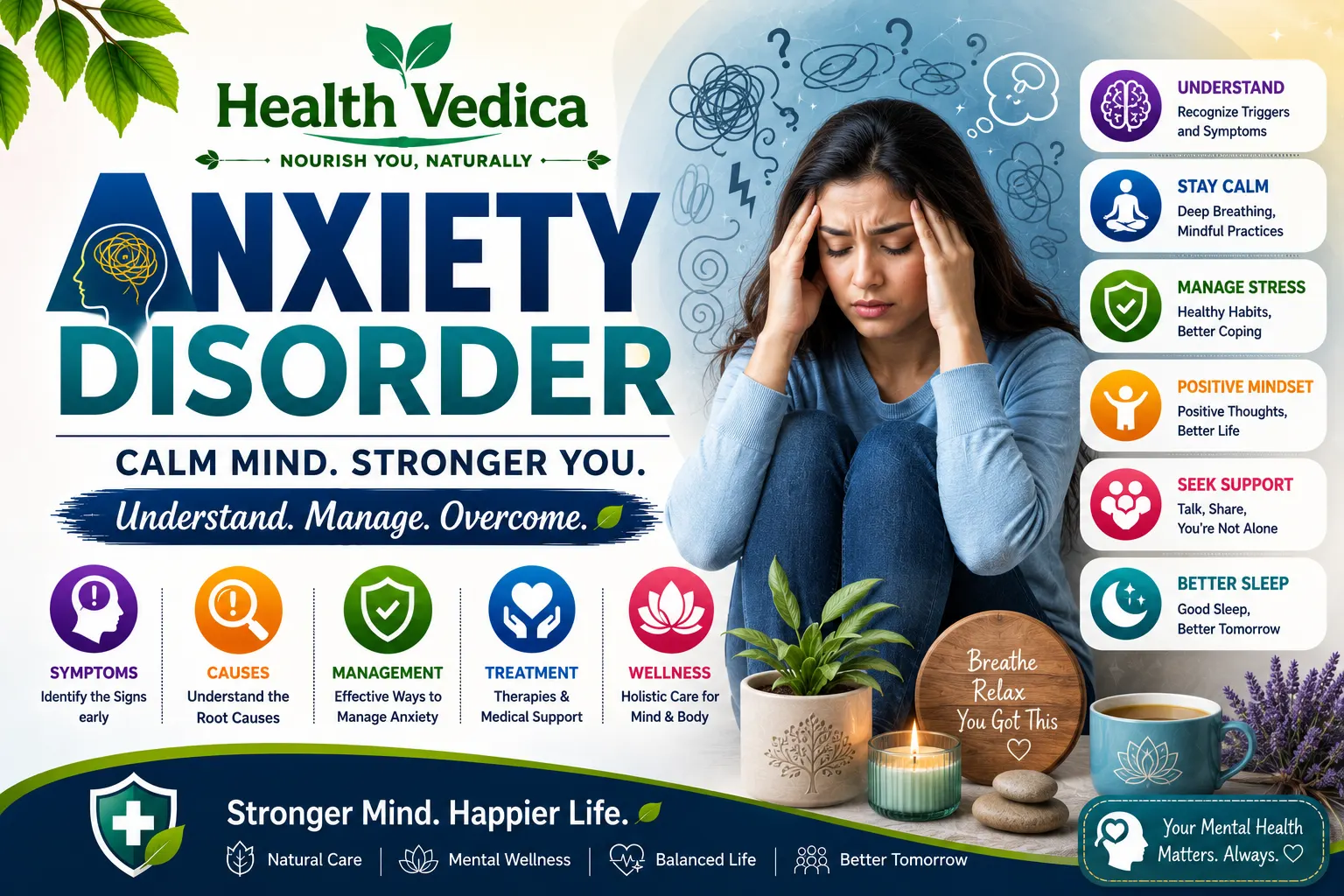
🔍 What is Anxiety Disorder?
Anxiety disorder is the most common category of mental health conditions worldwide — affecting 1 in 13 people globally. Unlike normal anxiety that everyone experiences (before exams, presentations, or challenges), anxiety disorders involve excessive, persistent fear or worry that significantly interferes with daily functioning and does not go away. India has approximately 45 million people with anxiety disorders, yet fewer than 20% receive treatment due to stigma, limited awareness, and shortage of mental health professionals. Anxiety disorders are highly treatable — with the right combination of therapy, lifestyle changes, and sometimes medication, most people achieve significant improvement.
📋 Types of Anxiety Disorders
| Type | Key Features | Common in India |
|---|---|---|
| Generalized Anxiety Disorder (GAD) | Persistent, excessive worry about multiple everyday concerns lasting 6+ months | Very common; often undiagnosed |
| Panic Disorder | Recurrent unexpected panic attacks; intense physical symptoms (heart pounding, breathlessness) | Common; often mistaken for heart attack |
| Social Anxiety Disorder | Intense fear of social situations, judgment, embarrassment | Underdiagnosed; stigma prevents help-seeking |
| Specific Phobias | Intense fear of specific objects/situations (heights, insects, needles) | Common; often untreated |
| Separation Anxiety | Fear of separation from attachment figures; not just in children | Common in children; adult form underrecognized |
| Health Anxiety | Excessive fear of having serious illness; obsessive health monitoring | Rising rapidly, especially post-COVID-19 |
| OCD (Obsessive-Compulsive Disorder) | Intrusive thoughts (obsessions) + repetitive behaviors (compulsions) | Affects ~2–3% of population |
| PTSD (Post-Traumatic Stress Disorder) | Following trauma; flashbacks, nightmares, hyperarousal | Underrecognized; disaster/conflict survivors |
🧬 Causes & Risk Factors
Brain Chemistry: Anxiety involves dysregulation of neurotransmitters — primarily GABA (calming), serotonin (mood regulator), and norepinephrine (stress response). The amygdala (brain's fear center) is overactive in anxiety disorders, triggering disproportionate fight-or-flight responses to non-threatening situations.
Contributing Factors: Genetics (family history of anxiety or mood disorders), traumatic life events, chronic stress, major life changes (job loss, relationship breakdown, financial stress), childhood adversity, medical conditions (thyroid disorders, heart arrhythmias, hypoglycemia), certain medications and substances (caffeine, alcohol), and personality traits (perfectionism, neuroticism) all contribute to anxiety disorder development.
India-Specific Stressors: Academic pressure and competitive examinations, career and financial insecurity, family expectations and relationship pressures, rapid urbanization and lifestyle changes, and post-COVID-19 anxiety are significant Indian-context anxiety triggers.
🩺 Symptoms of Anxiety Disorder
Psychological Symptoms: Excessive worry that's difficult to control, racing thoughts, constant feeling that something bad will happen, irritability, difficulty concentrating, feeling on edge or keyed up, and fear of losing control.
Physical Symptoms: Rapid heartbeat (palpitations), shortness of breath, sweating, trembling or shaking, chest tightness, nausea, dizziness, headaches, muscle tension and aches, fatigue, sleep disturbances (insomnia or hypersomnia), and gastrointestinal problems (IBS commonly co-occurs with anxiety).
💊 Evidence-Based Medical Treatments
| Treatment | Type | Effectiveness |
|---|---|---|
| Cognitive Behavioral Therapy (CBT) | Psychotherapy | Gold standard — 60–80% improvement; changes thought patterns |
| Exposure Therapy | Psychotherapy | Highly effective for phobias, social anxiety, PTSD |
| SSRIs (Sertraline, Escitalopram) | Medication — First Line | Effective for most anxiety disorders; takes 4–6 weeks |
| SNRIs (Venlafaxine, Duloxetine) | Medication — First Line | Effective especially for GAD and panic disorder |
| Buspirone | Medication | Non-habit-forming; good for GAD specifically |
| Beta-Blockers (Propranolol) | Medication — Situational | Controls physical symptoms (heart rate) for situational anxiety |
| Benzodiazepines | Medication — Short-term | Fast relief; significant addiction risk — avoid long-term use |
| Mindfulness-Based CBT (MBCT) | Psychotherapy | Highly effective for preventing relapse; combines CBT + mindfulness |
🌿 Ayurvedic Perspective (Chittodvega)
Ayurveda describes anxiety as Chittodvega — mental agitation caused by excess Vata dosha in the mind and nervous system, often accompanied by Rajas (mental turbulence). Treatment focuses on calming and grounding Vata, nourishing the nervous system, and balancing Prana Vata (which governs sensory and mental functions). Key Ayurvedic approaches include Brahmi (Bacopa monnieri — clinically proven anxiolytic, adaptogen), Ashwagandha (KSM-66 extract proven to reduce cortisol and anxiety scores significantly), Shankhpushpi (nervine tonic, sedative), Jatamansi (natural anxiolytic, MAO-inhibitor effects), Shirodhara (warm oil stream on forehead — profoundly calming), Abhyanga (oil massage — grounds Vata), and regular intake of warm, nourishing, easy-to-digest foods (Sattvic diet).
🧘 Natural & Lifestyle-Based Approaches
| Approach | Evidence | Recommended Practice |
|---|---|---|
| Pranayama (Yogic Breathing) | Strong | Anulom Vilom (alternate nostril): 10–15 min daily; activates parasympathetic nervous system |
| Regular Yoga | Strong | Yoga Nidra and restorative yoga most effective for anxiety; 30–45 min, 3–5x/week |
| Aerobic Exercise | Strong (comparable to medication) | 30 min brisk walking/running 5x/week significantly reduces anxiety |
| Meditation | Strong | 8-week MBSR (Mindfulness-Based Stress Reduction) proven as effective as medication for GAD |
| Sleep Hygiene | Strong | Consistent sleep-wake times, dark cool room, no screens 1 hour before bed |
| Limiting Caffeine & Alcohol | Strong | Both significantly worsen anxiety; gradual reduction recommended |
| Journaling | Moderate | Expressive writing 15 min daily reduces worry and rumination |
| Cold Water Exposure | Moderate | Cold water face immersion activates dive reflex, rapidly slows heart rate |
🥗 Anti-Anxiety Diet
Foods that reduce anxiety: Magnesium-rich foods (dark chocolate, pumpkin seeds, almonds, spinach — magnesium deficiency is highly prevalent and strongly linked to anxiety), omega-3 foods (flaxseeds, walnuts, fish — EPA and DHA reduce anxiety), probiotic foods (curd, buttermilk, fermented foods — gut-brain axis research shows gut health profoundly affects anxiety), complex carbohydrates (support serotonin production), tryptophan-rich foods (milk, bananas, sesame — precursor to serotonin), and Ashwagandha milk (warm milk + ashwagandha + honey before bed).
Foods that worsen anxiety: Caffeine (tea, coffee, energy drinks — dramatically worsens anxiety, especially panic attacks), alcohol (short-term relief followed by anxiety rebound), refined sugar, highly processed foods, MSG, and skipping meals (blood sugar drops trigger anxiety-like symptoms).
🫁 5-4-3-2-1 Grounding Technique (For Panic Attacks)
When anxiety peaks or panic begins, use this immediate grounding technique: Notice 5 things you can SEE, 4 things you can TOUCH (and feel their texture), 3 things you can HEAR, 2 things you can SMELL, 1 thing you can TASTE. This technique engages sensory awareness and brings the mind out of fearful thought loops back to the present moment.
📞 Indian Mental Health Resources
iCall (Tata Institute of Social Sciences): 9152987821 | Vandrevala Foundation: 1860-2662-345 (24/7) | NIMHANS: nimhans.ac.in | Fortis Stress Helpline: 8376804102 | Snehi: 044-24640050 | Online therapy: InnerHour, YourDOST, Wysa apps offer affordable Indian mental health support