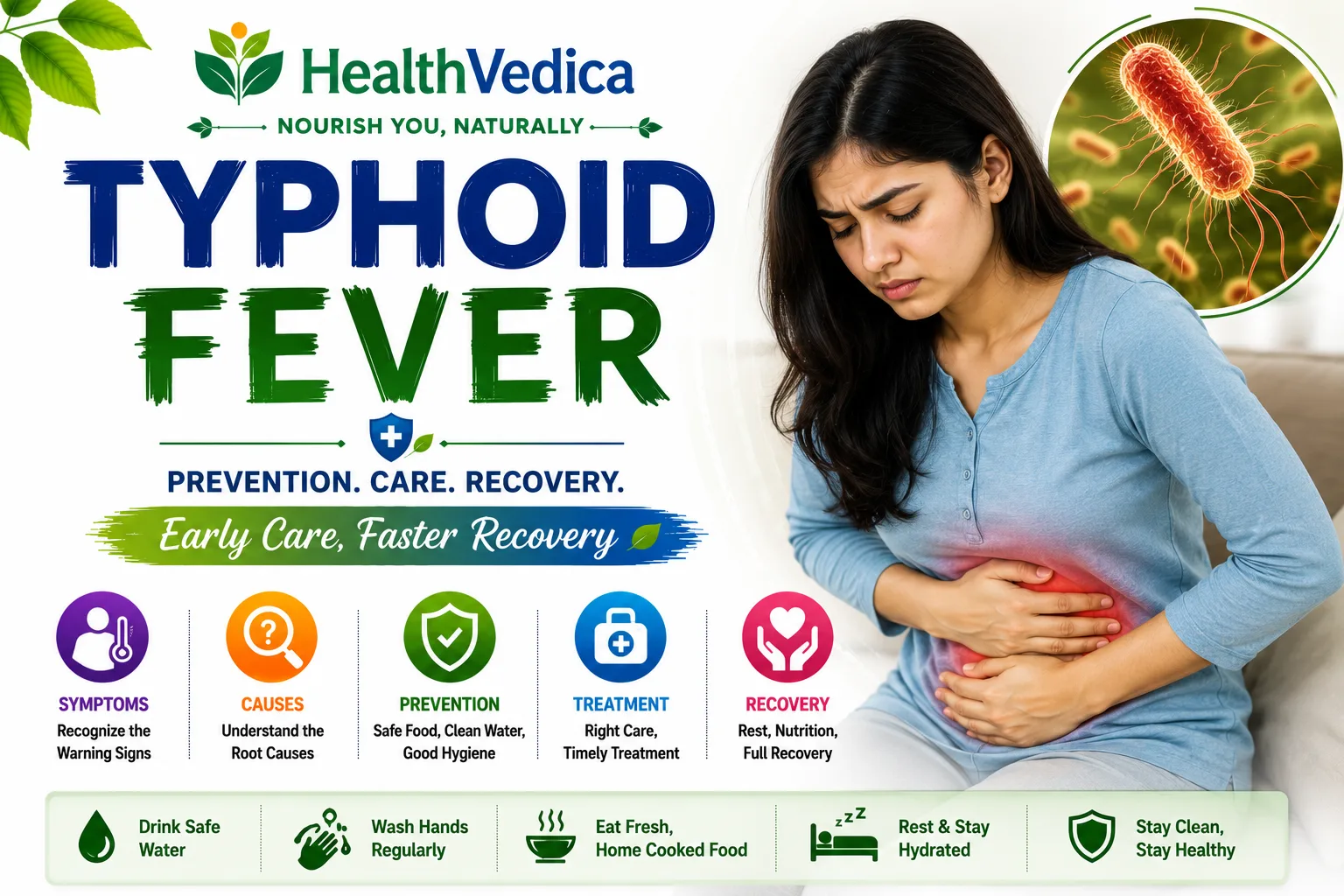
🌡️ Introduction
Typhoid fever is a serious bacterial infection caused by Salmonella Typhi, spread through contaminated food and water. India accounts for a large proportion of the world's 11–20 million annual typhoid cases, with children aged 5–15 years being most affected. In India, typhoid is endemic — particularly during monsoon season when water contamination increases. The bacteria invade the intestinal wall, reach the bloodstream, and cause a characteristic stepwise rising fever that can lead to serious complications including intestinal perforation, internal bleeding, and death if untreated. Timely diagnosis and appropriate antibiotic treatment is life-saving.
⚠️ Classic Symptom Progression
| Week | Symptoms |
|---|---|
| Week 1 | Gradually rising fever (step-ladder pattern), headache, malaise, abdominal pain, loss of appetite, constipation or diarrhea |
| Week 2 | High sustained fever (39–40°C), relative bradycardia (slow heart rate despite fever), rose spots on trunk, abdominal distension, hepatosplenomegaly |
| Week 3 | Intestinal complications — perforation, bleeding; marked weakness, mental clouding (typhoid state) |
| Week 4 | Gradual recovery if treated, or serious deterioration if untreated |
🧪 Diagnosis
| Test | Details |
|---|---|
| Blood Culture (Gold Standard) | Most accurate in first 2 weeks — identifies Salmonella Typhi |
| Widal Test | Most commonly used in India — not very accurate, many false positives/negatives |
| Typhidot (IgM/IgG) | Rapid serology test — better than Widal but still not perfect |
| Stool Culture (Week 3+) | Useful in later stages when bacteria shed in stool |
| CBC | Shows leukopenia (low WBC — characteristic of typhoid), thrombocytopenia |
💊 Antibiotic Treatment
| Drug | Notes |
|---|---|
| Azithromycin | Now first-line for uncomplicated typhoid — oral, 5–7 day course. Safe in children and pregnancy |
| Ceftriaxone | Injectable — for severe or complicated typhoid requiring hospitalization |
| Ciprofloxacin | Previously first-line but widespread resistance in India now — use only if sensitivity confirmed |
| Chloramphenicol, Ampicillin | Historical drugs — avoid due to resistance |
Important: Complete the FULL antibiotic course even if fever resolves. Incomplete treatment causes relapse and antibiotic resistance. Never self-medicate with leftover antibiotics.
🥗 Typhoid Diet — Critical for Recovery
Diet is extremely important in typhoid — the inflamed intestine requires easily digestible, non-irritating foods. Wrong foods can cause intestinal perforation — a surgical emergency.
| Phase | Recommended Foods | Avoid |
|---|---|---|
| Acute Fever (Week 1–2) | Liquid diet: ORS, coconut water, rice water (kanji), diluted fruit juices, buttermilk, glucose water | Solid foods, high-fiber foods, spicy foods, fried foods, raw vegetables |
| Recovery (Week 3) | Soft diet: Khichdi (rice + moong dal), boiled rice, banana, curd, boiled potato, moong dal soup, idli | Red meat, whole grains, fibrous vegetables, gas-forming foods (rajma, chana) |
| Full Recovery (Week 4+) | Gradually reintroduce normal diet starting with easily digestible foods | Continue avoiding spicy and fried food for 2 weeks post-recovery |
🌿 Ayurvedic Treatment (Vishama Jwara Chikitsa)
In Ayurveda, typhoid is categorized under Vishama Jwara (irregular fever) caused by Tridosha vitiation with bacterial contamination (Krimi). Ayurvedic treatment focuses on fever reduction (Jwara Nashana), gut healing (Deepana-Pachana), and rebuilding strength (Brimhana).
| Remedy | Use |
|---|---|
| Mahasudarshan Ghanvati | Classical fever-reducing compound — reduces typhoid fever duration and severity |
| Kutaja Bark (Holarrhena) | Anti-bacterial for Salmonella, reduces intestinal inflammation |
| Giloy (Guduchi) Decoction | Fever reduction and immune enhancement |
| Tulsi + Ginger Tea | Antipyretic, carminative, calming |
| Draksha (Raisin) Decoction | Nourishing, cooling, digestive — classical recovery drink |
🍵 Best Recovery Drinks & Foods
Coconut Water: The best hydrator during typhoid — electrolytes, easy digestion, cooling Pitta. Rice Water (Chawal ka Maad): Most easily digestible gut-healing liquid during acute fever. Giloy Juice: 20ml twice daily — fever reduction and immune support. Banana + Curd: After fever subsides — probiotics + potassium + easily digestible starch. Moong Dal Soup: Light, high-protein, easy to digest — ideal recovery food. Pomegranate Juice: Iron and antioxidants for post-typhoid anemia recovery.
🛡️ Prevention
Typhoid Conjugate Vaccine (TCV): Highly effective single-dose vaccine now available — recommended for all children over 6 months and adults in endemic areas. Now in India's immunization program. Safe Water: Always drink boiled or purified water. Avoid untreated well or tank water. Food Safety: Eat freshly cooked hot food. Avoid street food, raw salads, ice from unknown sources during monsoon. Hand Hygiene: Thorough handwashing before eating and after toilet — most important single prevention measure. Sanitation: Proper toilet facilities and sewage disposal is the root-level prevention.
💡 Tips for Recovery
Complete bed rest is essential during acute fever — even slight exertion can cause intestinal complications. Monitor for abdominal pain that becomes severe and localized (perforation sign — emergency surgery needed). Check for rectal bleeding — requires immediate hospitalization. Post-recovery, the patient may be a carrier — stool culture to confirm clearance before handling food for others. Relapse can occur in 5–10% — restart antibiotics promptly if fever returns.