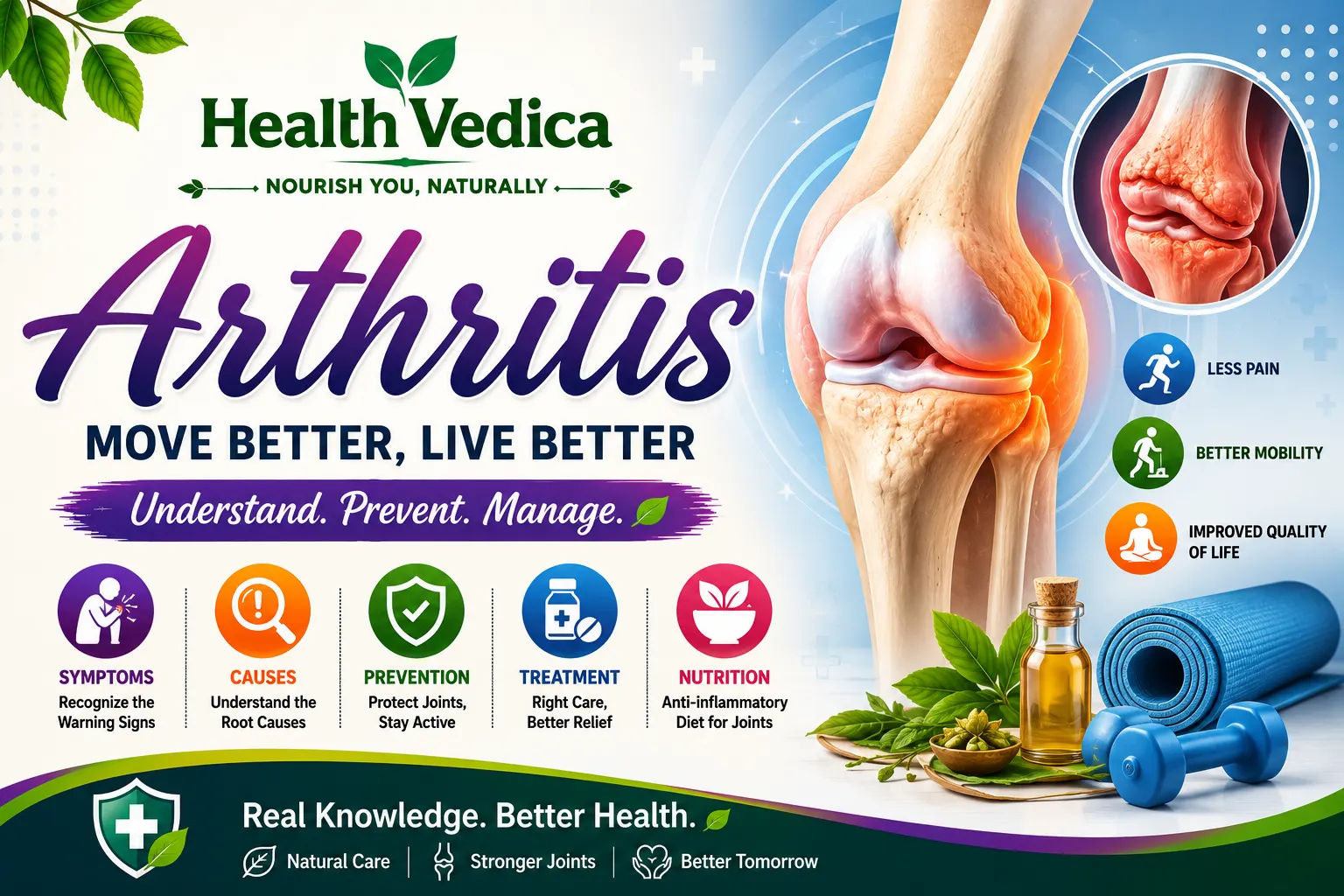
🔍 What is Arthritis?
Arthritis is not a single disease but an umbrella term for over 100 conditions affecting the joints, surrounding tissues, and other connective tissues. The word comes from the Greek artho (joint) and itis (inflammation). It is characterized by joint pain, stiffness, swelling, reduced range of motion, and decreased quality of life. India has approximately 180 million people affected by arthritis — more than diabetes and cancer combined. The two most common types are Osteoarthritis (OA) — a degenerative joint disease from cartilage breakdown — and Rheumatoid Arthritis (RA) — an autoimmune inflammatory disease. Arthritis is a leading cause of disability in India, particularly among women and the elderly.
📋 Major Types of Arthritis
| Type | Cause | Joints Affected | Age Group |
|---|---|---|---|
| Osteoarthritis (OA) | Cartilage degeneration, wear and tear | Knees, hips, hands, spine | 50+ years, common in India |
| Rheumatoid Arthritis (RA) | Autoimmune — immune system attacks joint lining | Small joints (hands, wrists, feet) symmetrically | 30–60 years; more common in women |
| Psoriatic Arthritis | Autoimmune; associated with psoriasis skin condition | Variable; may affect spine | 30–50 years |
| Gout | Uric acid crystal deposits in joints | Big toe (hallux), ankles, knees | Men 40+; women after menopause |
| Ankylosing Spondylitis | Autoimmune; affects spine | Spine, sacroiliac joints | Young adults (15–35) |
| Juvenile Idiopathic Arthritis | Autoimmune; in children | Variable | Under 16 years |
| Septic Arthritis | Bacterial/viral infection of joint | Usually single joint | Any age; medical emergency |
⚠️ Symptoms
Common Symptoms Across Types: Joint pain (can range from aching to sharp, severe pain), stiffness (especially morning stiffness lasting >1 hour in RA; shorter in OA), swelling and warmth around joints, redness of skin over joints, reduced range of motion, joint crepitus (grating/cracking sounds), fatigue (especially in RA), and decreased grip strength.
Rheumatoid Arthritis Specific: Symmetric joint involvement (both hands/both knees), morning stiffness lasting >1 hour, rheumatoid nodules under skin, systemic symptoms (fatigue, weight loss, fever), and potential involvement of heart, lungs, and eyes.
OA Specific: Pain worsens with activity and improves with rest, bone spurs, bony enlargement of finger joints (Heberden's/Bouchard's nodes), and no systemic symptoms.
🩺 Diagnosis
Diagnosis includes clinical examination, blood tests (RF — Rheumatoid Factor, Anti-CCP antibody, ESR, CRP, uric acid, CBC), X-rays and MRI to assess joint damage and inflammation, and joint fluid analysis in some cases. Early diagnosis and treatment of RA is critical to prevent joint destruction — a window of opportunity (first 3–6 months) exists where aggressive treatment can induce remission.
💊 Medical Treatment
| Drug Class | Examples | Used For |
|---|---|---|
| NSAIDs | Ibuprofen, Naproxen, Diclofenac | Pain and inflammation relief (OA, RA) |
| Analgesics | Paracetamol | OA pain (no anti-inflammatory effect) |
| Corticosteroids | Prednisolone, Methylprednisolone | RA flares; joint injections |
| DMARDs | Methotrexate, Hydroxychloroquine, Sulfasalazine | RA disease modification (slow progression) |
| Biologics | Adalimumab, Etanercept, Rituximab | Moderate–Severe RA unresponsive to DMARDs |
| JAK Inhibitors | Tofacitinib, Baricitinib | Moderate–Severe RA; oral alternative to biologics |
| Gout Medications | Colchicine, Allopurinol | Gout attacks and prevention |
| Hyaluronic Acid Injections | Synvisc, Hyalgan | OA of knee — joint lubrication |
🌿 Ayurvedic Perspective (Amavata & Sandhivata)
Arthritis is brilliantly described in Ayurveda. Rheumatoid Arthritis corresponds to Amavata — caused by Ama (undigested toxic metabolites) combining with vitiated Vata and settling in joints, causing inflammation, pain, and stiffness. Osteoarthritis corresponds to Sandhivata — Vata accumulation in joints causing dryness, degeneration, and crepitus (sounds). Treatment for Amavata focuses on Ama digestion (Deepana-Pachana therapy) and Vata balancing; for Sandhivata on Vata pacification and joint nourishment with oils. Key Ayurvedic herbs and treatments include Shallaki (Boswellia serrata) — clinically proven anti-inflammatory as effective as NSAIDs, Ashwagandha (anti-inflammatory, analgesic), Guggulu formulations (Yogaraj Guggulu for Vata disorders, Mahayogaraja Guggulu for severe cases), Punarnava (reduces joint swelling), Castor oil (best Vata-reducing internal Sneha), and treatments like Janu Basti (warm oil pool on knee), Pinda Sweda (bolus fomentation), and Panchakarma (Virechana and Basti therapies).
🏠 Home Remedies & Natural Approaches
| Remedy | Preparation/Method | Evidence/Benefit |
|---|---|---|
| Turmeric + Black Pepper Milk | 1/2 tsp turmeric + pinch black pepper in warm milk, daily | Clinical evidence — reduces CRP, joint pain (comparable to ibuprofen in OA trials) |
| Ginger Compress | Grate fresh ginger, wrap in cloth, apply warm on joint for 20 min | COX+LOX inhibition — anti-inflammatory; reduces swelling |
| Castor Oil Massage | Warm castor oil massage on affected joints, wrap with cloth, leave overnight | Ricinoleic acid — anti-inflammatory, reduces joint pain and stiffness |
| Epsom Salt (Magnesium Sulfate) Soak | Add 2 cups to warm bath or foot soak, soak 20 min | Magnesium absorbed through skin — reduces muscle tension, joint pain |
| Garlic Milk (Lahsun Doodh) | Boil 3–4 garlic cloves in milk until soft, cool and drink | Diallyl disulfide inhibits cartilage-damaging enzymes; anti-inflammatory |
| Shallaki (Boswellia) Supplement | 300–500mg extract, 2–3x daily | Multiple clinical trials prove effectiveness comparable to NSAIDs with no GI side effects |
| Hot and Cold Therapy | Ice pack (acute inflammation); heat pad/warm compress (chronic stiffness) | Cold reduces acute inflammation; heat improves circulation and flexibility |
🥗 Arthritis-Friendly Indian Diet
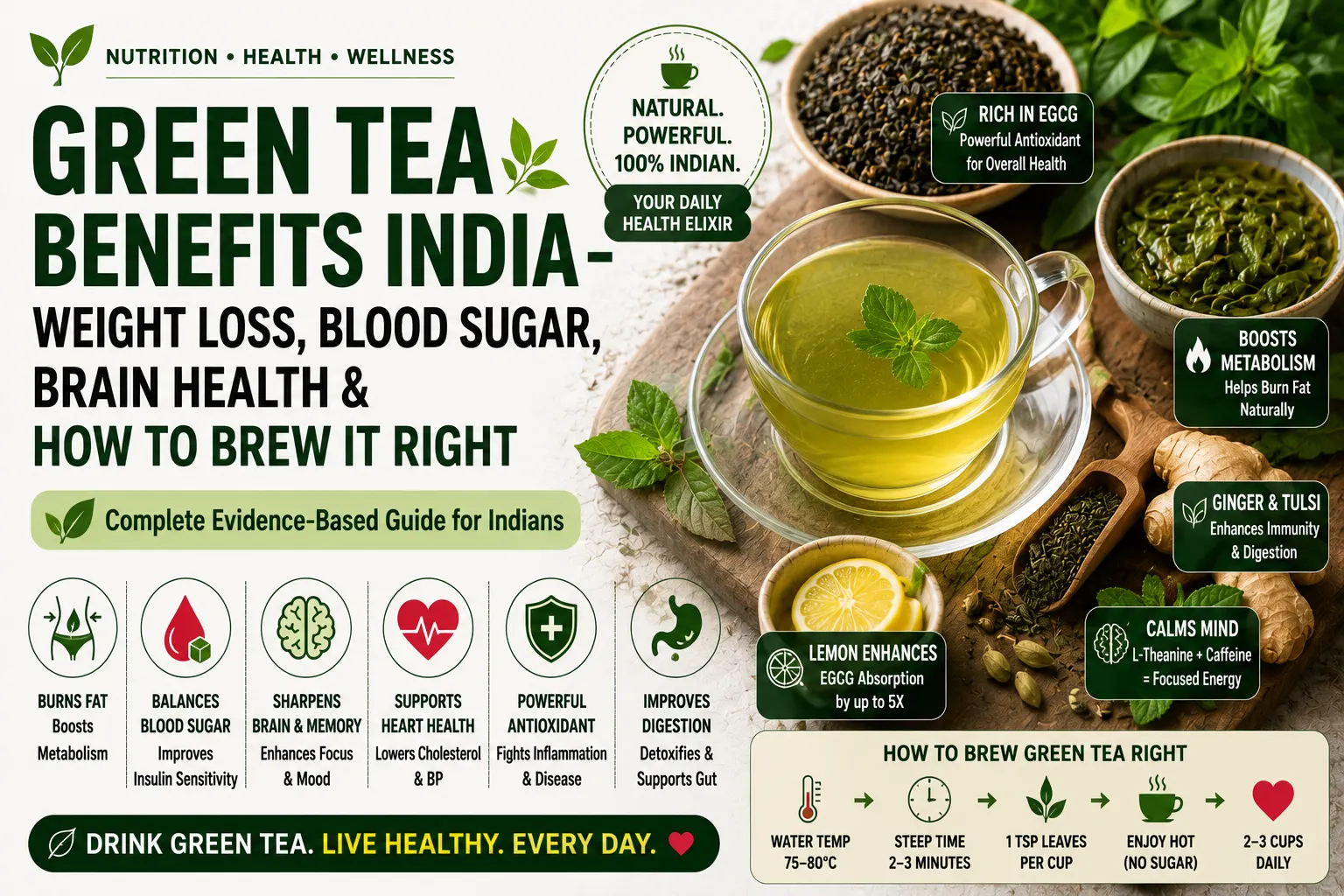
Anti-inflammatory foods to prioritize: Turmeric (daily in cooking), ginger, garlic, fatty fish (omega-3 — sardines, mackerel), walnuts and flaxseeds (plant omega-3), dark leafy greens (antioxidants, Vitamin K), berries (anthocyanins — anti-inflammatory), extra virgin olive oil (oleocanthal — natural NSAID-like activity), cherries (reduce uric acid — especially for gout), whole grains, and green tea.
Foods to avoid: Red meat and processed meats (arachidonic acid — pro-inflammatory), refined sugar and white flour, fried foods, excess alcohol (worsens gout and RA), dairy (may worsen some people's inflammation), nightshade vegetables (tomatoes, peppers, eggplant — controversial; some arthritis patients report improvement when eliminated), and high-purine foods for gout (organ meats, anchovies, red meat).
🧘 Exercise & Physical Therapy
Exercise is one of the most important arthritis treatments — not harmful as many believe. Appropriate exercise reduces pain, improves function, and slows joint degeneration. Best exercises for arthritis: Swimming and water aerobics (low impact, full body), cycling (low impact, strengthens knee muscles without joint stress), yoga (improves flexibility, reduces pain — multiple arthritis trials positive), Tai Chi (balance, strength, pain reduction — especially OA), and strength training to support and protect joints. Work with a physiotherapist for a personalized program. Avoid high-impact activities (running on concrete, jumping) during flares.