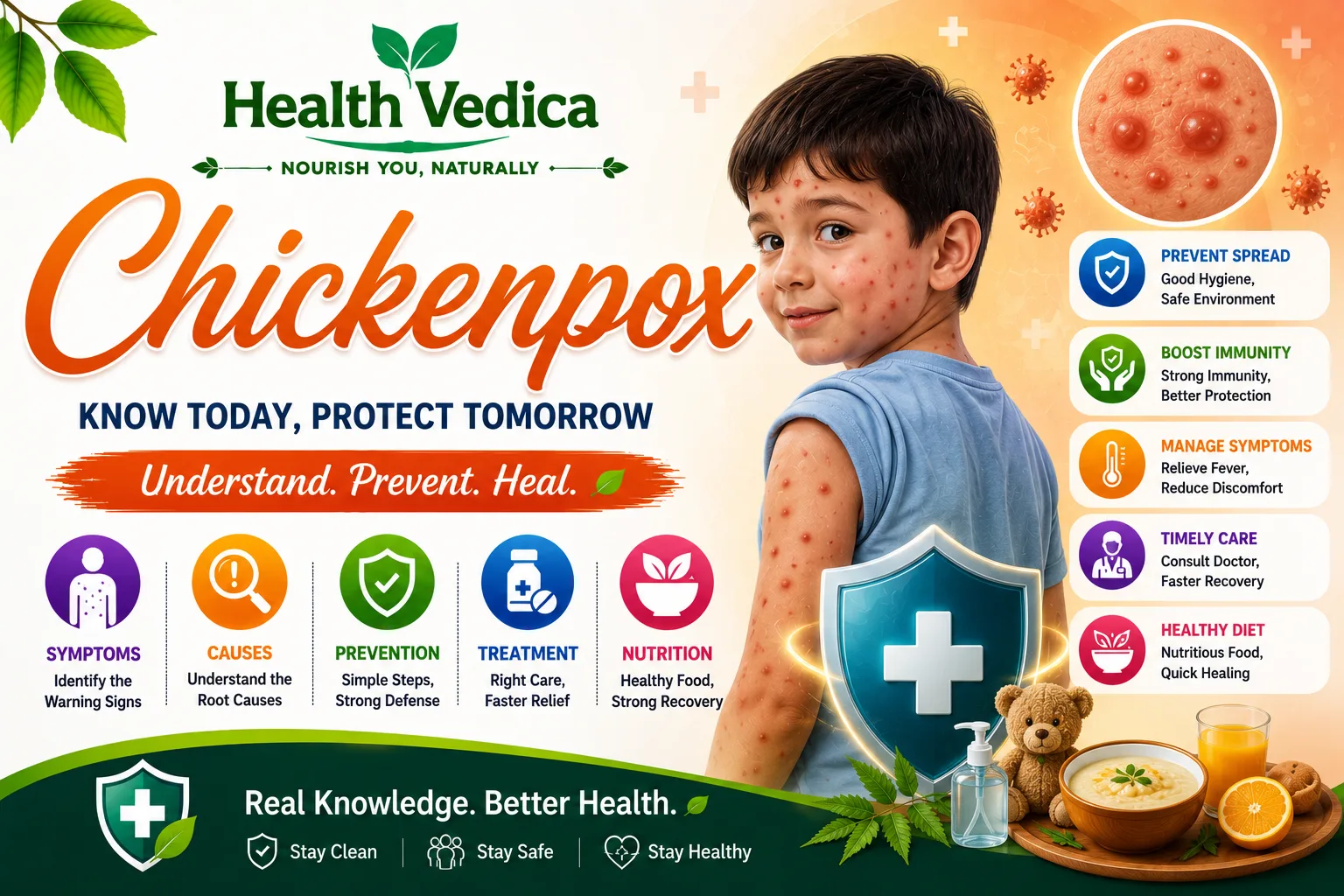
🔍 What is Chickenpox?
Chickenpox (Varicella) is a highly contagious viral infection caused by the Varicella-Zoster Virus (VZV) — the same virus that later causes shingles (Herpes Zoster) in adults when reactivated. Chickenpox is characterized by an itchy, blister-like rash that spreads over the entire body. Before the vaccine was available, nearly every person got chickenpox during childhood. In India, chickenpox is still endemic (widespread) with seasonal peaks during winter and spring. Although generally mild in healthy children, it can be serious — even life-threatening — in newborns, pregnant women, adults who've never had it, and immunocompromised individuals. One infection usually confers lifelong immunity.
📋 Chickenpox Progression Timeline
| Phase | Duration | What Happens |
|---|---|---|
| Incubation | 10–21 days after exposure | No symptoms; virus silently multiplying |
| Prodrome | 1–2 days | Fever, headache, fatigue, loss of appetite — before rash appears |
| Rash — Macules | Days 1–2 | Flat red spots appear on face, trunk, spreading to body |
| Rash — Papules | Days 2–3 | Spots become raised bumps |
| Rash — Vesicles | Days 3–4 | Blisters filled with clear fluid — classic 'dewdrop on rose petal' appearance; most itchy stage |
| Rash — Pustules | Days 4–5 | Blisters become cloudy with pus |
| Crusting/Scabbing | Days 5–7 | Blisters dry and scab over; new crops may still appear |
| Recovery | Days 7–14 | All lesions scab; no longer infectious once all blisters scabbed |
🦠 Transmission & Contagiousness
Chickenpox is one of the most contagious infections known. Transmission occurs through direct contact with rash blisters (blister fluid), airborne droplets from coughing or sneezing, and touching contaminated surfaces. A person is contagious from 1–2 days before the rash appears until all blisters have crusted over — typically 5–7 days after rash onset. One infected person can transmit to 90% of susceptible household contacts.
💊 Medical Management
For healthy children (mild cases): Supportive care — Calamine lotion or antihistamine cream on blisters for itch relief; Paracetamol for fever (NEVER aspirin — risk of life-threatening Reye's syndrome); Trimmed fingernails to prevent scratching and secondary bacterial infection; Oatmeal baths for itch relief; Oral antihistamines (promethazine) for severe itching; Adequate hydration. Antiviral treatment (Acyclovir/Valacyclovir) is recommended for: adults, adolescents, high-risk patients (immunocompromised, chronic lung/skin conditions), pregnant women, and severe disease — most effective when started within 24 hours of rash onset.
🌿 Ayurvedic & Home Remedies
| Remedy | Preparation/Application | Benefit |
|---|---|---|
| Neem Leaf Bath | Boil neem leaves in water, cool to comfortable temperature, bathe in it or add to bath water | Antibacterial, antiviral properties — reduces secondary infection risk, soothes itching |
| Neem Leaves on Bed | Spread fresh neem leaves on bed/mattress — traditional Indian practice | Traditional — believed to speed healing; antimicrobial properties may reduce secondary infection |
| Calamine Lotion | Apply generously on blisters 3–4 times daily | Soothes itching, dries blisters, reduces inflammation |
| Baking Soda Paste | Mix baking soda with water into paste, apply on blisters | Reduces itching, alkalizes skin environment |
| Oatmeal Bath | Add 1 cup colloidal oatmeal or finely ground oats to lukewarm bath | Soothes skin, reduces inflammation and itching |
| Coconut Oil | Apply gently on blisters after bath | Antimicrobial (lauric acid), moisturizing, reduces scar formation |
⚠️ When to Seek Emergency Care
Seek immediate medical attention if: High fever (above 39°C/102°F) not responding to paracetamol, severe headache or neck stiffness (meningitis), breathing difficulty (pneumonia), blisters becoming very red, warm, swollen, or painful with pus (secondary bacterial infection — impetigo), confusion, extreme drowsiness, or seizures. These are signs of chickenpox complications that require hospitalization.
💉 Chickenpox Vaccine (Varicella Vaccine)
A safe and highly effective vaccine is available in India. Two doses provide 98% protection. Recommended at 12–15 months (first dose) and 4–6 years (second dose). Available at private hospitals and pediatric clinics. Vaccination is the most effective prevention for chickenpox and its complications. It also reduces the lifetime risk of shingles significantly.