🧠 Introduction
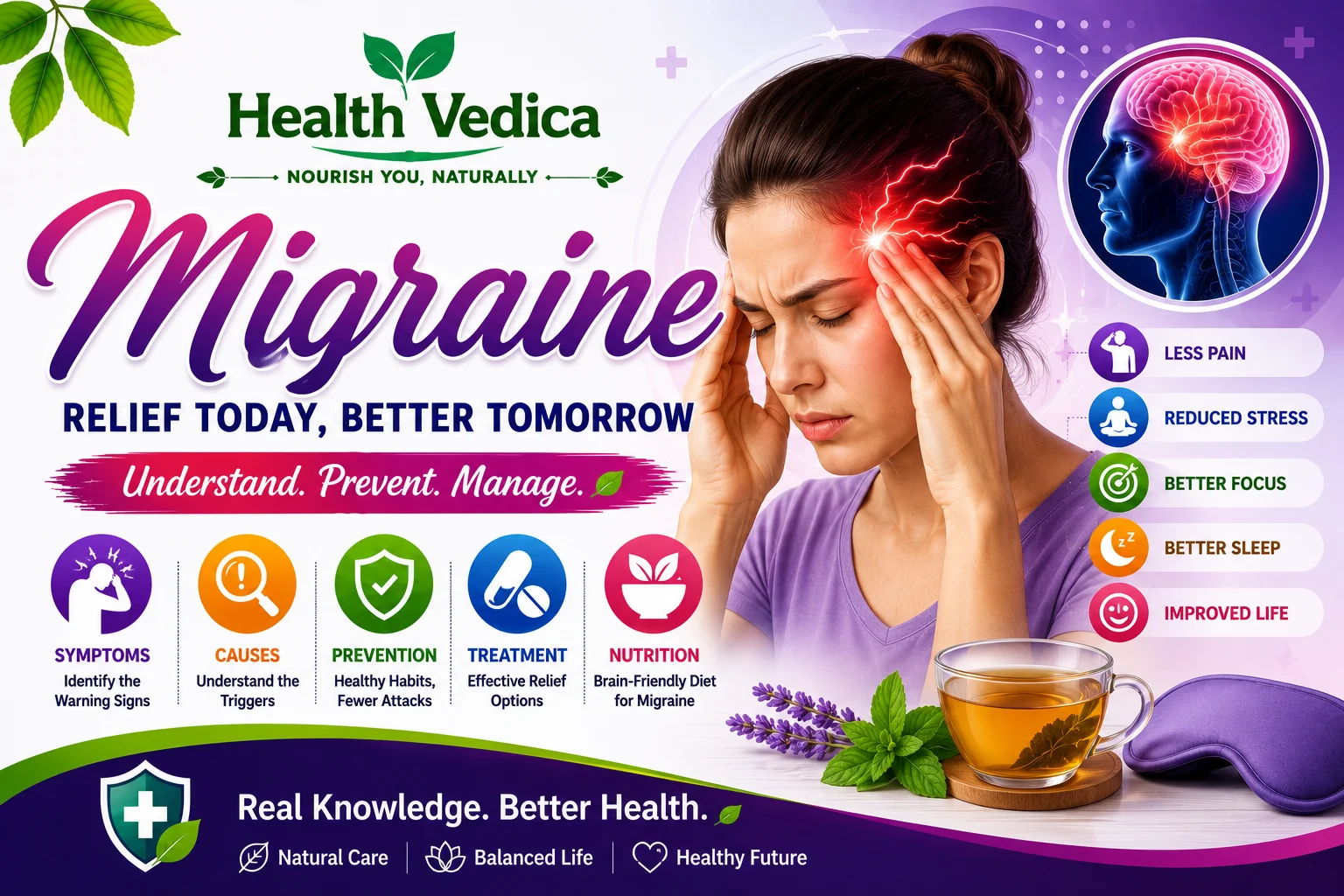
Migraine is a complex neurological disorder characterized by recurrent, often debilitating headaches — typically pulsating or throbbing, affecting one side of the head, lasting 4–72 hours, and accompanied by nausea, vomiting, and extreme sensitivity to light and sound. Globally, migraine affects 1 billion people — making it the 3rd most prevalent disease in the world. In India, approximately 25 million people suffer from migraines, with women 3 times more affected than men (due to hormonal influences). Migraines significantly impact quality of life, productivity, and mental health.
🔬 Phases of a Migraine Attack
| Phase | Timing | Symptoms |
|---|---|---|
| Prodrome (Pre-headache) | Hours to days before | Mood changes, food cravings, neck stiffness, fatigue, frequent yawning |
| Aura | Before or during headache (30%) | Visual disturbances (zigzag lines, blind spots), tingling, speech difficulty |
| Headache Phase | 4–72 hours | Throbbing pain (usually one side), nausea, vomiting, light/sound sensitivity |
| Postdrome | Up to 24 hrs after | Extreme fatigue, difficulty concentrating, head tenderness |
⚡ Common Migraine Triggers
| Trigger Category | Specific Triggers |
|---|---|
| Dietary | Alcohol (red wine, beer), aged cheese, processed meat (MSG), chocolate, artificial sweeteners, caffeine withdrawal, skipping meals, dehydration |
| Hormonal | Menstruation, ovulation, oral contraceptives, menopause — estrogen fluctuations trigger migraines |
| Environmental | Bright lights, sun glare, fluorescent lights, loud sounds, strong smells (perfume, paint), weather changes, altitude |
| Lifestyle | Sleep disruption, stress, irregular meal timing, excessive screen time, poor posture |
| Medications | Medication overuse headache (MOH) — analgesics taken >10 days/month cause rebound headaches |
🥗 Migraine-Protective Diet
| Food / Nutrient | Mechanism |
|---|---|
| Magnesium-rich foods (spinach, pumpkin seeds, dark chocolate) | Magnesium deficiency is strongly linked to migraine — 400–600mg daily reduces frequency |
| Omega-3 rich foods (flaxseeds, walnuts, fatty fish) | Reduces neuroinflammation — omega-3 supplementation reduces migraine frequency |
| Riboflavin (Vitamin B2) — almonds, eggs, leafy greens | 400mg B2 daily reduces migraine frequency by 50% in clinical trials |
| Ginger (Adrak) | Inhibits prostaglandin synthesis — as effective as sumatriptan in one RCT for acute migraine |
| Coenzyme Q10 — nuts, organ meats | 300mg CoQ10 reduces migraine frequency — mitochondrial energy support |
| Watermelon + Cucumber | High water content prevents dehydration — a key migraine trigger |
| Coffee (minimal) | Small amounts can abort early migraine (caffeine constricts dilated blood vessels). Excess causes withdrawal migraines. |
🚫 Foods to Avoid (Migraine Triggers)
Red wine and beer; aged cheeses (cheddar, brie); processed meats with nitrites (hot dogs, bacon); MSG (ajinomoto — common in Chinese food, instant noodles); chocolate (contains phenylethylamine and caffeine); artificial sweeteners (aspartame — diet sodas); fermented foods (soy sauce, vinegar); overripe fruits; and excessive caffeine or abrupt caffeine withdrawal.
🌿 Ayurvedic Perspective & Treatment
In Ayurveda, migraine is classified as Ardhavabhedaka (half-head pain) — a Vata-Pitta disorder affecting the Shirashoola (head). It involves Vyana Vata and Prana Vata disturbances combined with Pitta aggravation causing inflammation. Treatment focuses on Shiro Abhyanga, Nasya, Shirodhara, and specific herbs.
| Therapy / Herb | Benefit |
|---|---|
| Shirodhara | Warm oil stream on forehead — clinically proven to reduce migraine frequency and severity dramatically |
| Nasya (Nasal oil drops) | Anu Taila or Brahmi Ghrita nasal drops — addresses root Vata causation in head channels |
| Brahmi | Reduces neuroinflammation and anxiety — key migraine precipitant |
| Shankhapushpi | Calms nervous system excitability — reduces migraine frequency |
| Jatamansi | Nervine tonic — reduces autonomic nervous system hyperexcitability |
| Godanti Bhasma | Classical Ayurvedic gypsum preparation — rapid pain relief in acute Pitta headache |
🍵 Juices & Drinks for Migraine Relief
Ginger + Lemon Tea: At migraine onset — boil fresh ginger in water, add lemon and honey. Ginger inhibits prostaglandins (same mechanism as NSAIDs) and is one of the best-evidenced natural remedies for acute migraine. Magnesium Water: Mineral water with naturally high magnesium content reduces migraine frequency with daily consumption. Peppermint Tea: Menthol has vasodilating and analgesic properties — effective for tension-type components of migraine. Cherry Juice: Anti-inflammatory anthocyanins reduce neuroinflammation. Brahmi + Ashwagandha Milk (warm): Pre-sleep calming drink that reduces cortisol-driven migraine triggers.
💆 Non-Drug Relief Techniques
Cold Compress: Apply ice pack or cold cloth to forehead and temples — constricts blood vessels and provides immediate pain relief. Acupressure: Press the LI4 point (between thumb and index finger) firmly for 5 minutes — clinically shown to reduce migraine pain. Dark, Quiet Room: Reducing light and sound stimulation during attacks dramatically reduces severity. Yoga & Pranayama: Regular practice of Anulom Vilom, Bhramari, and Shavasana significantly reduces migraine frequency over 3 months. Regular Sleep Schedule: Consistent sleep and wake times — sleep disruption is the most common migraine trigger.
💡 Migraine Management Tips
Keep a migraine diary — track triggers, sleep, food, weather, hormonal cycle, and stress to identify personal triggers. Eat meals at fixed times — skipping meals triggers migraines. Stay hydrated — drink 2.5–3 liters of water daily. Limit screen time and use blue light filters. Avoid analgesic overuse — taking pain medication more than 10 days a month causes rebound headaches worse than original migraines.