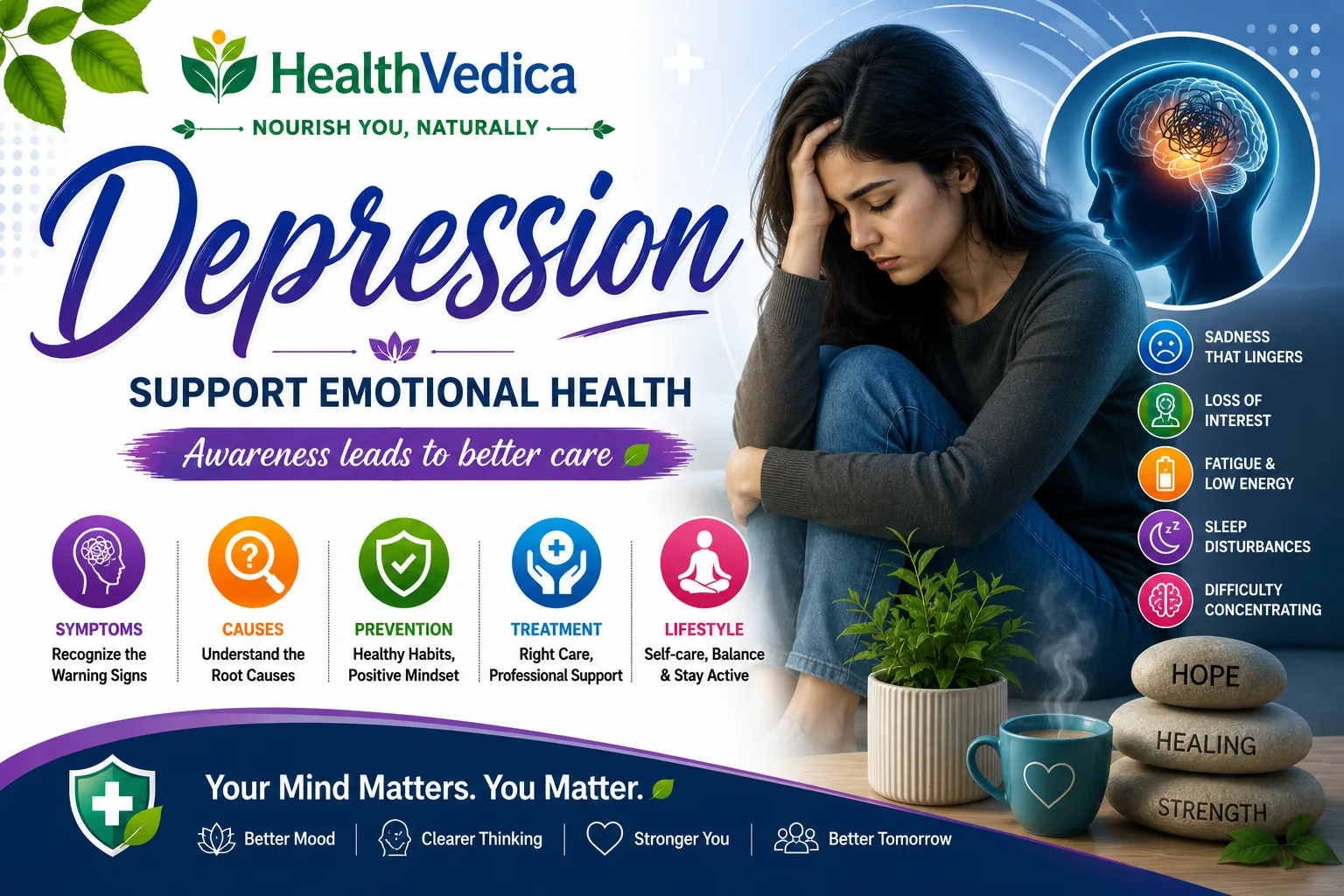
🔍 What is Depression?
Depression (Major Depressive Disorder/MDD) is a common and serious medical illness — not a personal weakness or character flaw — that negatively affects how a person feels, thinks, and acts. It causes persistent feelings of sadness, hopelessness, and loss of interest in previously enjoyed activities, interfering significantly with daily functioning. India has approximately 56 million people living with depression — making it one of the world's largest depression burdens. Despite this prevalence, the treatment gap is enormous: approximately 80% of people with depression in India do not receive any treatment due to stigma, lack of mental health awareness, shortage of professionals, and financial barriers. Depression is highly treatable — 80–90% of people respond well to treatment.
📋 Types of Depressive Disorders
| Type | Key Features |
|---|---|
| Major Depressive Disorder (MDD) | Classic depression — 5+ symptoms for 2+ weeks causing significant impairment |
| Persistent Depressive Disorder (Dysthymia) | Milder but chronic depression lasting 2+ years — 'I've always been this way' |
| Bipolar Disorder | Episodes of depression alternating with mania/hypomania — different treatment approach |
| Seasonal Affective Disorder (SAD) | Depression linked to seasons (mainly winter in western countries; monsoon-related in India) |
| Postpartum Depression | After childbirth — more severe than 'baby blues'; requires treatment; common yet undiagnosed in India |
| Psychotic Depression | Severe depression with hallucinations or delusions |
🧬 Symptoms (DSM-5 Criteria)
Depression diagnosis requires 5 or more symptoms present for at least 2 weeks, with at least one being depressed mood or loss of interest: Depressed mood most of the day, Loss of interest or pleasure in activities once enjoyed (anhedonia), Significant weight change (loss or gain) or appetite change, Sleep disturbance (insomnia or sleeping too much), Psychomotor agitation (restlessness) or retardation (slowing), Fatigue or loss of energy, Feelings of worthlessness or excessive guilt, Difficulty concentrating or making decisions, and Recurrent thoughts of death or suicide. Note: Depression in India often presents with more physical symptoms (body pain, fatigue, headaches) rather than emotional ones due to cultural stigma.
💊 Medical Treatment
| Treatment | Type | Details |
|---|---|---|
| SSRIs | First-line medication | Sertraline, Escitalopram, Fluoxetine — effective, good safety profile; 4–6 weeks to full effect |
| SNRIs | First-line medication | Venlafaxine, Duloxetine — especially for depression with pain symptoms |
| Cognitive Behavioral Therapy (CBT) | Psychotherapy (Gold Standard) | As effective as medication for mild-moderate; better long-term relapse prevention |
| Interpersonal Therapy (IPT) | Psychotherapy | Addresses relationship issues central to depression |
| Combination (CBT + Medication) | Combined | Most effective for moderate-severe depression — higher remission rates |
| ECT (Electroconvulsive Therapy) | Procedure | Safe, highly effective for severe/treatment-resistant depression; still available in India |
| TMS (Transcranial Magnetic Stimulation) | Procedure | Non-invasive brain stimulation; for treatment-resistant cases; available in major Indian cities |
🌿 Ayurvedic Perspective (Vishada)
Depression is described as Vishada in Ayurveda — a mental state characterized by loss of enthusiasm, despair, and mental inertia, primarily caused by Vata and Kapha dosha derangement with Rajas (mental turbulence) and Tamas (mental heaviness/inertia) dominance. Ayurvedic treatment focuses on Sattvic diet and lifestyle, Medhya Rasayana (brain tonics), and Panchakarma for severe cases. Key evidence-based Ayurvedic antidepressant herbs include Ashwagandha (KSM-66 extract — multiple RCTs confirm significant antidepressant and anti-anxiety effects; comparable to some medications), Saffron/Kesar (30mg extract daily — proven comparable to fluoxetine for mild-moderate depression in clinical trials), Brahmi (Bacopa monnieri — BDNF enhancer, memory, antidepressant properties), Shankhpushpi (nervine tonic, mild antidepressant), and Jatamansi (natural MAO inhibition, calming).
🧘 Evidence-Based Lifestyle Interventions
| Intervention | Evidence Level | Details |
|---|---|---|
| Aerobic Exercise | Strong (comparable to antidepressants) | 30 min brisk walk/run, 5 days/week — increases BDNF, serotonin, dopamine; multiple large meta-analyses confirm effect |
| Yoga + Pranayama | Strong | Multiple Indian RCTs confirm yoga significantly reduces depression scores; Yoga Nidra particularly effective |
| Mindfulness Meditation | Strong | MBSR (8-week program) effective; changes brain structure in regions associated with depression |
| Social Connection | Strong | Social isolation dramatically worsens depression; structured social activities are therapeutic |
| Sleep Optimization | Strong | Depression and sleep have bidirectional relationship; sleep improvement significantly helps depression |
| Sunlight Exposure | Moderate | 15–30 min morning sunlight — Vitamin D synthesis, circadian rhythm regulation, serotonin production |
| Anti-inflammatory Diet | Moderate | Mediterranean diet pattern associated with 30% lower depression risk; reduces neuroinflammation |
⚡ If Someone is Suicidal — Act Immediately
If someone expresses suicidal thoughts or intent: Take it seriously — ALWAYS. Stay with the person. Remove access to means (medications, sharp objects). Listen without judgment. Do not promise secrecy. Call iCall: 9152987821 or Vandrevala Foundation: 1860-2662-345 (24/7). Take them to the nearest hospital emergency department if there is immediate risk. Asking about suicide does NOT plant the idea — it opens a vital conversation.