🦋 Introduction
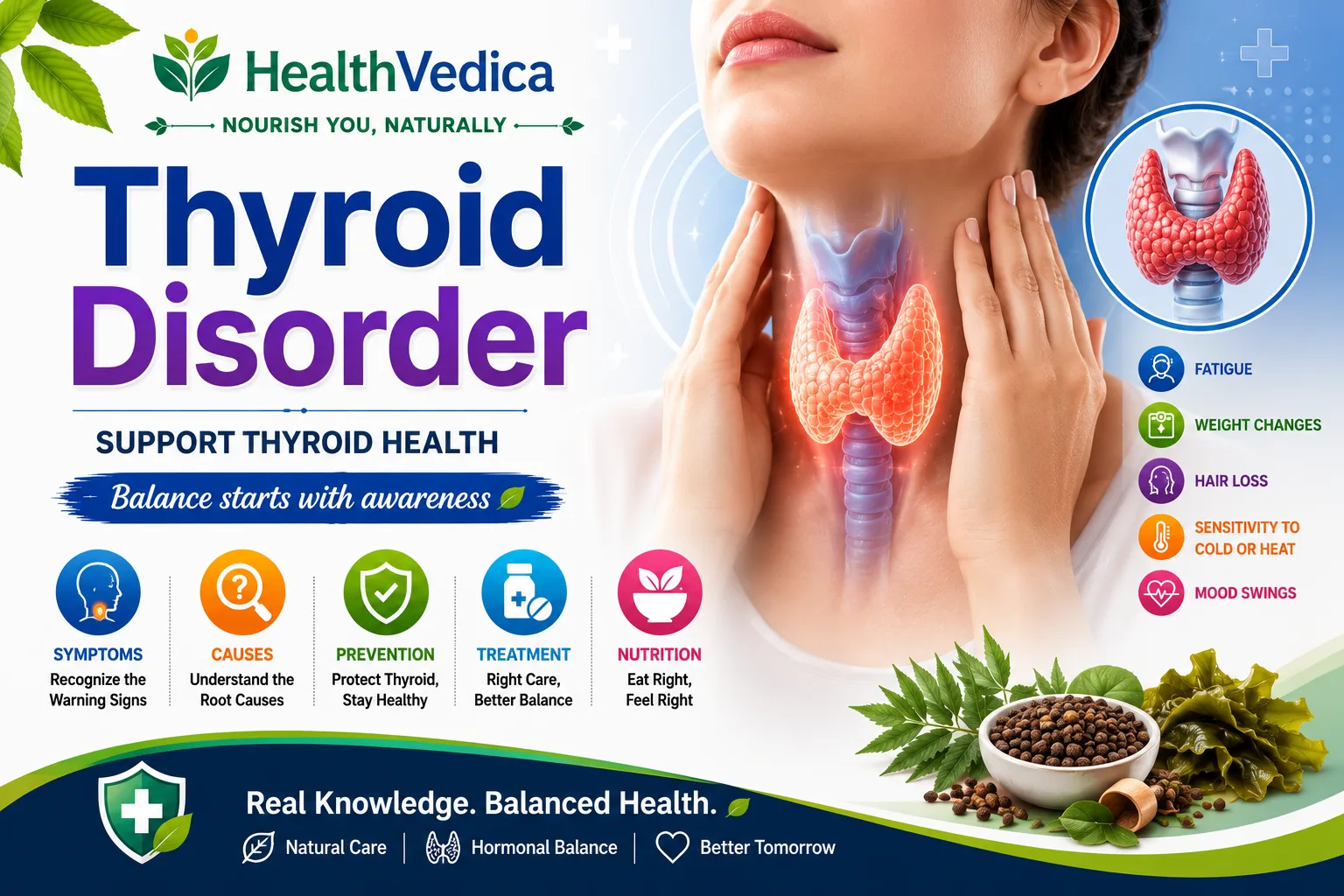
Thyroid disorders are among India's most prevalent and underdiagnosed conditions — affecting over 42 million Indians, with women 5–8 times more likely to be affected than men. The thyroid gland (butterfly-shaped, located in the neck) produces thyroxine (T4) and triiodothyronine (T3) hormones that regulate the body's metabolic rate, energy, body temperature, heart rate, brain function, and growth. Thyroid dysfunction — whether underactive (hypothyroidism) or overactive (hyperthyroidism) — profoundly impacts virtually every organ system.
🔬 Types of Thyroid Disorders
| Condition | Thyroid Activity | Cause |
|---|---|---|
| Hypothyroidism (Underactive) | Too little hormone | Hashimoto's thyroiditis (autoimmune), iodine deficiency, post-treatment |
| Hyperthyroidism (Overactive) | Too much hormone | Graves' disease (autoimmune), toxic nodule, excess iodine |
| Goitre | Normal or abnormal | Iodine deficiency, nodular goitre, thyroiditis |
| Thyroid Cancer | Usually normal | Papillary, follicular, medullary types |
| Thyroid Nodules | Usually normal | Cysts, adenomas — mostly benign, 5–10% malignant |
⚠️ Symptoms Comparison
| Symptom Area | Hypothyroidism (Low) | Hyperthyroidism (High) |
|---|---|---|
| Weight | Weight gain despite little eating | Weight loss despite increased appetite |
| Energy | Extreme fatigue, lethargy | Anxiety, nervousness, restlessness |
| Heart Rate | Slow heartbeat (bradycardia) | Rapid heartbeat, palpitations |
| Body Temperature | Intolerance to cold | Intolerance to heat, excessive sweating |
| Bowels | Constipation | Frequent loose stools, diarrhea |
| Hair & Skin | Dry skin, hair loss, brittle nails | Fine, silky hair, warm moist skin |
| Mood | Depression, brain fog, slow thinking | Irritability, anxiety, mood swings |
| Menstrual Cycle | Heavy, irregular periods | Light, irregular, or absent periods |
| Eyes | Puffy eyelids | Bulging eyes (exophthalmos in Graves') |
🧪 Thyroid Tests — What They Mean
| Test | Normal Range | Interpretation |
|---|---|---|
| TSH (Thyroid Stimulating Hormone) | 0.5–5.0 mIU/L | High TSH = Hypothyroid; Low TSH = Hyperthyroid |
| Free T4 | 0.8–1.8 ng/dL | Low T4 = Hypothyroid; High T4 = Hyperthyroid |
| Free T3 | 2.3–4.2 pg/mL | Low T3 = Hypothyroid; High T3 = Hyperthyroid |
| Anti-TPO Antibodies | <34 IU/mL | Elevated = Hashimoto's or Graves' (autoimmune) |
| Anti-TG Antibodies | <115 IU/mL | Elevated = autoimmune thyroid disease |
| TSH Receptor Antibodies | <1.75 IU/L | Elevated = Graves' disease (hyperthyroidism) |
🥗 Best Diet for Hypothyroidism
| Nutrient / Food | Benefit |
|---|---|
| Iodine — iodized salt, seafood, dairy | Essential for thyroid hormone synthesis — deficiency causes hypothyroidism |
| Selenium — Brazil nuts (2/day), sunflower seeds | Converts T4 to active T3 — 200mcg selenium reduces anti-TPO antibodies by 40% |
| Zinc — pumpkin seeds, legumes | Required for TSH production and thyroid hormone synthesis |
| Vitamin D — sun exposure, eggs, fortified foods | Deficiency worsens Hashimoto's — supplement 2000 IU daily if deficient |
| Iron — legumes, leafy greens | Iron deficiency reduces thyroid hormone synthesis effectiveness |
| Ashwagandha | Increases T3 and T4 levels — clinical trial shows significant improvement in hypothyroid patients |
| Guggul | Guggulsterones activate thyroid — traditional and clinically supported |
🚫 Goitrogenic Foods to Moderate in Hypothyroidism
Cruciferous vegetables (broccoli, cauliflower, cabbage, kale) in RAW form contain goitrogens that may inhibit thyroid hormone production. However, cooking deactivates most goitrogens — cooked cruciferous vegetables are generally safe in moderate amounts. Do not eliminate these highly nutritious vegetables — simply cook them. Raw cruciferous vegetable juices should be moderated.
🥗 Best Diet for Hyperthyroidism
Reduce iodine-rich foods (seafood, iodized salt, seaweed). Increase calcium-rich foods to protect bones (hyperthyroidism accelerates bone loss). Anti-inflammatory foods — turmeric, omega-3 rich foods (flaxseeds, walnuts). Adequate protein to counteract muscle wasting. Avoid caffeine — worsens palpitations and anxiety.
🌿 Ayurvedic Treatment
| Herb | Condition | Evidence |
|---|---|---|
| Ashwagandha (Withania somnifera) | Hypothyroidism | RCT shows significant increase in T3, T4, and reduction in TSH |
| Guggul (Commiphora mukul) | Hypothyroidism | Guggulsterones activate thyroid gland and increase T3 |
| Brahmi (Bacopa monnieri) | Both types (mind support) | Reduces thyroid-related brain fog, anxiety, depression |
| Kanchanar Guggul | Goitre, thyroid nodules | Classical formula for Gala Ganda (thyroid swelling) — reduces thyroid enlargement |
| Jatamansi | Hyperthyroidism | Reduces autonomic excitability and anxiety in hyperthyroid |
🍵 Healing Drinks for Thyroid Health
Ashwagandha + Milk (Hypothyroid): 1 tsp ashwagandha powder in warm milk at night — improves T3/T4 naturally over 8 weeks. Coconut Oil in Warm Water (Hypothyroid): MCTs stimulate thyroid activity and metabolic rate. Anti-Inflammatory Turmeric + Ginger Tea (Both): Reduces autoimmune inflammation driving Hashimoto's and Graves'. Brazil Nut Selenium Smoothie (Hypothyroid): 2 Brazil nuts daily — provides optimal selenium for T4→T3 conversion. Lemon + Ginger Water Morning (Both): Liver support — the liver converts 60% of T4 to active T3, liver health is crucial for thyroid function.
💡 Important Tips
Take thyroid medication on an empty stomach with water — calcium, iron supplements, and coffee reduce absorption. Retest TSH every 6–8 weeks when adjusting medication doses. Never stop thyroid medication without medical advice. Vitamin D, selenium, and iron deficiencies are extremely common in thyroid patients — always test and correct. Sleep deprivation worsens all thyroid conditions — prioritize 7–8 hours. Stress is a major autoimmune thyroid trigger — practice daily stress management.