☀️ Introduction
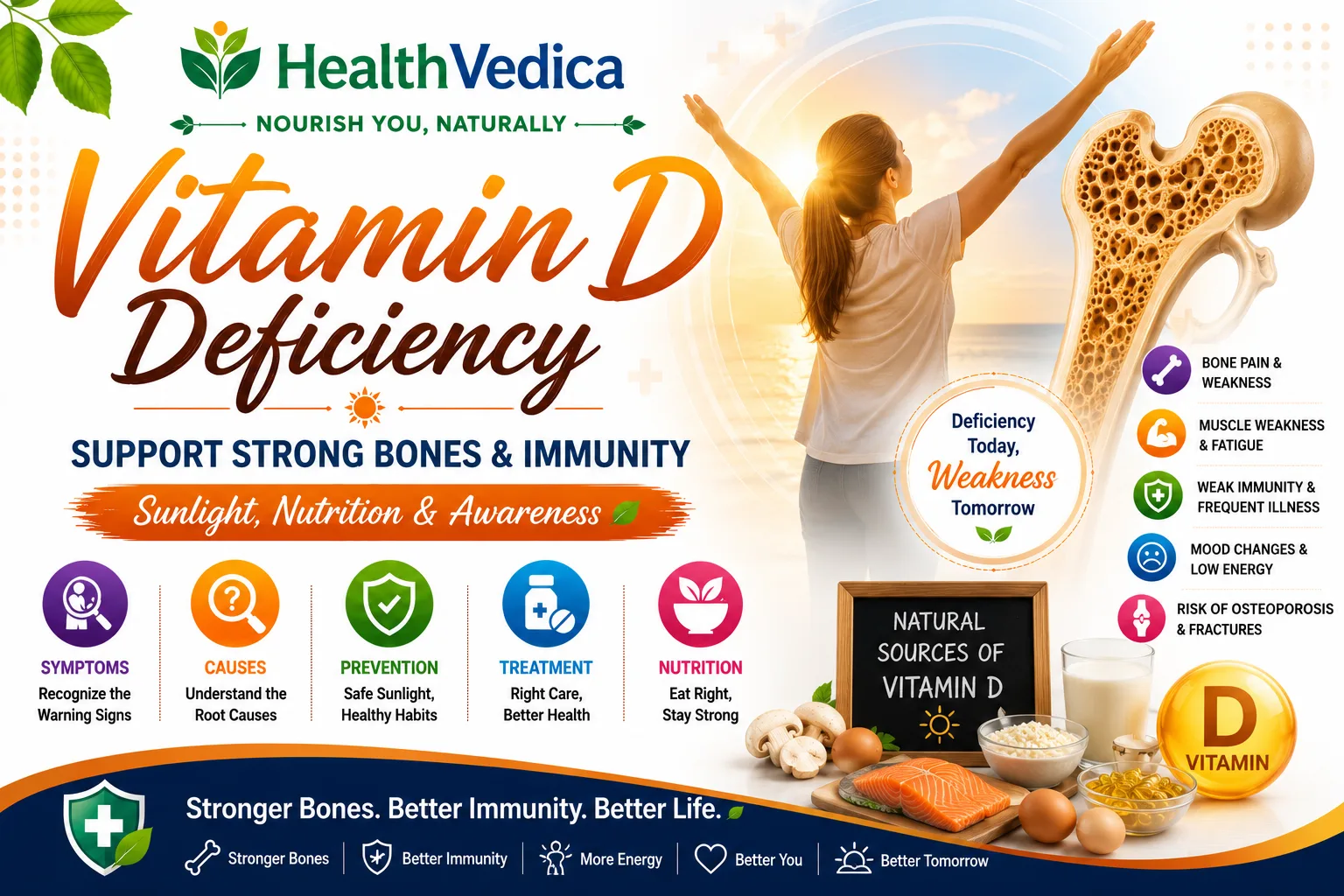
Vitamin D deficiency is India's most widespread and underrecognized nutritional epidemic — affecting an estimated 70–90% of Indians despite living in a sun-drenched country. This paradox exists because modern urban lifestyles (indoor work, sun avoidance, dark clothing, sunscreen overuse) have dramatically reduced sun exposure, the primary natural source of Vitamin D. Vitamin D is not a vitamin in the conventional sense — it functions as a hormone, influencing over 200 genes and affecting virtually every cell in the body. Deficiency is strongly associated with depression, bone disease, cancer, autoimmune disorders, diabetes, heart disease, and impaired immunity.
📊 Vitamin D Levels — Understanding Your Report
| 25-OH Vitamin D Level | Classification | Action |
|---|---|---|
| <10 ng/mL | Severe Deficiency | High-dose supplementation + sun exposure |
| 10–20 ng/mL | Deficiency | Supplementation required |
| 20–30 ng/mL | Insufficiency | Supplementation + lifestyle change |
| 30–60 ng/mL | Optimal (Target) | Maintain with sun exposure and diet |
| 60–100 ng/mL | Acceptable High-Normal | Monitor, reduce supplementation |
| >150 ng/mL | Toxicity (Rare) | Stop supplementation immediately |
⚠️ Symptoms of Vitamin D Deficiency
| System | Symptoms |
|---|---|
| Musculoskeletal | Bone pain (especially back, hips, legs), muscle weakness, frequent fractures, osteomalacia, rickets in children |
| Immune | Frequent infections (respiratory, URI), slow wound healing, increased autoimmune disease risk |
| Mental Health | Depression, anxiety, brain fog, cognitive decline, seasonal affective disorder |
| Energy | Chronic fatigue, tiredness that doesn't improve with rest |
| Hair | Excessive hair loss (alopecia) — Vitamin D receptors in hair follicles critical for growth cycle |
| Cardiovascular | Increased hypertension risk, arterial stiffness, heart disease association |
| Metabolic | Insulin resistance, higher diabetes risk, obesity predisposition |
| Dental | Poor dental enamel, increased cavity risk |
☀️ Sunlight — The Most Effective Vitamin D Source
Sunlight (UVB radiation) triggers Vitamin D3 synthesis in skin from 7-dehydrocholesterol. This is 2–4 times more effective than dietary or supplement sources because it is self-regulating (excess is automatically destroyed).
| Factor | Optimal for Indians |
|---|---|
| Time of Day | 10 AM – 2 PM (when shadow is shorter than height — peak UVB) |
| Duration | 15–30 minutes for fair-skinned Indians; 30–60 minutes for darker skin |
| Body Exposed | Arms, legs, chest, back — not just hands and face |
| Sunscreen | SPF 30 reduces Vitamin D production by 95% — don't apply before sun exposure for D3 |
| Frequency | At least 3–5 times per week |
| Glass/Tinted Windows | Block UVB completely — no Vitamin D through glass |
🥗 Dietary Sources of Vitamin D
| Food | Vitamin D per Serving | Notes |
|---|---|---|
| Cod Liver Oil (1 tbsp) | 1360 IU | Highest natural source |
| Wild Salmon (100g) | 400–600 IU | Farmed has less |
| Sardines (100g) | 300 IU | Affordable, available across India |
| Egg Yolk (1 egg) | 40–80 IU | Free-range eggs have more |
| Mushrooms (UV-exposed, 100g) | Up to 900 IU | Place mushrooms in sun 20 min before cooking |
| Fortified Milk (200ml) | 80–100 IU | Not all Indian brands fortify equally |
| Fortified Breakfast Cereal | 40–80 IU per serving | Check label for fortification |
Note: Vegetarian sources of Vitamin D (D2 from plants/mushrooms) are less potent than D3 (from animal sources and synthesis in skin). Vegans almost universally require Vitamin D3 supplementation.
💊 Vitamin D Supplementation Guide
| Deficiency Level | Loading Dose | Maintenance |
|---|---|---|
| Severe (<10 ng/mL) | 60,000 IU weekly for 8–12 weeks | 1000–2000 IU daily |
| Deficiency (10–20 ng/mL) | 60,000 IU weekly for 6–8 weeks | 1000–2000 IU daily |
| Insufficiency (20–30 ng/mL) | 60,000 IU weekly for 4 weeks | 1000 IU daily |
| Maintenance (30–60 ng/mL) | None needed | 600–1000 IU daily |
Always take Vitamin D with a fat-containing meal (it's fat-soluble). Always take with Vitamin K2 (100mcg MK-7 form daily) to direct calcium to bones rather than arteries. Retest 25-OH Vitamin D after 3 months of supplementation.
🌿 Ayurvedic Perspective
While Ayurveda predates the discovery of vitamins, it recognized Surya (Sun) as the most potent healing force and prescribed Suryasevana (sun bathing) as a therapeutic practice for bone health, skin conditions, and energy. Sesame seeds (Til) were known to support bone health — they are rich in calcium and contain small amounts of Vitamin D. Ghee enhances absorption of fat-soluble nutrients including Vitamin D analogs.
🍳 Vitamin D-Boosting Recipes
Sunny Side Up Eggs with Mushroom: Eggs + sun-exposed mushrooms — dual Vitamin D meal. Sardine + Tomato Indian Curry: Affordable Vitamin D-rich meal especially for coastal India. UV-Mushroom Stir-fry: Place mushrooms in direct sunlight for 20 minutes before cooking — dramatically increases Vitamin D content. Fortified Milk + Turmeric Latte: Combine fortified milk with turmeric for Vitamin D + anti-inflammatory benefits.
💡 Vitamin D Tips for Indians
Get blood 25-OH Vitamin D tested (not 1,25-OH — that's a different test) — must be specifically requested. The 'CLIA' method is most accurate. Take Vitamin D3 (cholecalciferol) not D2 (ergocalciferol) — D3 is 87% more potent. Magnesium is needed to activate Vitamin D — deficiency in one affects the other. Obesity stores Vitamin D in fat, making less available — obese individuals need higher doses. Kidney disease impairs Vitamin D activation — require special activated forms. Dark-skinned individuals need significantly more sun exposure than light-skinned for equivalent Vitamin D synthesis.