🌿 Introduction
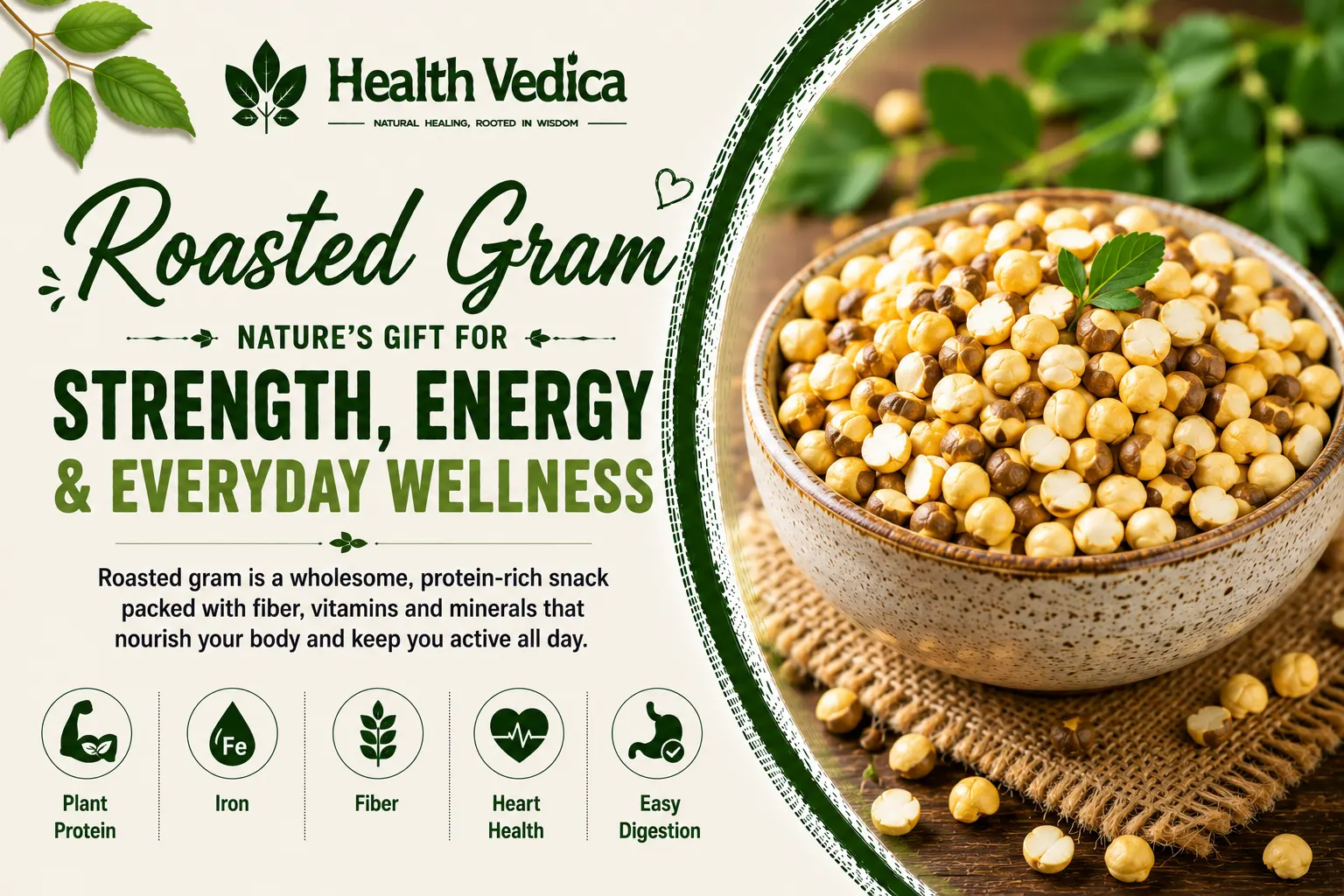
Roasted Gram, known as Bhuna Chana, Puttu Kadalai (Tamil), or Hurigadale (Kannada), is dry-roasted chickpea — one of India's oldest and most popular traditional snacks. It is extraordinarily nutrient-dense, offering a powerful combination of plant protein, dietary fiber, complex carbohydrates, B vitamins, and essential minerals in a convenient, ready-to-eat form. Unlike most snacks, roasted gram is genuinely healthy and has been a staple energy and protein food for workers, farmers, and athletes in India for centuries.
📊 Nutritional Value Per 100g
| Nutrient | Amount | % Daily Value |
|---|---|---|
| Calories | 364 kcal | 18% |
| Protein | 22 g | 44% |
| Carbohydrates | 56 g | 19% |
| Fat | 5 g | 6% |
| Fiber | 17.4 g | 62% |
| Iron | 4.9 mg | 27% |
| Folate | 557 mcg | 139% |
| Phosphorus | 366 mg | 37% |
| Magnesium | 115 mg | 27% |
| Potassium | 875 mg | 25% |
| Zinc | 3.4 mg | 31% |
| Manganese | 2.2 mg | 96% |
| Vitamin B6 | 0.5 mg | 29% |
📉 Glycemic Index
Despite its carbohydrate content, roasted gram has a low glycemic index of around 28–35, primarily due to its remarkable fiber content (17.4g per 100g — 62% DV). This ensures slow, sustained glucose release without blood sugar spikes, making it one of the best healthy snacks for diabetics and athletes alike.
🕉️ Ayurvedic Properties & Dosha Effect
In Ayurveda, Bhuna Chana is considered Laghu (light), Ruksha (dry), Sheeta (cooling), and Kashaya (astringent). It primarily balances Pitta and Kapha doshas. Dry-roasted chickpea is considered easier to digest than raw chickpea or even boiled chickpea in Ayurvedic texts because the roasting process breaks down some anti-nutrients. It is recommended as a nutritive food for building strength and stamina (Bala Vardhak).
💚 Health & Healing Benefits
Roasted gram is one of the most impressive snack foods from a nutritional standpoint. With 22g of protein per 100g, it rivals many animal protein sources and is invaluable for vegetarians and vegans seeking muscle building and weight management support. The extraordinary fiber content (17.4g/100g — 62% DV) supports gut health, prevents constipation, feeds beneficial bacteria, lowers cholesterol significantly, and provides long-lasting satiety that reduces overall calorie intake. The folate content is exceptional (139% DV per 100g), making roasted gram one of the richest folate food sources available. Iron (4.9 mg/100g, 27% DV) supports hemoglobin production. Zinc (31% DV) supports immune function and testosterone production. Manganese (96% DV) supports bone formation and antioxidant enzyme activity. Roasted gram is naturally cholesterol-free and low in saturated fat, making it heart-protective. A small handful as a snack (30–40g) provides 7–9g protein and excellent nutritional value.
🍛 Indian Dietary Uses
Roasted gram is commonly eaten as a plain snack, mixed in trail mixes, ground into sattu (roasted gram flour), used in laddoos, chaat, and as a high-protein addition to buttermilk and smoothies. Sattu drink (roasted gram flour with water, spice, and lemon) is a popular high-protein drink in Bihar and Eastern India.