🌿 Introduction
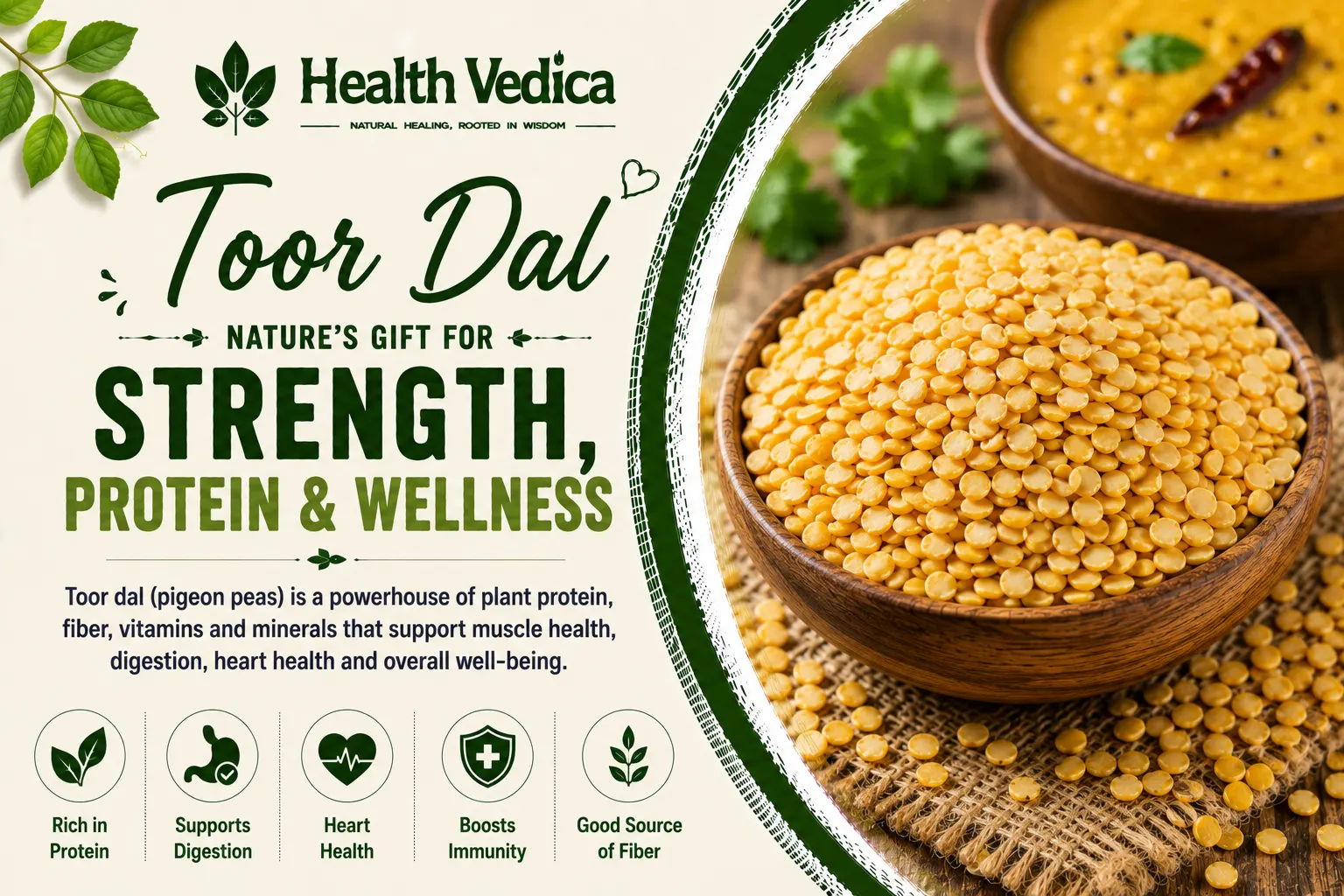
Toor Dal, also known as Arhar Dal or Split Pigeon Peas, is arguably the most consumed dal in India. It is the defining ingredient of South India's beloved Sambar and the everyday dal of millions of Indian households across all regions. Toor dal is a nutritional powerhouse offering plant protein, complex carbohydrates, B vitamins, iron, and dietary fiber — making it one of the most complete plant-based foods in the Indian diet.
📊 Nutritional Value Per 100g (Cooked)
| Nutrient | Amount | % Daily Value |
|---|---|---|
| Calories | 116 kcal | 6% |
| Protein | 6.8 g | 14% |
| Carbohydrates | 21 g | 7% |
| Fat | 0.4 g | 1% |
| Fiber | 5.7 g | 20% |
| Folate | 111 mcg | 28% |
| Iron | 1.1 mg | 6% |
| Magnesium | 46 mg | 11% |
| Potassium | 400 mg | 11% |
| Phosphorus | 156 mg | 16% |
| Zinc | 0.96 mg | 9% |
| Thiamine (B1) | 0.2 mg | 17% |
| Calcium | 43 mg | 4% |
📉 Glycemic Index
Toor dal has a low glycemic index of around 29, making it diabetes-friendly and ideal for blood sugar management. Its significant fiber and protein content ensures slow glucose release and sustained energy. Including toor dal regularly in meals is associated with better long-term blood sugar control in Indian studies.
🕉️ Ayurvedic Properties & Dosha Effect
In Ayurveda, Toor Dal is considered Laghu (light), Ruksha (dry), and Madhura-Kashaya (sweet-astringent) in taste. It balances Pitta and Kapha doshas. It is considered an easily digestible, nutritive dal that builds body tissues (Dhatu Poshak). Toor dal with ghee, turmeric, and cumin (standard Indian tadka) is considered one of the most Sattvic and complete vegetarian meals in Ayurvedic nutrition. It supports Agni and is recommended for people recovering from illness.
💚 Health & Healing Benefits
Toor dal's high folate content (28% DV per 100g cooked) makes it critical for pregnant women and those planning conception, as folate prevents neural tube defects. Its protein content (6.8g per 100g) combined with rice or roti creates a complete amino acid profile that supports muscle maintenance and repair. The magnesium in toor dal (11% DV) supports hundreds of enzymatic functions including energy metabolism, nerve function, and insulin signaling. Potassium helps regulate blood pressure and fluid balance. The fiber content supports gut health, regular bowel movement, and lowers cholesterol. Toor dal's antioxidant polyphenols help combat oxidative stress and inflammation. As a naturally low-fat, high-nutrition food, toor dal supports weight management while providing essential satiety.
🍛 Indian Dietary Uses
Toor dal is used in the iconic South Indian Sambar, everyday Tadka Dal, Dal Fry, Dal Khichdi, and Dal Dhokli (Gujarati). It is the foundation of the Indian thali across most states and is eaten at least once daily in millions of households.