🌿 Introduction
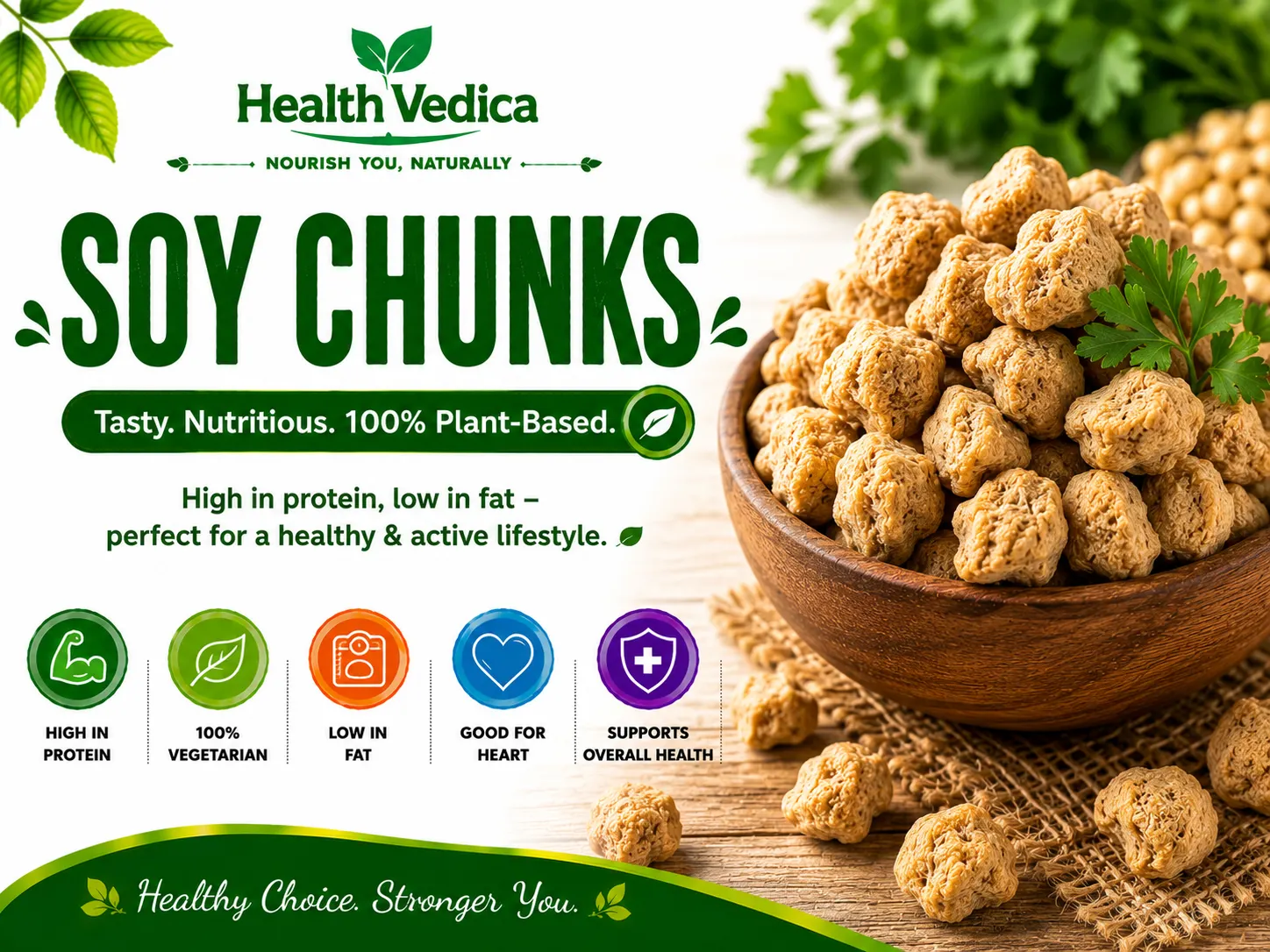
Soya Chunks, also known as Textured Vegetable Protein (TVP), are one of India's most popular affordable plant-based protein foods. They are made from defatted soybean flour after extracting soybean oil, resulting in a highly concentrated protein-rich food.
Soya chunks have a meat-like chewy texture and are commonly used as a vegetarian alternative to meat in dishes such as soya curry, biryani, pulao, cutlets and stir-fries.
Because of their exceptionally high protein content, soya chunks are especially popular among vegetarians, athletes, gym enthusiasts and people looking for budget-friendly protein sources.
Unlike many plant foods, soy protein contains all essential amino acids, making soya chunks one of the best complete vegetarian protein options.
📊 Nutritional Value Per 100g of Dry Soya Chunks
| Nutrient | Amount | % Daily Value (DV) |
|---|---|---|
| Calories | 345 kcal | 17% |
| Protein | 52 g | 104% |
| Total Fat | 0.5 g | <1% |
| Carbohydrates | 33 g | 12% |
| Dietary Fiber | 13 g | 46% |
| Calcium | 350 mg | 27% |
| Iron | 20 mg | 111% |
| Magnesium | 280 mg | 67% |
| Phosphorus | 550 mg | 44% |
| Potassium | 1800 mg | 38% |
| Zinc | 4 mg | 36% |
| Isoflavones | Present | — |
💪 Extremely High Protein Food
Soya chunks contain approximately 50–52g protein per 100g dry weight, making them one of the highest protein vegetarian foods available.
For comparison, soya chunks provide more protein per 100g than many common vegetarian protein sources like lentils, chickpeas and paneer.
The protein quality is high because soy contains all nine essential amino acids needed for muscle repair and growth.
📉 Glycemic Index
Soya chunks have a low glycemic effect because they are rich in protein and fiber while being relatively low in digestible carbohydrates.
This makes them useful in balanced diets for people managing blood sugar levels.
🧬 Powerful Nutritional Compounds
Soya chunks contain soy protein, isoflavones, phytosterols, lecithin and antioxidant compounds.
Isoflavones are naturally occurring plant compounds studied for their possible role in heart health, bone health and hormonal wellness.
🕉️ Ayurvedic Perspective & Dosha Effect
Soya chunks are a modern processed form of soybean and are not directly mentioned in classical Ayurveda. Based on their qualities, they can be understood as a heavy and nourishing food.
Rasa (Taste): Sweet (Madhura).
Quality: Heavy, protein-rich and strengthening.
Dosha Effect: May support Vata due to nourishment but excessive intake may increase Kapha because of heaviness.
Ayurveda emphasizes proper cooking with digestive spices like ginger, cumin, hing, ajwain and black pepper because soy-based foods may feel heavy for some people.
💚 Evidence-Based Health Benefits
Muscle Building: High-quality protein supports muscle repair, strength and recovery, making soya chunks popular among fitness enthusiasts.
Weight Management: Protein increases fullness and may help reduce unnecessary calorie intake.
Heart Health: Replacing high saturated-fat protein sources with soy protein may support healthier cholesterol levels.
Blood Sugar Support: Protein and fiber slow digestion and help maintain steady energy.
Bone Health: Protein, calcium and minerals contribute to maintaining bone strength.
Iron Support: High iron content makes soya chunks useful in iron-rich diets.
Affordable Nutrition: Provides high protein at a lower cost compared with many animal protein sources.
🏋️ Soya Chunks for Gym & Fitness
Soya chunks are widely used by vegetarians who need higher protein intake. A typical serving of cooked soya chunks can provide significant protein for muscle recovery.
Combining soya chunks with rice, roti, millets or vegetables creates a balanced meal containing protein, carbohydrates and micronutrients.
❤️ Soya Chunks & Heart Health
Soya chunks are naturally low in saturated fat and contain plant compounds that may support cardiovascular health when included as part of a balanced diet.
🩸 Soya Chunks & Diabetes
The high protein and fiber content helps slow digestion and may support better blood sugar control. Portion control remains important because they still contain carbohydrates.
👨👩👧 Who Should Eat Soya Chunks?
Soya chunks are suitable for vegetarians, athletes, gym-goers, students and anyone needing affordable high-quality protein.
🚫 Who Should Limit Soya Chunks?
People with soy allergy should avoid them. Individuals with digestive sensitivity may need smaller portions because soy products can cause bloating in some people.
🌿 Healthy Recipes & Preparations
Soya Chunk Curry: Protein-rich Indian curry with spices.
Soya Biryani: Vegetarian high-protein rice dish.
Soya Keema: Minced-style preparation replacing meat.
Soya Cutlets: Healthy snack option with vegetables.
Soya Stir Fry: Quick protein-rich meal.
🥗 Best Ways to Eat Soya Chunks
Always soak and boil soya chunks before cooking. Rinsing after boiling improves taste and removes the raw soybean flavour.
Adding digestive spices improves flavour and may reduce bloating.
🍽️ Best Food Combinations
Soya chunks pair well with vegetables, whole grains, millets, rice, spinach, tomatoes, ginger, garlic and Indian spices.
🌱 Soya Chunks vs Other Protein Foods
| Food | Approx Protein / 100g |
|---|---|
| Soya Chunks | 50–52g |
| Chickpeas | 19g |
| Lentils | 24g |
| Paneer | 18–20g |
🧊 Storage Tips
Store dry soya chunks in an airtight container away from moisture. Proper storage keeps them fresh for a long time.
📅 Daily Recommended Intake
For most adults, 25–50g dry soya chunks per day can be included depending on protein requirements and overall diet.
⚠️ Precautions
Avoid excessive consumption of highly processed soy foods. People with soy allergy should completely avoid soya products.
🔬 Scientific Highlights
Soya chunks are recognized as a high-quality plant protein source because of their complete amino acid profile, high protein concentration and beneficial soy compounds.
❌ Common Myths & Facts
❌ Myth: Soya chunks are harmful for men.
✅ Fact: Moderate soy consumption has not been shown to negatively affect testosterone levels in healthy men.
❌ Myth: Only non-vegetarian foods build muscle.
✅ Fact: Soy protein can support muscle growth when total protein intake is adequate.
❌ Myth: Eating soy daily is always dangerous.
✅ Fact: Moderate amounts of traditional soy foods are considered safe for most healthy people.
🌍 Fun Facts
- Soya chunks were developed as a low-cost protein-rich food.
- They can absorb flavours from spices and sauces easily.
- They are one of India's most popular vegetarian meat alternatives.
- Soya chunks are made from soybean after oil extraction.
- They can expand several times after soaking in water.
🌱 Edible Form & Benefits
| Form | Benefits |
|---|---|
| Dry Soya Chunks | Highly concentrated protein source. |
| Cooked Soya Chunks | Easy-to-digest protein-rich food. |
| Soya Granules | Useful for curries and fillings. |
🌱 Availability in India
| Information | Details |
|---|---|
| Availability | Available throughout the year. |
| Storage | Long shelf life when kept dry. |
| Buying Tip | Select clean products from trusted brands. |
⏰ Best Time to Eat
Soya chunks can be consumed during lunch or dinner. Many fitness enthusiasts prefer them after workouts because of their high protein content.