🌿 Introduction
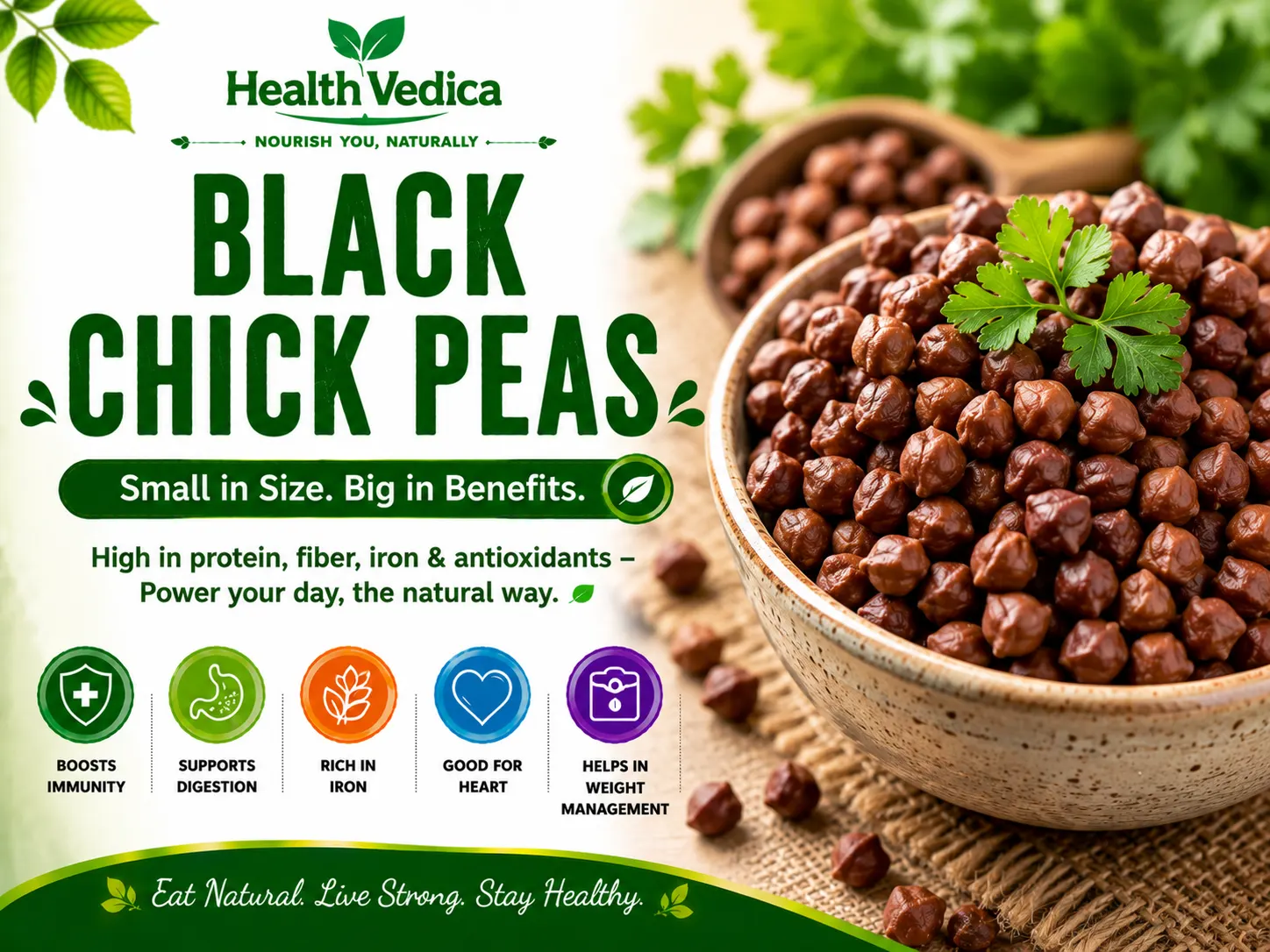
Black Chickpeas, popularly known as Kala Chana in India, are a traditional powerhouse legume valued for their high protein, fiber, minerals and long-lasting energy. They are a smaller, darker variety of chickpeas belonging to the Desi Chickpea group and have been an essential part of Indian diets for thousands of years.
Compared to regular Kabuli chickpeas, Kala Chana has a slightly nuttier flavour, firmer texture and higher fiber content. It is widely consumed as boiled kala chana, roasted chana, sprouts, sundal, curries and salads.
In Ayurveda, Kala Chana is considered a nourishing pulse that supports strength, digestion and metabolism when consumed properly with digestive spices.
📊 Nutritional Value Per 100g of Dry Black Chickpeas
| Nutrient | Amount | % Daily Value (DV) |
|---|---|---|
| Calories | 364 kcal | 18% |
| Protein | 20 g | 40% |
| Total Fat | 5.9 g | 8% |
| Carbohydrates | 60.6 g | 22% |
| Dietary Fiber | 17.5 g | 63% |
| Iron | 6.2 mg | 34% |
| Calcium | 105 mg | 8% |
| Magnesium | 115 mg | 27% |
| Potassium | 875 mg | 19% |
| Phosphorus | 366 mg | 52% |
| Folate | 557 mcg | 139% |
| Zinc | 3.4 mg | 31% |
| Manganese | 2.1 mg | 91% |
📉 Glycemic Index & Diabetes Benefits
Kala Chana has a low glycemic index (approximately 28–33 when cooked). Its high fiber and protein content slow digestion, helping maintain steady energy release and reducing sudden blood sugar fluctuations.
Because of this slow-digesting nature, Kala Chana is commonly included in balanced meal plans for people managing blood sugar levels.
💪 High Protein Vegetarian Food
With around 20g protein per 100g dry weight, Kala Chana is one of the best affordable plant protein sources in India. It supports muscle repair, strength maintenance and overall body nourishment.
Combining Kala Chana with grains like rice, roti or millets improves the amino acid balance of the meal.
🧬 Powerful Bioactive Compounds
Black chickpeas contain polyphenols, flavonoids, resistant starch, phytosterols and antioxidant compounds. Their dark outer skin contains additional protective plant compounds.
🕉️ Ayurvedic Properties & Dosha Effect
In Ayurveda, Kala Chana is considered a strengthening pulse with grounding qualities.
Rasa (Taste): Sweet (Madhura) and astringent (Kashaya).
Virya (Potency): Cooling.
Dosha Effect: Helps control excess Kapha due to its dry and protein-rich nature. Excess consumption may aggravate Vata due to its gas-forming tendency.
Ayurveda recommends soaking overnight and cooking Kala Chana with hing, cumin, ginger, ajwain and black pepper to improve digestion.
💚 Evidence-Based Health Benefits
Blood Sugar Management: High fiber and protein slow carbohydrate absorption, supporting better glucose control.
Muscle Strength: Plant protein helps maintain muscle mass and supports recovery.
Heart Health: Soluble fiber helps support healthy cholesterol levels, while potassium supports blood pressure balance.
Weight Management: Protein and fiber increase fullness, helping reduce unnecessary calorie intake.
Improves Digestion: Fiber supports bowel regularity and feeds beneficial gut bacteria.
Supports Iron Levels: Kala Chana provides plant-based iron, useful in iron-rich diets.
Provides Long-Lasting Energy: Complex carbohydrates provide steady energy without rapid spikes.
🩸 Kala Chana & Anaemia Support
Kala Chana provides iron, folate and protein, nutrients involved in healthy red blood cell formation. Pairing it with vitamin C-rich foods like lemon, amla or tomatoes improves plant iron absorption.
🏋️ Kala Chana for Fitness
Sprouted or boiled Kala Chana is a popular fitness food because it provides a combination of protein, complex carbohydrates and fiber that supports active lifestyles.
👨👩👧 Who Should Eat Kala Chana?
Kala Chana is suitable for vegetarians, athletes, growing children, adults and anyone looking for affordable plant-based nutrition.
🚫 Who Should Limit Kala Chana?
People with severe bloating, IBS sensitivity, legume allergies or digestive weakness may need smaller portions. Those with kidney disease should monitor mineral intake based on medical advice.
🌿 Healthy Recipes & Preparations
Boiled Kala Chana: Simple protein-rich snack with lemon and spices.
Kala Chana Curry: Traditional Indian curry preparation.
Sprouted Kala Chana: Nutrient-rich breakfast or salad ingredient.
Chana Sundal: South Indian coconut-based preparation.
Roasted Kala Chana: Healthy crunchy snack alternative.
🥗 Best Ways to Eat Kala Chana
Soak Kala Chana overnight and cook thoroughly. Adding digestive spices reduces bloating and improves absorption.
🍽️ Best Food Combinations
Kala Chana pairs well with lemon, onions, tomatoes, coriander, spinach, millets, rice, yogurt and Indian spices.
🌱 Sprouted Kala Chana Benefits
Sprouting activates enzymes and may improve digestibility and nutrient availability. Sprouted Kala Chana is commonly consumed as a healthy morning snack.
🧊 Storage Tips
Store dry Kala Chana in an airtight container away from moisture. Cooked chickpeas can be refrigerated for a few days.
📅 Daily Recommended Intake
50–100 grams cooked Kala Chana can be consumed regularly depending on nutritional requirements.
⚠️ Precautions
Overconsumption may cause gas due to high fiber and resistant starch. Proper soaking and cooking help reduce digestive discomfort.
🔬 Scientific Highlights
Studies on desi chickpeas highlight their high protein, fiber, mineral and antioxidant content, making them valuable for metabolic health and balanced nutrition.
❌ Common Myths & Facts
❌ Myth: Kala Chana causes weight gain.
✅ Fact: Its protein and fiber content can support healthy weight management when eaten in appropriate portions.
❌ Myth: Only non-vegetarian foods provide protein.
✅ Fact: Kala Chana is an excellent affordable plant protein source.
❌ Myth: Sprouts are always better than cooked chickpeas.
✅ Fact: Both forms have benefits depending on individual digestion and needs.
🌍 Fun Facts
- Kala Chana is one of India's oldest traditional pulses.
- It is the main ingredient used to make besan (gram flour).
- Roasted chana has been a traditional Indian snack for centuries.
- Black chickpeas are smaller and darker than Kabuli chickpeas.
- India is one of the world's largest consumers of chickpeas.
🌱 Edible Parts & Their Benefits
| Edible Part | Health Benefits |
|---|---|
| Whole Kala Chana | Rich in protein, fiber and minerals. |
| Sprouted Kala Chana | Improved digestibility and nutrient availability. |
| Roasted Chana | Portable protein-rich snack. |
🌱 Seasonality in India
| Season | Availability |
|---|---|
| Harvest Season | February – April |
| Best Climate | Cool and dry conditions |
| Buying Tip | Select clean, uniform seeds without insect damage. |
⏰ Best Time to Eat
Kala Chana is best consumed during breakfast or lunch because it provides sustained energy and takes longer to digest.