🌿 Introduction
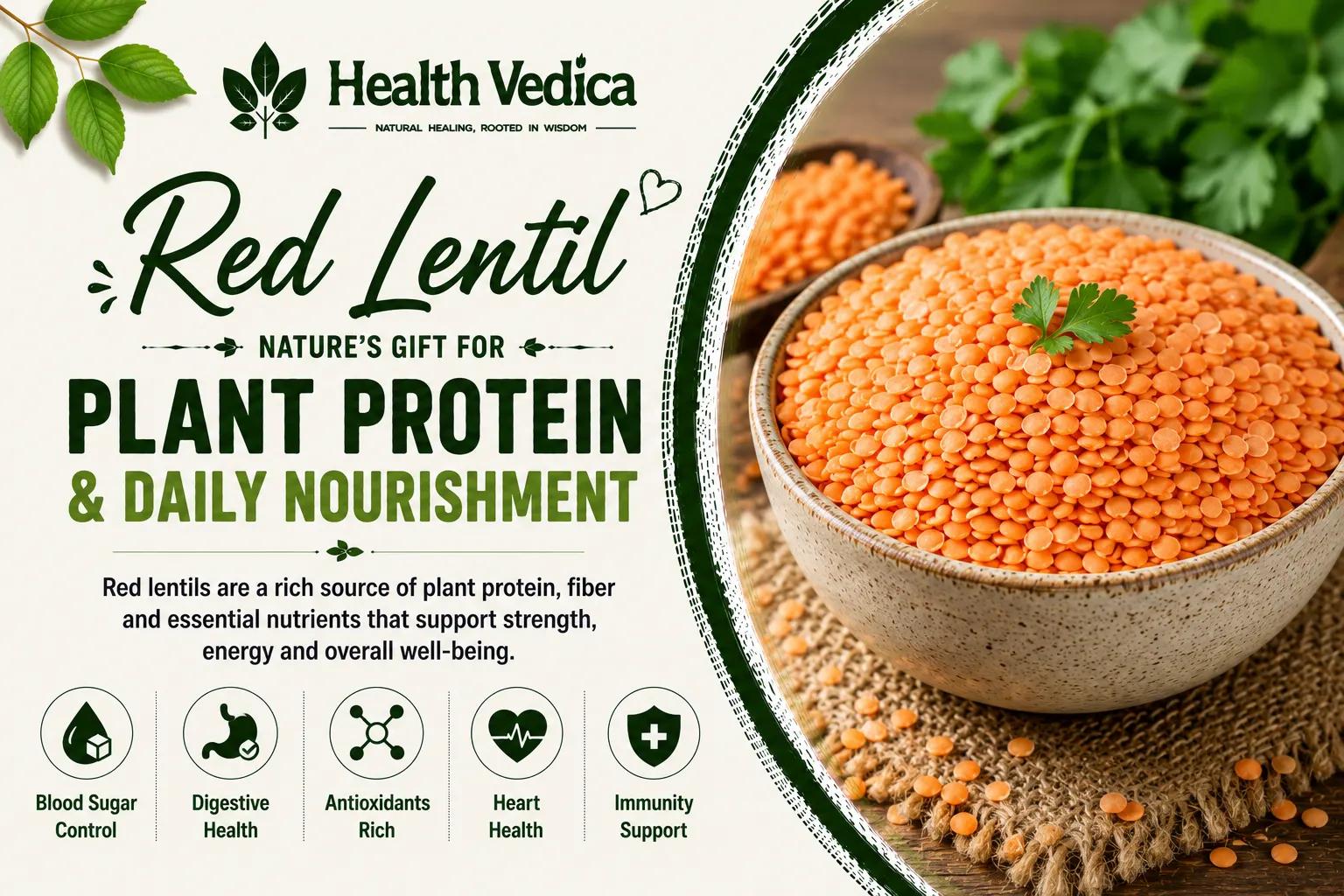
Red Lentils, known as Masoor Dal in India, are one of the most widely consumed lentils in Indian households. Easily digestible, quick-cooking (no soaking required), and extraordinarily nutrient-dense, masoor dal is a daily staple providing plant protein, iron, folate, and complex carbohydrates. Split red lentils are one of the oldest cultivated legumes in South Asia and have fed generations of Indians as an affordable, complete nutritional food.
📊 Nutritional Value Per 100g (Cooked)
| Nutrient | Amount | % Daily Value |
|---|---|---|
| Calories | 116 kcal | 6% |
| Protein | 9 g | 18% |
| Carbohydrates | 20 g | 7% |
| Fat | 0.4 g | 1% |
| Fiber | 7.9 g | 28% |
| Folate | 181 mcg | 45% |
| Iron | 3.3 mg | 18% |
| Potassium | 369 mg | 11% |
| Magnesium | 36 mg | 9% |
| Phosphorus | 180 mg | 18% |
| Zinc | 1.3 mg | 12% |
| B Vitamins (B1, B5, B6) | Significant | — |
📉 Glycemic Index
Despite being a legume with significant carbohydrate content, masoor dal has a low glycemic index of around 21–30 due to its extraordinary fiber content (7.9g per 100g cooked). It promotes slow, sustained glucose release and is highly recommended in diabetic meal plans across India.
🕉️ Ayurvedic Properties & Dosha Effect
In Ayurveda, Masoor Dal is classified as Laghu (light), Rooksha (dry), and Vishada (clarity-promoting). It primarily balances Pitta and Kapha doshas. It is one of the more easily digestible dals, making it a preferred choice for people recovering from illness, children, and the elderly. Adding ghee, cumin, and turmeric during cooking (tadka) significantly enhances its nutritional bioavailability and digestibility.
💚 Health & Healing Benefits
Red lentils are exceptional for cardiovascular health — their high fiber lowers LDL cholesterol, their folate reduces homocysteine (a heart disease risk factor), and their potassium-to-sodium ratio supports healthy blood pressure. The protein content (9g per 100g cooked) makes masoor dal one of the most important protein sources for vegetarians and provides sustained satiety. Iron (3.3 mg per 100g) supports red blood cell production and is critical for preventing anemia. Consuming masoor dal with Vitamin C-rich foods (like tomatoes or lemon juice) dramatically enhances iron absorption. Folate (45% DV) is essential for DNA synthesis, cell division, and is particularly critical during pregnancy. The prebiotic fiber in masoor dal feeds beneficial gut bacteria, supporting microbiome diversity and reducing inflammation. Lentil polyphenols have demonstrated anti-cancer properties in studies focused on colon health.
🍛 Indian Dietary Uses
Masoor Dal is prepared as simple dal (tadka dal), dal soup, masoor dal khichdi, dal palak, and masoor sprouts salad. It cooks quickly without soaking and forms the base of many everyday Indian meals. It can also be sprouted for maximum nutritional benefit.