🌿 Introduction
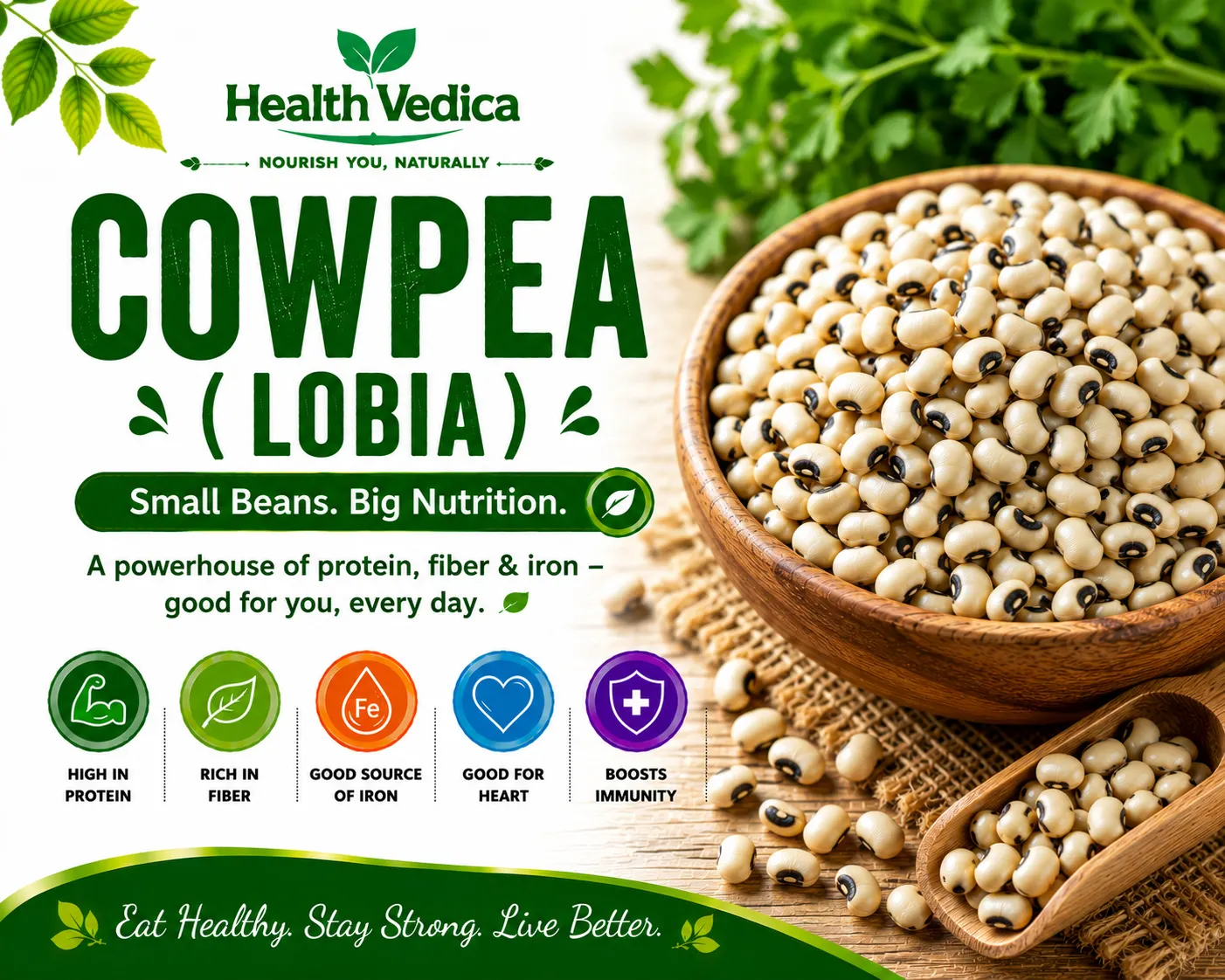
Cowpea (Vigna unguiculata), popularly known as Lobia or Black Eyed Peas, is a highly nutritious traditional pulse consumed across India and many parts of the world.
Cowpea is known for its creamy texture, mild flavour and impressive combination of plant protein, dietary fiber, minerals and antioxidants. It is commonly prepared as lobia curry, salads, sundal, sprouts and traditional regional dishes.
For centuries, cowpea has been valued as an affordable source of nutrition, especially in vegetarian diets. It provides sustained energy and supports overall health through its rich nutrient profile.
In Ayurveda-inspired diets, pulses like lobia are appreciated for their strengthening and nourishing qualities when prepared with proper spices.
📊 Nutritional Value Per 100g of Dry Cowpea (Lobia)
| Nutrient | Amount | % Daily Value (DV) |
|---|---|---|
| Calories | 336 kcal | 17% |
| Protein | 23.5 g | 47% |
| Total Fat | 1.3 g | 2% |
| Carbohydrates | 60 g | 22% |
| Dietary Fiber | 10.6 g | 38% |
| Calcium | 110 mg | 8% |
| Iron | 8.3 mg | 46% |
| Magnesium | 184 mg | 44% |
| Phosphorus | 424 mg | 61% |
| Potassium | 1112 mg | 24% |
| Folate | 356 mcg | 89% |
| Zinc | 3.4 mg | 31% |
| Manganese | 1.5 mg | 65% |
📉 Glycemic Index & Diabetes Benefits
Cowpea has a low glycemic impact due to its high fiber, protein and complex carbohydrates.
The slow digestion of lobia helps provide steady energy and may support better blood sugar management when included in a balanced diet.
💪 Excellent Vegetarian Protein Source
Cowpea provides around 23g protein per 100g dry weight, making it an excellent plant-based protein option.
It supports muscle maintenance, tissue repair and daily nutritional needs, especially for vegetarians.
🧬 Antioxidant & Protective Compounds
Cowpeas contain polyphenols, flavonoids, antioxidants and resistant starch that contribute to metabolic and digestive health.
The coloured varieties of cowpea contain additional antioxidant pigments that protect plant cells.
🕉️ Ayurvedic Properties & Dosha Effect
Traditional Ayurvedic texts describe legumes as nourishing foods when properly prepared.
Rasa (Taste): Sweet (Madhura) and slightly astringent (Kashaya).
Quality: Light to moderate, strengthening.
Dosha Effect: Helps balance Kapha due to its protein and fiber content. Excess consumption may increase Vata because legumes can cause gas.
Ayurveda recommends cooking lobia with hing, cumin, ginger, garlic and black pepper for better digestion.
💚 Evidence-Based Health Benefits
Heart Health: Fiber helps support healthy cholesterol levels and cardiovascular wellness.
Blood Sugar Control: Protein and fiber slow carbohydrate absorption and improve satiety.
Weight Management: High fiber and protein reduce hunger and support calorie control.
Digestive Health: Fiber supports bowel regularity and beneficial gut bacteria.
Blood Formation: Iron and folate contribute to healthy red blood cell production.
Muscle Support: Plant protein helps maintain strength and repair tissues.
🩸 Cowpea & Anaemia Support
Cowpea provides iron and folate, important nutrients involved in healthy blood formation. Consuming lobia with lemon, tomatoes or other vitamin C-rich foods improves iron absorption.
❤️ Cowpea for Heart Health
The low-fat nature combined with fiber, potassium and antioxidants makes cowpea a heart-friendly pulse when included in a balanced diet.
👨👩👧 Who Should Eat Cowpea?
Cowpea is suitable for children, adults, vegetarians, athletes and people looking for affordable protein-rich foods.
🚫 Who Should Limit Cowpea?
People with severe digestive sensitivity, legume allergies or certain kidney-related dietary restrictions should consume according to individual requirements.
🌿 Healthy Recipes & Preparations
Lobia Curry: Traditional North Indian protein-rich curry.
Cowpea Sundal: South Indian coconut-based snack.
Cowpea Salad: Healthy high-fiber meal option.
Sprouted Lobia: Nutrient-rich breakfast preparation.
Lobia Soup: Light and nourishing recipe.
🥗 Best Ways to Eat Cowpea
Soaking cowpeas overnight reduces cooking time and improves digestibility. Proper cooking helps reduce natural compounds that may interfere with nutrient absorption.
Adding spices like cumin, hing and ginger improves digestion.
🍽️ Best Food Combinations
Cowpea pairs well with rice, roti, millets, vegetables, leafy greens, coconut and Indian spices.
🌱 Cowpea vs Other Pulses
| Pulse | Main Benefit |
|---|---|
| Cowpea | Protein + fiber balance |
| Chickpeas | Protein and minerals |
| Moong Dal | Easy digestion |
| Horse Gram | Metabolism support |
🧊 Storage Tips
Store dry cowpeas in an airtight container away from moisture and insects.
📅 Daily Recommended Intake
Approximately 40–60 grams dry cowpea can be included as part of a balanced diet depending on individual nutritional needs.
⚠️ Precautions
Excess intake may cause gas and bloating due to fiber and complex carbohydrates. Soaking and cooking properly improves tolerance.
🔬 Scientific Highlights
Cowpea is recognized as a nutrient-rich legume containing protein, fiber, minerals and antioxidants that support metabolic health.
❌ Common Myths & Facts
❌ Myth: Pulses are only carbohydrate foods.
✅ Fact: Cowpea provides significant protein along with complex carbohydrates.
❌ Myth: Vegetarian diets cannot provide enough protein.
✅ Fact: Pulses like cowpea are valuable plant protein sources.
❌ Myth: Lobia is difficult to digest for everyone.
✅ Fact: Proper soaking, cooking and spices improve digestion.
🌍 Fun Facts
- Cowpea is one of the oldest cultivated legumes.
- It is called Lobia in North India and Chawli in western India.
- Black-eyed peas are a famous variety of cowpea.
- Cowpea grows well in dry climates.
- It is an important affordable protein source worldwide.
🌱 Edible Forms & Benefits
| Form | Benefits |
|---|---|
| Whole Cowpea | High protein and fiber. |
| Sprouted Cowpea | Improved nutrient availability. |
| Cooked Lobia | Easy daily protein source. |
🌱 Seasonality in India
| Information | Details |
|---|---|
| Growing Season | Summer and monsoon seasons |
| Availability | Available throughout the year. |
| Buying Tip | Select clean beans with uniform colour. |
⏰ Best Time to Eat
Cowpea is best consumed during lunch because it provides sustained energy and requires adequate digestion time.