🌿 Introduction
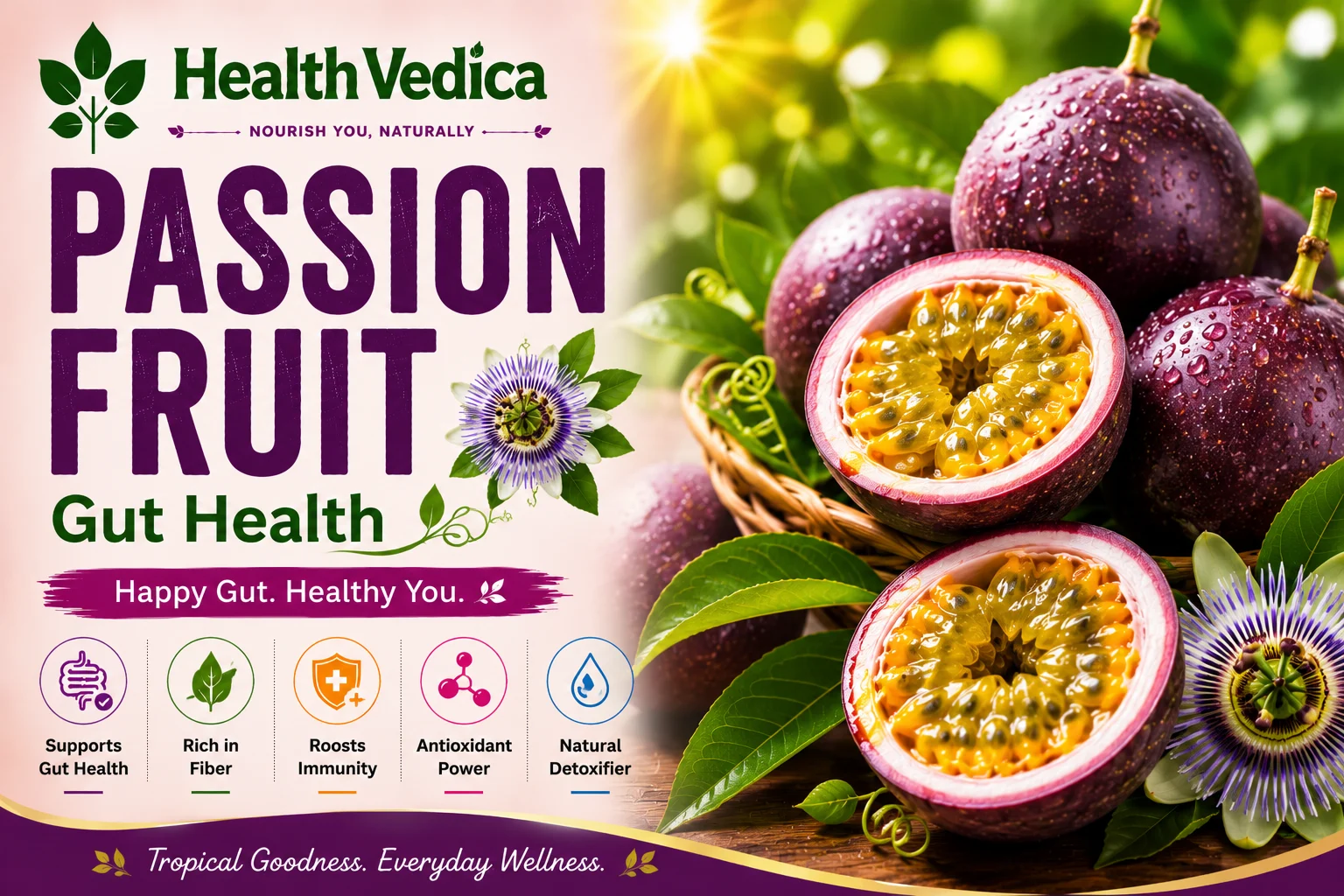
Passion Fruit (Passiflora edulis) is a highly nutritious tropical fruit known for its fragrant aroma, juicy golden pulp and crunchy edible seeds. Native to South America and now cultivated in India, Australia, Africa and Southeast Asia, passion fruit is considered a nutritional powerhouse because it provides vitamin C, vitamin A, dietary fiber, potassium and numerous plant antioxidants. Despite its sweet-tart taste, it has a relatively low glycemic index and supports immunity, digestive health, heart wellness, eye health and healthy skin.
📊 Nutritional Value Per 100g of Passion Fruit
| Nutrient | Amount | % Daily Value (DV) |
|---|---|---|
| Calories | 97 kcal | 5% |
| Protein | 2.2 g | 4% |
| Total Fat | 0.7 g | 1% |
| Carbohydrates | 23.4 g | 8% |
| Dietary Fiber | 10.4 g | 37% |
| Natural Sugars | 11.2 g | — |
| Vitamin C | 30 mg | 33% |
| Vitamin A | 64 mcg | 7% |
| Potassium | 348 mg | 7% |
| Magnesium | 29 mg | 7% |
| Iron | 1.6 mg | 9% |
| Phosphorus | 68 mg | 10% |
| Water | 72.9 g | — |
📉 Glycemic Index
Passion Fruit has a low glycemic index of approximately 30. Its exceptionally high fiber content slows carbohydrate absorption, making it a suitable fruit for people managing blood sugar when eaten in moderation.
🧬 Powerful Plant Compounds
Passion Fruit is abundant in polyphenols, piceatannol, carotenoids, beta-carotene, cryptoxanthin, lutein, flavonoids and vitamin C. These compounds help reduce oxidative stress, support immunity and protect cells from free radical damage.
💊 Vitamins & Minerals Explained
Vitamin C strengthens immunity and collagen formation, vitamin A supports healthy vision, potassium contributes to normal blood pressure, magnesium supports muscles and nerves, while dietary fiber promotes digestive health and healthy cholesterol levels.
🕉️ Ayurvedic Properties & Dosha Effect
Although Passion Fruit is not extensively described in classical Ayurvedic literature, Ayurvedic nutrition experts generally consider it to possess Madhura (sweet) and Amla (slightly sour) tastes with a cooling nature. It may help pacify Pitta Dosha, support hydration and digestion, while excessive consumption may aggravate Vata Dosha because of its sour taste.
💚 Evidence-Based Health Benefits
Boosts Immunity: Passion Fruit is rich in vitamin C and antioxidants that strengthen immune defenses and help reduce oxidative stress.
Supports Gut Health: With more than 10 grams of dietary fiber per 100 grams, it promotes healthy bowel movements, nourishes beneficial gut bacteria and supports digestive wellness.
Heart Health: Potassium, fiber and polyphenols contribute to healthy blood pressure, cholesterol metabolism and cardiovascular function.
Supports Eye Health: Vitamin A, lutein and carotenoids help maintain healthy vision and protect the retina from oxidative damage.
Supports Healthy Skin: Vitamin C stimulates collagen production, while antioxidants help protect skin from premature ageing.
Blood Sugar Support: The combination of low glycemic index and high fiber helps reduce rapid spikes in blood glucose.
Healthy Weight Management: High fiber promotes fullness, helping reduce overall calorie intake.
👨👩👧 Who Should Eat Passion Fruit?
Passion Fruit is an excellent choice for children, athletes, older adults, pregnant women, individuals seeking digestive support and anyone looking for a nutrient-rich tropical fruit.
🚫 Who Should Limit Passion Fruit?
Individuals allergic to latex may rarely experience cross-reactivity with Passion Fruit. People taking blood pressure medications should consume excessive quantities only after discussing with their healthcare provider because of its potassium content, although normal dietary intake is generally safe.
🌿 Healthy Recipes & Home Remedies
Passion Fruit Yogurt Bowl: Mix fresh pulp with Greek yogurt, oats and chia seeds for a protein-rich breakfast.
Tropical Smoothie: Blend Passion Fruit with mango, banana and coconut water for a refreshing drink.
Fruit Salad: Combine Passion Fruit with kiwi, papaya and pomegranate for an antioxidant-rich dessert.
Homemade Passion Fruit Lemonade: Mix fresh pulp with lemon juice, mint and chilled water without refined sugar.
🥗 Best Ways to Eat Passion Fruit
Cut the fruit in half and scoop out the pulp along with the edible crunchy seeds. It can also be added to smoothies, yogurt, salads, desserts and homemade beverages.
🍽️ Best Food Combinations
Passion Fruit pairs well with yogurt, kiwi, mango, papaya, banana, chia seeds, coconut water, mint and oats.
🧊 Storage Tips
Store unripe fruits at room temperature until the skin becomes slightly wrinkled, indicating ripeness. Refrigerate ripe fruits for up to one week.
📅 Daily Recommended Intake
1–2 medium Passion Fruits (approximately 80–120 grams of pulp) daily are suitable for most healthy adults.
⚠️ Precautions
The seeds are edible and nutritious. However, avoid eating the thick outer rind, which is not commonly consumed. Individuals with latex allergy should exercise caution if they experience allergic symptoms.
🔬 Scientific Highlights
Research has demonstrated that Passion Fruit is rich in antioxidants, dietary fiber and piceatannol, a polyphenol that has shown potential benefits for metabolic health in preliminary human and laboratory studies. Additional clinical research is underway to better understand its long-term effects on cardiovascular and metabolic health.
❌ Common Myths & Facts
❌ Myth: Passion Fruit seeds should not be eaten.
✅ Fact: The seeds are completely edible and provide dietary fiber and beneficial plant compounds.
❌ Myth: Passion Fruit contains too much sugar.
✅ Fact: Despite its sweet taste, Passion Fruit has a relatively low glycemic index and an exceptionally high fiber content.
❌ Myth: Passion Fruit only boosts immunity.
✅ Fact: It also supports digestive health, heart wellness, eye health, skin health and healthy blood sugar management.
🌍 Fun Facts
- The flower of Passion Fruit is one of the most intricate and beautiful flowers in the plant kingdom.
- India cultivates Passion Fruit mainly in Karnataka, Kerala, Tamil Nadu, Meghalaya, Nagaland and Sikkim.
- The edible seeds add a pleasant crunch and are naturally rich in dietary fiber.
- The slightly wrinkled skin of a ripe Passion Fruit usually indicates maximum sweetness.
- Passion Fruit belongs to the Passifloraceae family, which contains more than 500 species.