🌿 Introduction
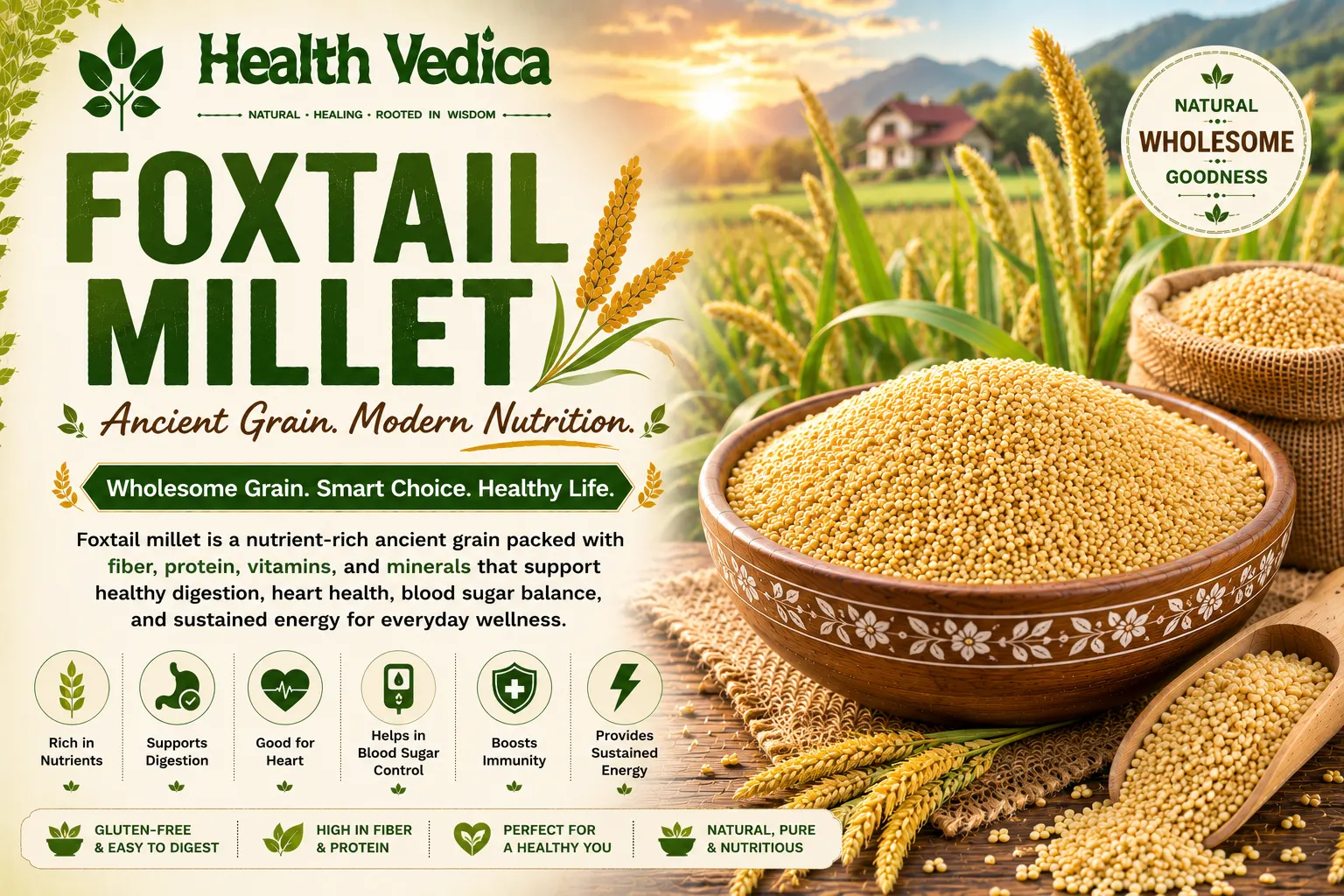
Foxtail millet, known as Korra in Telugu and Kannada, Kangni or Rala in Hindi, and Thinai in Tamil, is one of the oldest cultivated millets in Asia with over 8,000 years of history. It is the second most widely grown millet in the world and a nutritional treasure. With a straw-like seed head resembling a fox's tail, this ancient grain is rich in iron, calcium, and complex carbohydrates with a remarkably low glycemic index, making it ideal for modern health challenges like diabetes and obesity.
🔬 Nutritional Value Per 100g (Raw Foxtail Millet)
| Nutrient | Amount | % Daily Value |
|---|---|---|
| Calories | 351 kcal | 18% |
| Carbohydrates | 60.9 g | 22% |
| Protein | 12.3 g | 25% |
| Fat | 4.3 g | 6% |
| Fiber | 8.0 g | 29% |
| Iron | 2.8 mg | 16% |
| Calcium | 31 mg | 3% |
| Magnesium | 81 mg | 19% |
| Zinc | 2.4 mg | 22% |
| Thiamine (B1) | 0.59 mg | 49% |
📊 Glycemic Index
Foxtail millet has a very low glycemic index of approximately 50–54. Its high fiber content and resistant starch ensure a slow, gradual release of glucose into the bloodstream, making it one of the best grains for people with diabetes, insulin resistance, and metabolic syndrome.
🌿 Ayurvedic Properties & Dosha Effect
In Ayurveda, foxtail millet (thinai) is described as light, slightly dry, and cooling. It is beneficial for Kapha and Pitta types. Ancient Siddha and Ayurvedic texts prescribe thinai for urinary disorders, obesity, and blood sugar management. The grain is considered diuretic and detoxifying, supporting kidney health and fluid balance in the body.
✅ Health & Healing Benefits
Foxtail millet is particularly effective for blood sugar management due to its low GI and high fiber. Studies have shown regular consumption reduces fasting blood glucose and HbA1c levels in type 2 diabetics. Its high iron content makes it valuable for anemia prevention, particularly for women. The protein-to-carbohydrate ratio is excellent for muscle maintenance and satiety. Magnesium and zinc support immune function, bone health, and wound healing. Its antioxidants help reduce inflammation and protect against oxidative stress.
🍲 Indian Dietary Uses
Foxtail millet is used to make korra annam (rice substitute in Andhra), thinai pongal, thinai idli, thinai dosa, millet upma, millet porridge (kanji), thinai puttu, and millet roti. It can directly replace white rice in most South Indian rice-based recipes.
💡 Foxtail Millet Kanji (Traditional Health Drink)
Cook foxtail millet in excess water with buttermilk or water and a pinch of salt. This cooling porridge drink has been traditionally consumed in Tamil Nadu to beat summer heat, manage urinary infections, and maintain blood sugar levels. It is one of the oldest Indian health tonics.
💡 Smart Tips
Soak foxtail millet for 6–8 hours before cooking to reduce phytic acid and improve mineral absorption. Dry roast before cooking for a nuttier flavor. Use a 1:3 ratio (millet:water) for porridge or 1:2 for cooked rice substitute. Can be sprouted for even higher nutritional value.