🌺 Introduction
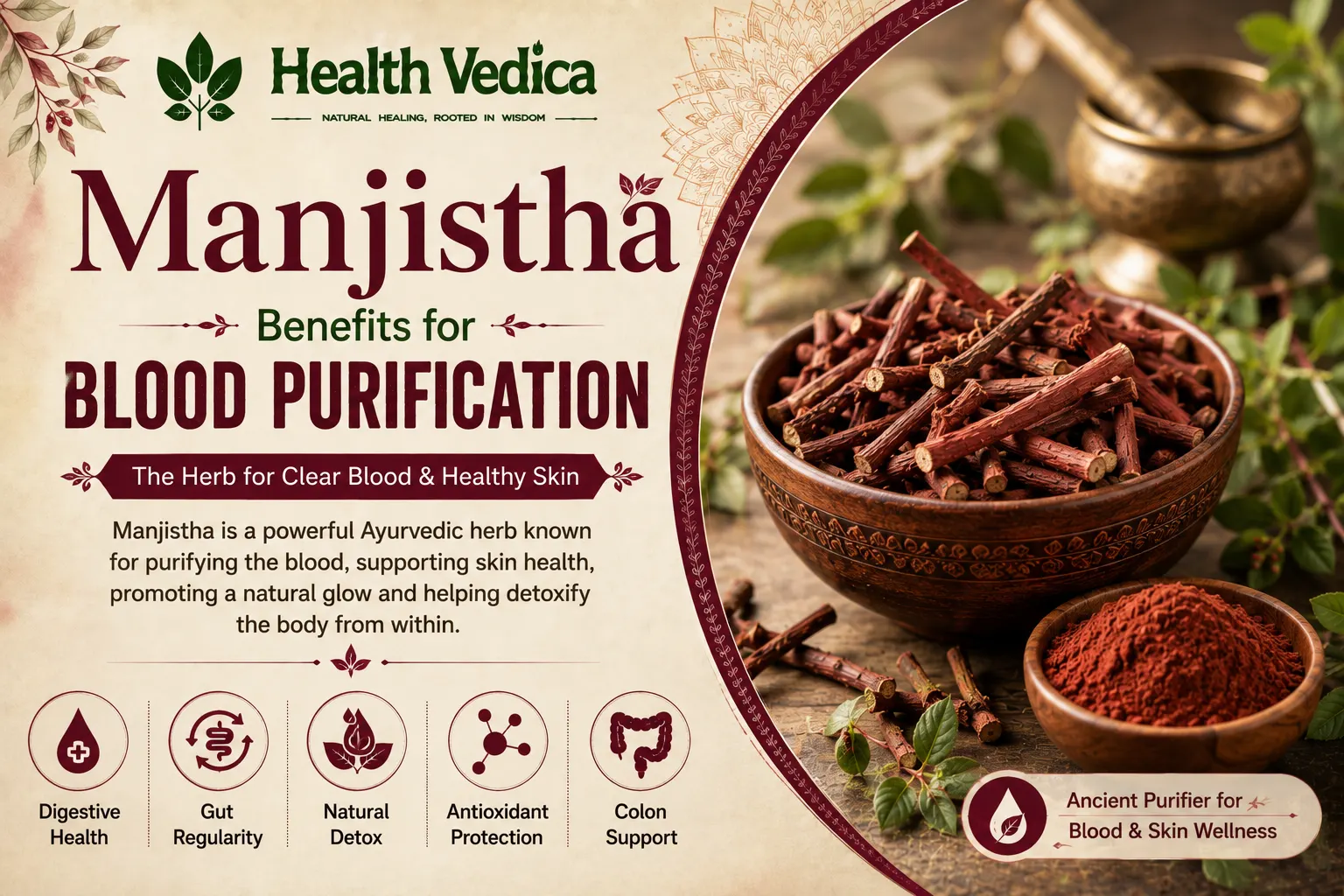
Manjistha (Rubia cordifolia), known as Indian Madder, is Ayurveda's supreme Raktashodhaka — blood purifying herb. Its roots contain striking red pigments that visually symbolize its action on the blood (Rakta Dhatu). Used for thousands of years in India, Sri Lanka, and China, Manjistha addresses root-cause conditions arising from impure blood and lymphatic stagnation — which in Ayurveda underlie most chronic skin disorders, hormonal imbalances, and inflammatory diseases. It is the single most important Ayurvedic herb for skin health, complexion, and clearing inflammatory conditions from the inside out.
🔬 Key Active Compounds
| Compound | Primary Benefit |
|---|---|
| Alizarin & Purpurin | Antioxidant, anti-inflammatory, blood purifying |
| Rubiadin | Anti-cancer, antimicrobial |
| Lucidin | Antimicrobial, wound healing |
| Xanthopurpurin | Antifungal, anti-itch |
| Mollugin | Liver protective, anti-inflammatory |
💊 Nutritional Highlights (Per 100g Root Powder)
| Nutrient | Amount |
|---|---|
| Protein | 3.5 g |
| Fiber | 14 g |
| Iron | 6.8 mg |
| Calcium | 250 mg |
| Anthraquinones | 1.5–3% |
🌡️ Ayurvedic Properties & Dosha Effect
Manjistha is Madhura (sweet), Tikta (bitter), and Kashaya (astringent) in taste. It has Guru (heavy) and Ruksha (dry) qualities, with Ushna Virya (hot potency). It primarily pacifies Pitta and Kapha doshas and acts specifically on Rakta Dhatu (blood tissue) and Rasa Dhatu (plasma). Its Raktaprasadana (blood clarifying) action makes it the cornerstone of Ayurvedic blood purification therapies.
💪 Health & Healing Benefits
Skin Health & Glow: Manjistha is the number-one Ayurvedic herb for skin. It clears acne, reduces hyperpigmentation and dark spots, brightens complexion, and treats chronic skin conditions like eczema, psoriasis, and urticaria from within. Its blood-purifying action removes the root cause of most skin disorders.
Lymphatic Detox: It decongests the lymphatic system, helps clear swollen lymph nodes, and supports movement of lymphatic fluid — essential for immune health and reducing water retention.
PCOS & Hormonal Balance: Manjistha regulates estrogenic activity, reduces Pitta-driven hormonal acne, and supports regular menstrual cycles. It is frequently combined with Shatavari for comprehensive women's hormonal health.
Wound & Injury Healing: Topical application of Manjistha paste accelerates wound closure, prevents infection, and reduces post-injury pigmentation. Its anti-inflammatory and antimicrobial compounds make it an Ayurvedic first-aid herb.
Kidney & Urinary Health: Manjistha protects renal tissue from oxidative stress, reduces urinary tract inflammation, and has been researched for its role in kidney stone prevention.
Anti-cancer Research: Rubiadin and Mollugin in Manjistha show promising apoptotic activity against breast, liver, and colon cancer cell lines in laboratory studies.
Joint Inflammation: Combined with Guggulu, Manjistha reduces inflammatory arthritis symptoms through Pitta and Ama (toxin) clearance.
🍵 Traditional Preparations
Manjisthadi Kashayam: Classical decoction combining Manjistha with other blood-purifying herbs — for chronic skin disorders and fever.
Manjistha Powder with Honey: Morning blood-purifying tonic for clear skin and hormonal balance.
Manjistha + Neem + Turmeric Capsules: The complete Ayurvedic skin-clearing trinity — widely available from Indian herbal brands.
Manjistha Face Pack: Mixed with rose water and sandalwood for topical brightening, acne reduction, and glow.
Sarivadyasava: Fermented tonic containing Manjistha for blood disorders and skin diseases.
✅ Key Advantages
Best Ayurvedic herb for clear, glowing skin. Powerful blood purifier. Treats PCOS and hormonal acne. Detoxifies the lymphatic system. Accelerates wound healing. Kidney and urinary health support. Anti-cancer research potential.
⚠️ Tips & Precautions
May turn urine orange-red due to anthraquinone pigments — this is normal and harmless. Avoid in pregnancy (uterine stimulant). High doses may cause loose stools. Not ideal for severe Vata imbalances alone. Best combined with Guduchi or Shatavari for hormonal conditions. Standard dose: 3–6 g powder or 500 mg extract twice daily.