🌿 Introduction
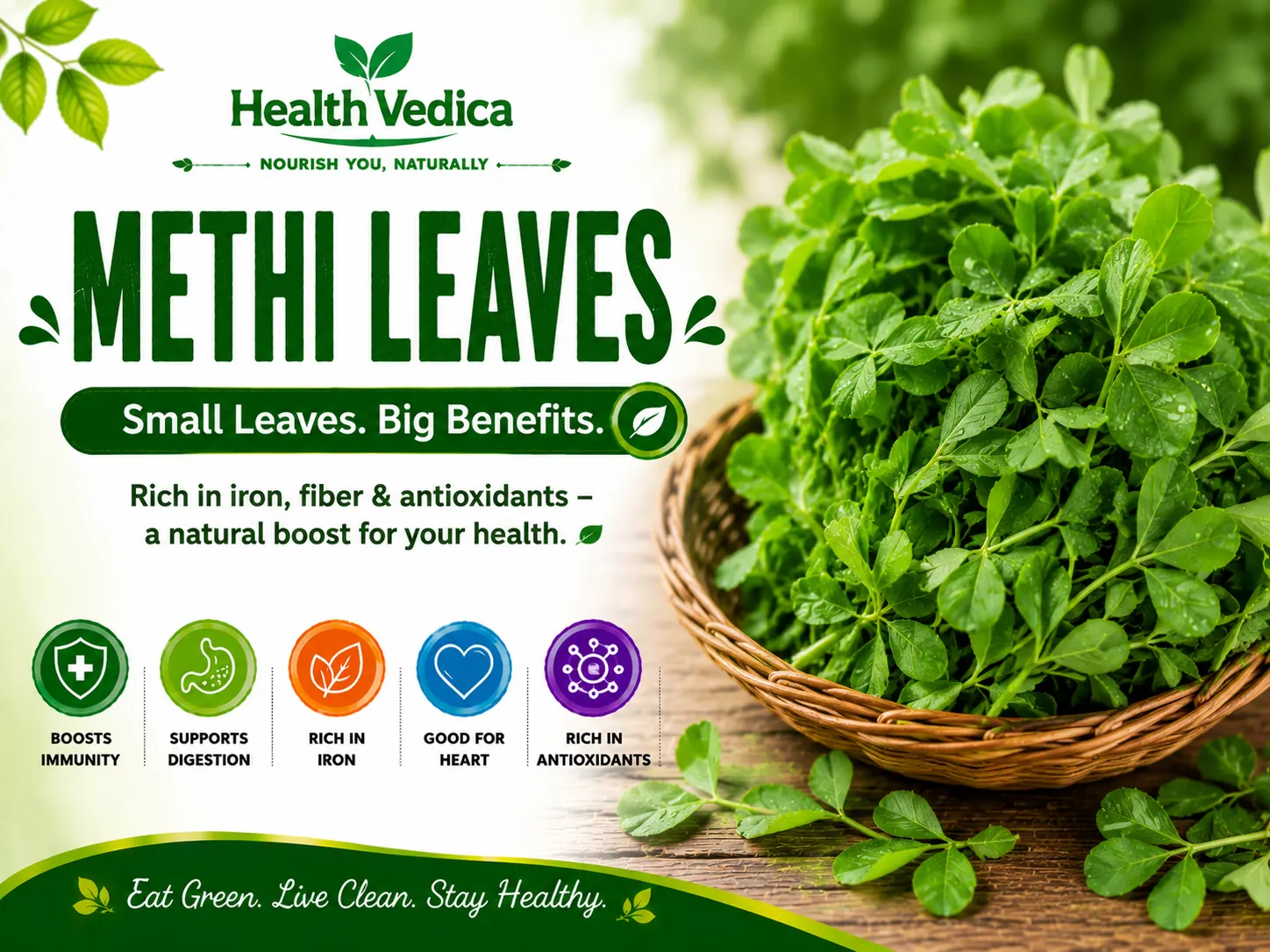
Methi Leaves (Trigonella foenum-graecum), commonly known as Fenugreek Leaves, are one of the most valued greens in Indian cuisine and Ayurveda. With their unique slightly bitter taste, aromatic flavour and impressive nutrient profile, methi leaves have been used for centuries as both food and traditional medicine.
Methi belongs to the legume family and both its leaves and seeds are widely used. While fenugreek seeds are famous for blood sugar and digestion benefits, fresh methi leaves provide vitamins, minerals, antioxidants and fiber with fewer calories.
Traditional Indian dishes such as methi sabzi, methi paratha, dal methi, methi thepla and aloo methi highlight its culinary importance. Ayurveda considers methi a warming herb that supports digestion, metabolism and overall strength.
📊 Nutritional Value Per 100g of Fresh Methi Leaves
| Nutrient | Amount | % Daily Value (DV) |
|---|---|---|
| Calories | 49 kcal | 2% |
| Protein | 4.4 g | 9% |
| Total Fat | 0.9 g | 1% |
| Carbohydrates | 6 g | 2% |
| Dietary Fiber | 1.1 g | 4% |
| Calcium | 395 mg | 30% |
| Iron | 5.8 mg | 32% |
| Vitamin C | 52 mg | 58% |
| Vitamin A | 40 mcg | 4% |
| Folate | 57 mcg | 14% |
| Potassium | 770 mg | 16% |
| Magnesium | 47 mg | 11% |
| Manganese | 0.2 mg | 9% |
📉 Glycemic Index & Blood Sugar Effect
Methi leaves have a low glycemic impact because of their fiber content and beneficial plant compounds. Fenugreek contains soluble fibers such as galactomannan, which may help slow carbohydrate absorption and support healthier blood sugar responses.
🧬 Powerful Bioactive Compounds
Methi leaves contain polyphenols, flavonoids, saponins, diosgenin and antioxidant compounds. These natural compounds contribute to its traditional reputation for supporting metabolism and overall health.
💊 Vitamins & Minerals Explained
Iron: Supports haemoglobin formation and oxygen transport in the body.
Calcium: Helps maintain strong bones and teeth.
Vitamin C: Supports immunity and improves iron absorption.
Potassium: Supports healthy blood pressure and fluid balance.
🕉️ Ayurvedic Properties & Dosha Effect
In Ayurveda, methi is considered a valuable medicinal food with properties that support digestion and metabolism.
Rasa (Taste): Bitter (Tikta) and slightly pungent (Katu).
Virya (Potency): Heating (Ushna).
Dosha Effect: Helps balance Vata and Kapha, but excessive intake may increase Pitta due to its heating nature.
Ayurveda traditionally uses methi for improving Agni (digestive fire), reducing Ama (metabolic waste), supporting lactation and strengthening the body.
💚 Evidence-Based Health Benefits
Supports Blood Sugar Management: Fenugreek compounds and fiber may help improve glucose metabolism and reduce sudden blood sugar spikes when consumed as part of a balanced diet.
Improves Digestion: Fiber and bitter compounds stimulate digestion, support bowel regularity and may reduce digestive discomfort.
Supports Heart Health: Fiber and plant compounds may contribute to healthier cholesterol levels.
Helps Maintain Healthy Weight: Fiber promotes fullness and reduces unnecessary snacking.
Supports Blood Health: High iron content makes methi leaves a valuable addition to iron-rich diets.
Anti-Inflammatory Support: Antioxidants help protect cells from oxidative stress.
Skin & Hair Health: Nutrients like iron, vitamin C and antioxidants support healthy skin and hair.
🩸 Methi Leaves & Diabetes Support
Methi is traditionally one of the most recommended herbs for metabolic health. Its soluble fiber may slow digestion and carbohydrate absorption. However, it should complement prescribed diabetes treatment and not replace medical advice.
🤱 Methi Leaves & Women's Health
Traditionally, fenugreek has been used in Ayurveda and Indian households to support lactation after childbirth. Pregnant women should avoid medicinally high amounts without professional guidance.
👨👩👧 Who Should Eat Methi Leaves?
Methi leaves are suitable for most people, especially those looking to increase vegetable intake, improve digestion and include nutrient-rich traditional greens in their diet.
🚫 Who Should Limit Methi Leaves?
Pregnant women should avoid excessive medicinal quantities. People taking blood sugar-lowering medicines should monitor glucose levels because methi may enhance blood sugar-lowering effects.
🌿 Healthy Recipes & Preparations
Methi Dal: A protein-rich combination of lentils and fenugreek leaves.
Methi Paratha: Traditional Indian flatbread enriched with greens.
Aloo Methi: Potato cooked with aromatic methi leaves and spices.
Methi Thepla: Gujarati-style nutritious flatbread.
Methi Soup: A light digestive preparation.
🥗 Best Ways to Eat Methi Leaves
Fresh methi leaves can be lightly cooked to reduce bitterness while preserving nutrients. Combining methi with spices like cumin, turmeric, garlic and ginger improves flavour and digestion.
🍽️ Best Food Combinations
Methi pairs well with lentils, whole wheat, millet, garlic, ginger, sesame seeds, yogurt and vegetables.
🧊 Storage Tips
Remove damaged leaves, wash only before use and store fresh methi wrapped in a clean cloth or paper towel in the refrigerator.
📅 Daily Recommended Intake
50–100 grams of fresh methi leaves can be consumed regularly as part of a balanced diet.
⚠️ Precautions
Excessive intake may cause digestive discomfort in some people. Those using diabetes medication or blood-thinning medicines should consult healthcare professionals before using concentrated fenugreek supplements.
🔬 Scientific Highlights
Research on fenugreek highlights its fiber content, antioxidant compounds and potential role in glucose metabolism, cholesterol management and digestive health.
❌ Common Myths & Facts
❌ Myth: Methi alone can cure diabetes.
✅ Fact: Methi may support blood sugar management but lifestyle and medical treatment remain important.
❌ Myth: Bitter foods are unhealthy.
✅ Fact: Bitter compounds in foods like methi can support digestion and metabolism.
❌ Myth: Only methi seeds have benefits.
✅ Fact: Methi leaves also provide valuable vitamins, minerals and antioxidants.
🌍 Fun Facts
- Methi has been used in Indian cuisine and Ayurveda for thousands of years.
- The word fenugreek comes from Latin meaning "Greek hay".
- Both leaves and seeds are edible.
- Methi is one of the most popular winter greens in India.
- Kasuri methi is the dried form of fenugreek leaves.
🥬 Edible Parts & Their Benefits
| Edible Part | Health Benefits |
|---|---|
| Fresh Leaves | Rich in fiber, vitamins, minerals and antioxidants. |
| Seeds | High in soluble fiber and traditional medicinal compounds. |
| Dried Leaves (Kasuri Methi) | Provides aroma and concentrated flavor compounds. |
🌱 Seasonality in India
| Season | Availability |
|---|---|
| Peak Season | Winter months (October – March) |
| Best Climate | Cool and dry weather |
| Buying Tip | Select fresh green leaves without yellowing. |
⏰ Best Time to Eat
Methi leaves are best consumed during lunch or early dinner because their fiber and bitter compounds support digestion.