🍃 Introduction
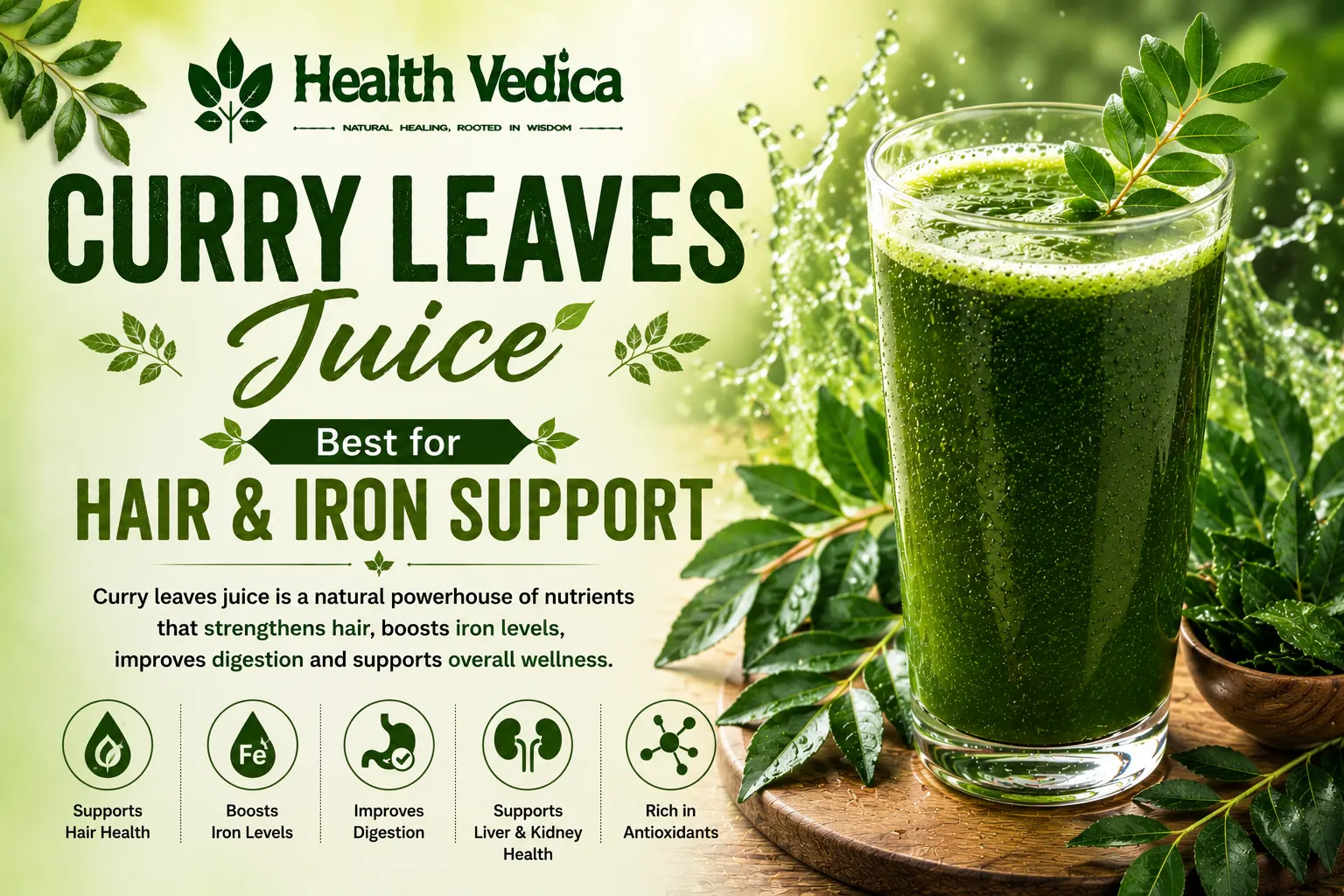
Curry Leaves Juice, made from the fresh leaves of Murraya koenigii — known as Kadi Patta or Meetha Neem in India — is a traditional Indian wellness drink that is becoming popular in the global natural health community. These aromatic leaves are a staple in South Indian cooking and have been used in Ayurvedic medicine for centuries to treat a wide range of conditions from hair loss to diabetes and liver disorders.
🧪 Nutritional Value of Curry Leaves Juice (Per 100ml)
| Nutrient | Amount | Daily Value % |
|---|---|---|
| Calories | 108 kcal | 5% |
| Vitamin A | 7560 IU | 151% |
| Vitamin C | 4 mg | 4% |
| Iron | 0.93 mg | 5% |
| Calcium | 810 mg | 81% |
| Phosphorus | 600 mg | 86% |
| Carbazole Alkaloids | High (active compounds) | — |
| Koenigine, Mahanimbine | Present | — |
| Antioxidants | Very High | — |
🌺 Ayurvedic Properties
In Ayurveda, curry leaves (Surabhi or Girinimba) are classified as Tikta (bitter) and Katu (pungent) with a hot potency. They primarily reduce Kapha and Vata doshas. Curry leaves are renowned as Kesharanjaka (hair colorant/nourisher) in Ayurvedic texts and are widely used in traditional hair oils, decoctions, and dietary preparations. Their bitter taste makes them excellent digestive stimulants and liver tonics.
💚 Health & Healing Benefits
1. Hair Growth & Anti-Greying: This is curry leaves' most celebrated benefit in India. The Carbazole alkaloids in curry leaves nourish hair follicles, stimulate melanocyte activity (preventing premature greying), reduce hair fall, and strengthen hair shafts from within.
2. Diabetes & Blood Sugar: Curry leaves' compounds stimulate insulin-producing beta cells in the pancreas and improve peripheral glucose uptake, significantly reducing blood sugar levels. They are particularly effective in managing Type 2 diabetes and prediabetes.
3. Liver Protection & Detox: Mahanimbine and other alkaloids protect the liver from oxidative stress, enhance glutathione production, and help in reversing mild fatty liver disease.
4. Cholesterol Management: Studies show curry leaf extracts significantly reduce total cholesterol, LDL, and VLDL while increasing HDL — protecting the heart and arteries.
5. Weight Loss: Curry leaves contain Mahanimbine — an alkaloid with anti-obesity effects that reduces fat cell accumulation, improves metabolism, and suppresses appetite.
6. Anti-Inflammatory & Antioxidant: The high antioxidant content neutralizes free radicals, reduces systemic inflammation, and may protect against neurodegenerative diseases like Alzheimer's.
7. Eye Health: Extremely rich in Vitamin A and carotenoids, curry leaves juice protects against night blindness, retinal damage, and cataracts.
8. Gut Health: Acts as a mild laxative, carminative (anti-gas), and antimicrobial agent — effective against bacterial gastroenteritis and diarrhea.
🕐 Best Time & How to Drink
Consume in the morning on an empty stomach — blend 20–30 fresh curry leaves with 100 ml water, strain, and drink. Can be combined with lemon or buttermilk. For hair benefits, topical application of curry leaves oil (leaves fried in coconut oil) is equally effective.
💡 Preparation Tips
Use fresh, washed curry leaves (organic preferred). Blend with minimal water and strain. For better taste, mix with buttermilk or lemon water. The juice is quite intense — start with 10–15 leaves and gradually increase. Alternatively, chew 10–15 fresh curry leaves every morning — this is the most traditional Indian consumption method.
⚠️ Precautions
Generally very safe. In rare cases, excessive intake may cause heartburn due to its hot potency. People with very low blood pressure should moderate intake. Pregnant women should avoid large medicinal doses — culinary amounts are fine.
🇮🇳 Indian Dietary Uses
Fundamental to South Indian tempering (tadka) in sambar, rasam, chutneys, and rice dishes. Used in Ayurvedic hair oils and traditional beauty routines. Increasingly popular as a morning shot drink in urban Indian wellness culture.