🌺 Introduction
Hibiscus Juice, made from the dried or fresh calyces of Hibiscus sabdariffa — known as Gudhal or Gongura in India — is a vibrant crimson health drink with a distinctive tangy taste. Revered in Ayurveda, Africa, the Middle East, and Latin America for centuries, hibiscus juice is now one of the most clinically studied herbal beverages for its cardiovascular, metabolic, and antioxidant benefits. In India, it is known as Lal Chai (red tea) and increasingly sold as a wellness shot in health cafes.
🧪 Nutritional Value of Hibiscus Juice (Per 100ml)
| Nutrient | Amount | Daily Value % |
|---|---|---|
| Calories | 37 kcal | 2% |
| Vitamin C | 12 mg | 13% |
| Iron | 1.48 mg | 8% |
| Calcium | 215 mg | 22% |
| Phosphorus | 37 mg | 5% |
| Anthocyanins (Delphinidin) | Very High | — |
| Hibiscus Acid (Hydroxycitric Acid) | High | — |
| Polyphenols | Very High | — |
| Protocatechuic Acid | Present | — |
🌺 Ayurvedic Properties
In Ayurveda, hibiscus is classified as Amla (sour) and Kashaya (astringent) with a cooling Virya. It primarily pacifies Pitta and Kapha doshas. Known as Japapuspa in Sanskrit, it is used in Ayurvedic formulations for blood disorders, menstrual health, hair nourishment, and liver support. The flowers are used in classical preparations like Japakusuma Taila (hibiscus hair oil) and decoctions for female reproductive health.
💚 Health & Healing Benefits
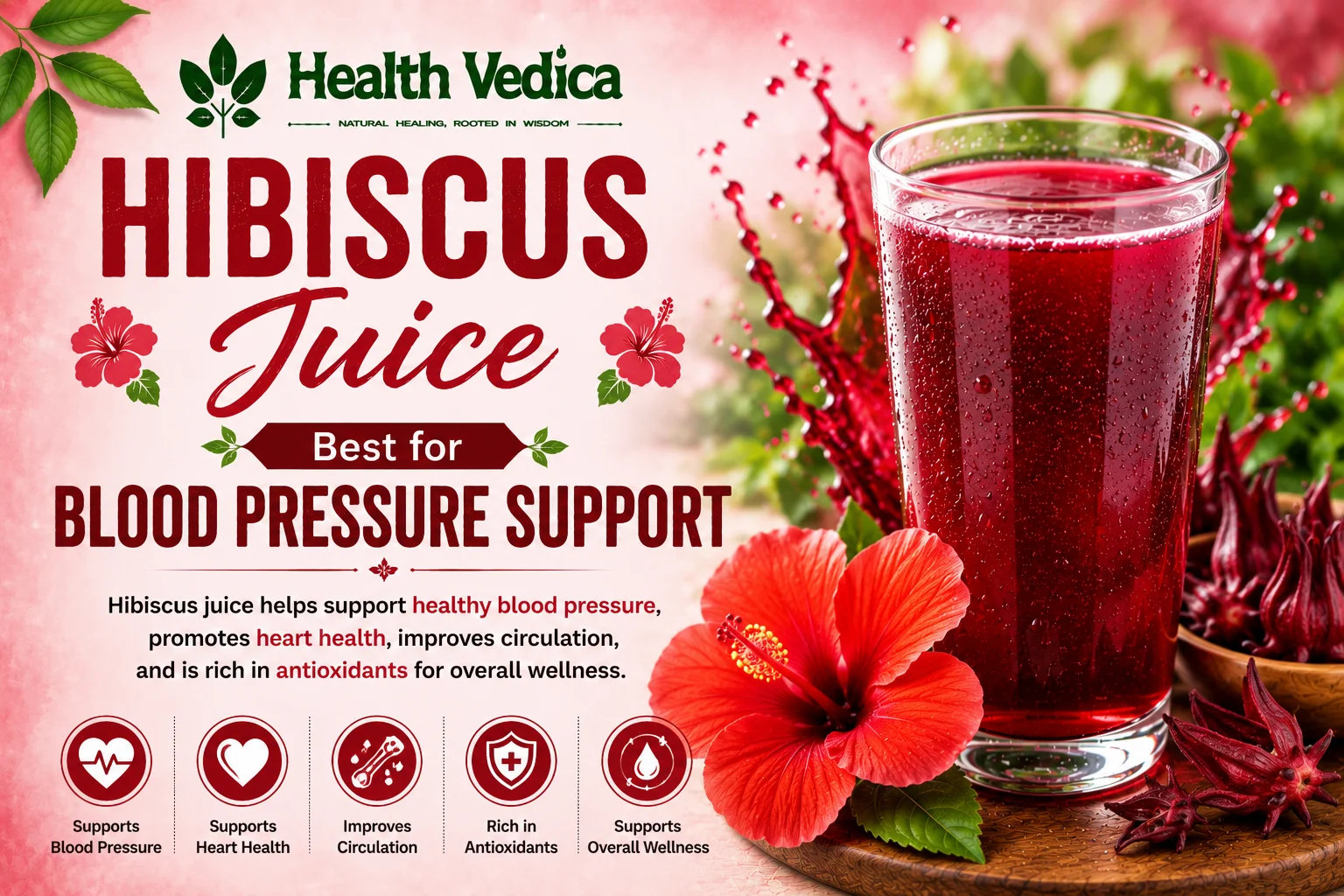
1. Blood Pressure Reduction: The most well-documented benefit — Multiple clinical trials (including a Harvard School of Public Health study) confirm that drinking 2–3 cups of hibiscus tea/juice daily lowers systolic blood pressure by 7–10 mmHg in people with mild hypertension — comparable to some BP medications.
2. Cholesterol Management: Hibiscus significantly reduces total cholesterol, LDL, and triglycerides while increasing HDL. The mechanism involves inhibiting cholesterol synthesis enzymes in the liver.
3. Weight Loss & Metabolism: Hibiscus acid (hydroxycitric acid) inhibits amylase enzyme, reducing carbohydrate absorption, suppressing appetite, and preventing fat accumulation — similar to the mechanism of the weight-loss supplement Garcinia cambogia.
4. Antioxidant Champion: Hibiscus has one of the highest ORAC (antioxidant capacity) values among all herbs — its anthocyanins neutralize free radicals, reduce oxidative stress, and protect DNA from damage.
5. Liver Protection: Studies show hibiscus extract prevents liver damage, reduces liver fat accumulation, and normalizes liver enzymes in people with non-alcoholic fatty liver disease (NAFLD).
6. Anti-Cancer Potential: Protocatechuic acid in hibiscus induces apoptosis (programmed cell death) in cancer cells without harming healthy cells — showing particular promise against leukemia, stomach, and prostate cancer cells.
7. Menstrual Health: Traditionally used in India and Africa to ease menstrual cramps, regulate cycles, and address heavy bleeding through its astringent and antispasmodic properties.
8. Kidney Health: Acts as a mild diuretic and uric acid reducer — beneficial for people with gout and kidney stone prevention (particularly urate stones).
🕐 Best Time & How to Drink
Best consumed as a cold or warm infusion — steep 5–8 dried hibiscus flowers in hot water for 5–10 minutes. Drink 1–2 cups daily. For weight loss, drink before meals. Avoid with milk as it can curdle due to hibiscus's acidity.
💡 Preparation Tips
Use dried hibiscus calyces (Roselle variety — H. sabdariffa). Steep in boiling water for 10 minutes, strain, and sweeten with honey if desired. For a cooling summer drink, brew and refrigerate — add mint, lemon, and ice. The deep red color and tangy flavor make it a natural, beautiful beverage for children and adults alike.
⚠️ Precautions
Avoid during pregnancy — may cause uterine contractions. Not recommended for people on blood pressure medications without monitoring (can cause hypotension). May interfere with acetaminophen metabolism. Avoid with chloroquine (antimalarial drug).
🇮🇳 Indian Dietary Uses
Used in Gongura chutney (Andhra Pradesh specialty), hibiscus tea, summer coolers, jams, and syrups. The flowers are offered in temples (particularly to Goddess Kali and Lord Ganesha) and used in traditional Indian hair care preparations.